

China Vulcanizing Press Advances Modern Rubber Manufacturing Efficiency
2026-08-28
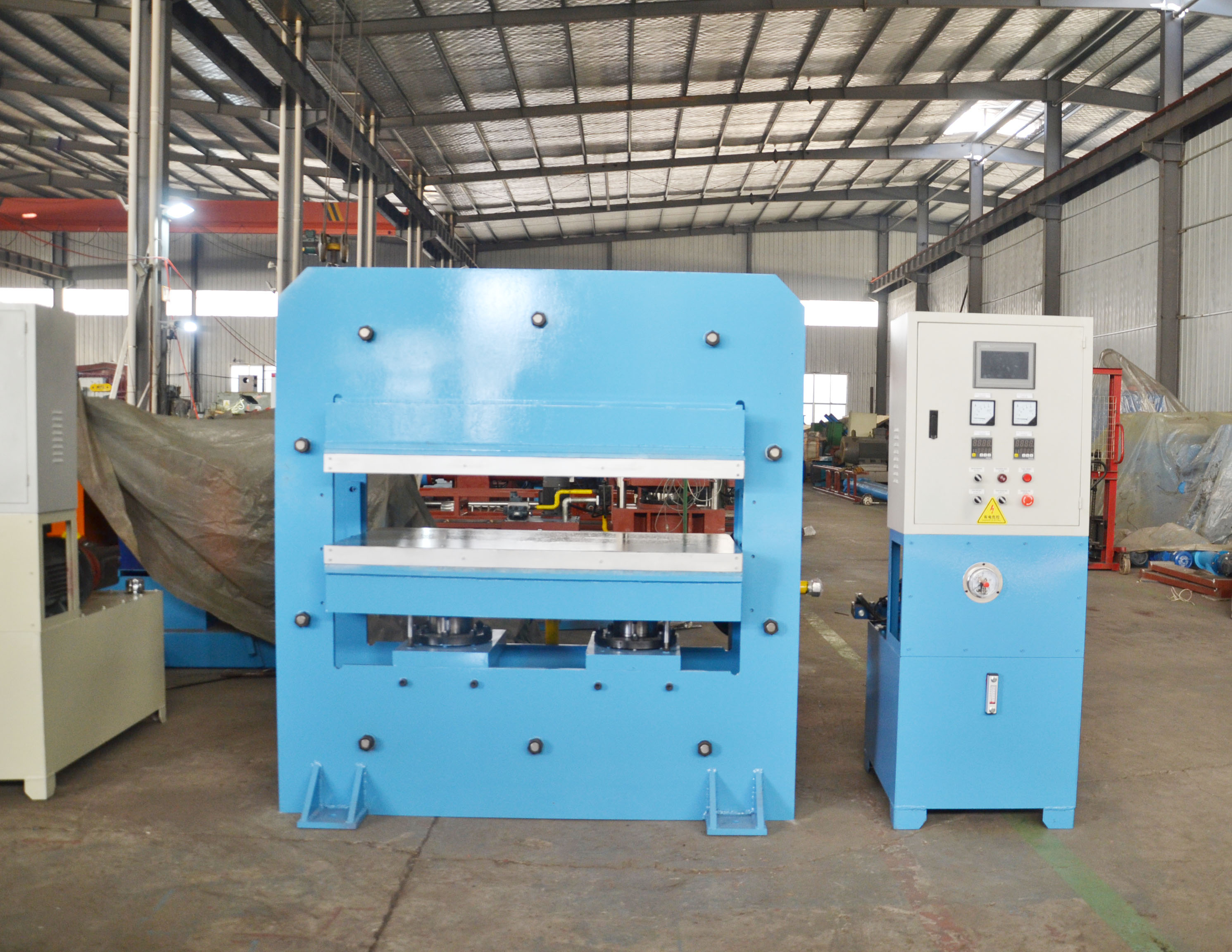
Every minute of downtime in rubber manufacturing eats into profit margins, yet many factories still rely on outdated vulcanizing equipment that struggles to keep pace with modern demands. Enter SFC, a name quietly reshaping how China’s vulcanizing presses tackle efficiency. What if the bottleneck isn’t your raw materials or workforce, but the press itself? As global competition tightens, the gap between standard machinery and high-performance systems has never been wider—and SFC is closing it with innovations that deserve a closer look.
Heat Control Moves Beyond Guesswork
For a long time, controlling heat in anything from a lab kiln to a full-scale furnace meant relying on spot checks and manual adjustments. A technician would read a thermocouple, compare it to a mental model of how the material should behave, and then tweak a burner or cooling valve. It worked often enough, but it left too much room for error. Every operator had a slightly different sense of what “warm enough” meant, and that variability showed up in warped parts, uneven coatings, and wasted energy.
The shift away from guesswork started with cheap, fast sensors and has accelerated with systems that can map temperature across an entire surface in real time. Instead of one or two point measurements, thermal cameras and thermocouple arrays feed data into control loops that adjust heating elements every few milliseconds. A modern furnace controller doesn't just wait for a threshold to be crossed; it predicts how the heat will spread through the material and throttles power before the temperature drifts too far. That predictive layer is the key difference. It turns heat management from a reactive task into something closer to steering a vehicle by watching the road ahead rather than only the rearview mirror.
The practical gains are visible in lower scrap rates, tighter dimensional tolerances, and far less energy burned to rework bad batches. Operators still matter, but their role has changed. Instead of constantly fiddling with valves, they watch trend lines and thermal images to spot anomalies that automated loops might miss. The result is a process that finally treats heat as a measurable, controllable variable rather than a vague condition you hope is close enough.
Pressure Profiles Tailored per Compound
Instead of locking every shot to a fixed 9 bar, pressure can be shaped around the way different compounds leave the coffee bed. A gentle ramp at the start keeps volatile, floral notes from being scorched or washed out too early. As extraction progresses, a controlled rise in pressure draws out sugars and mid-range acids, while a softer finish avoids pulling the harsher, more bitter fractions that tend to dominate at high pressure.
Each group of compounds has its own solubility window, and pressure changes shift those windows in real time. Lower pressure early on slows the migration of delicate aromatics, giving them room to develop without being overwhelmed. Later, a brief high-pressure pulse can help release oils and body-building materials that would otherwise remain trapped in the cell structure. This isn't a single recipe; it's a sequence of adjustments that responds to how the puck compacts and how the flow rate drifts.
In practice, machines with fine pressure control can update the profile several times per second. By pairing those curves with cupping results, a roaster can map out which pressure path suits a particular bean or blend. Over time, the profile becomes less about hitting a number and more about listening to the coffee—keeping the bright, sweet, and heavy components in balance without over-extracting the rough edges.
Shorter Cycles Without Temperature Spikes
The usual way to cut cycle time is to slam more heat into the system, then hope the overshoot doesn't ruin the part. That approach works until it doesn't. By instead mapping the thermal response of the tool or sample in real time, modern controllers can push the heating phase much harder while flattening the final approach to the setpoint. The result is a curve that climbs fast but settles without the characteristic spike that used to force operators to back off the gains.
This matters most in processes where a few degrees of overshoot trigger warpage, discoloration, or premature wear. Splitting the heating profile into a rapid bulk phase and a controlled trim phase lets the system deliver energy at full power early, then taper off exactly when the thermal mass starts to lag. The same logic applies to cooling: active cooling can start earlier because the controller knows the part won't be pushed past its target.
What used to feel like a compromise between speed and stability is now just a matter of control architecture. A well-tuned system will often shorten cycles by fifteen to thirty percent without ever letting the temperature trace exceed the allowed band — no spikes, no oscillation, just a clean step.
Automation That Cuts Idle Press Minutes
Idle minutes on a press rarely look dramatic on a shift report, but they stack up fast. Each pause waiting for a die change, a material splice, or a manual quality check eats into throughput that no amount of downstream speed can recover. Automation shifts the focus from reacting to delays to preventing them, using sensors and preset sequences that keep the ram moving through what used to be dead time.
The real difference shows up in changeovers. Instead of a crew walking through a checklist while the press sits cold, automated clamping, guided die carts, and recipe-driven settings let the next job start before the last one has fully cleared. Operators oversee the transition rather than perform every step, which trims minutes that used to be accepted as unavoidable.
It also helps in less obvious places. Automated part ejection, in-die sensing, and real-time tonnage monitoring catch small faults before they force a stop. That means fewer hard stops, fewer restarts, and a steadier rhythm across the shift—idle time doesn't disappear all at once, but it gets squeezed out of the places where it hides.
Energy Recovery Cuts Factory Power Bills
Most industrial plants bleed energy in ways that rarely show up on a standard utility audit. Compressors vent hot exhaust, furnaces radiate heat into the rafters, and cooling towers dump thermal load straight into the atmosphere. For decades, plant managers treated this as the unavoidable cost of running heavy equipment. The numbers tell a different story: in a typical metalworking or food processing facility, recoverable waste heat accounts for 15 to 30 percent of total energy input. That is not a rounding error—it is a second power bill hiding in plain sight.
Energy recovery changes the arithmetic by capturing what would otherwise be lost and routing it back into the production cycle. Heat exchangers bolted onto exhaust stacks can preheat incoming combustion air or boiler feedwater. Variable frequency drives on large motors convert braking energy into usable electricity instead of dissipating it as heat through resistor banks. Even low-grade waste heat—often below 100°C—can run an organic Rankine cycle unit to generate supplementary power. The key is matching the recovery technology to the specific temperature band and flow rate, rather than installing a one-size-fits-all system that looks impressive but delivers little.
The payoff shows up fastest on the monthly utility statement. A mid-sized plastics extrusion plant in Ohio retrofitted its cooling loop with a plate-and-frame heat exchanger, using the reclaimed warmth to preheat resin dryers and office space. Within fourteen months, the equipment paid for itself, and annual electricity consumption dropped by 22 percent. Similar projects in breweries and die-casting shops have cut gas and power costs by a quarter or more without touching production throughput. The hidden bonus is resilience: when a factory recovers its own energy, it becomes less exposed to rate spikes and supply interruptions that squeeze margins across the sector.
Tighter Tolerances Reshape Finished Goods
When tolerance bands shrink from ±0.1 mm to ±0.02 mm, the difference shows up in the final product long before most buyers consciously notice it. Panel gaps on consumer electronics close up, mating surfaces sit flush without gaskets, and moving parts glide instead of rattle. The tighter spec doesn't just alter a dimension on a drawing—it forces tooling to be maintained differently, raw materials to be sourced more selectively, and assembly sequences to be checked at every station.
In injection molding, tighter tolerances often mean reworking cooling channels and gate locations so that shrinkage is predicted within microns, not tenths. For metal parts, it means switching from conventional milling to grinding or EDM for critical features. The result is a finished good that feels more deliberate: buttons that don't wobble, covers that don't flex under finger pressure, and seams that disappear into the design instead of breaking it.
But the reshape isn't limited to geometry. Tighter tolerances push manufacturers to reexamine their measurement loops, from in-line vision systems to final CMM reports, because you can't claim precision you can't verify. This ripple effect reaches packaging, shipping, and even warranty claims—fewer tolerance-related returns mean fewer service calls, but only if the entire process keeps up with the numbers on the print.
FAQ
Modern units use servo-hydraulic systems and multi-zone temperature control. Instead of relying on a single heating circuit, they split the platen into independently managed zones, which evens out heat distribution and shortens the time needed to reach optimal curing temperature. Some designs also incorporate quick-clamping mechanisms that reduce dead time between cycles.
They recover heat from exhaust steam and use insulated heating platens to cut thermal loss. Variable-frequency drives on hydraulic pumps adjust power draw to the actual load, so the press isn't running at full wattage during idle or low-pressure phases. Together these changes can lower energy use per tire or belt by roughly 15 to 20 percent compared to older models.
Automated loading and unloading arms, alongside recipe-driven control panels, let one operator oversee several presses. The machine can switch between different mold profiles without manual recalibration, so changeover time drops from hours to minutes. This reduces labor bottlenecks and keeps the production line moving almost continuously.
Large, thick-section items gain the most, such as off-road tires, conveyor belts, and engine mounts. Because the platen pressure and temperature profile can be fine-tuned, the center of the part reaches full cure without overcooking the surface. This is harder to achieve with conventional presses and makes a noticeable difference in durability.
Closed-loop feedback continuously adjusts pressure and temperature based on real-time sensor data from inside the mold. If one zone drifts by even a degree or two, the system corrects it within seconds. As a result, the hardness, tensile strength, and dimensional accuracy of each part stay within a much tighter tolerance band, reducing scrap rates.
Many newer presses use modular hydraulic manifolds and self-lubricating guide rails. This cuts the number of leak points and reduces weekly upkeep. Built-in diagnostic screens flag failing seals or drift before they cause downtime, so plants can schedule repairs during planned pauses instead of stopping production unexpectedly.
Chinese models often come at 30 to 40 percent lower initial cost while offering comparable pressure uniformity and cycle times in the 150 to 200 ton range. The gap in ultra-high-precision applications above 500 tons has narrowed, but some buyers still prefer European presses for extreme aerospace or medical rubber parts. For mainstream tire and industrial goods, Chinese presses now compete strongly.
Yes. Most current models support OPC UA or Modbus TCP, so they feed live data on temperature curves, cycle counts, and energy consumption into a central MES or SCADA system. This allows production managers to track overall equipment effectiveness and adjust schedules remotely, which is a key step toward a fully connected rubber factory.
Conclusion
The shift in China's vulcanizing press design is rewriting how rubber plants manage heat, pressure, and downtime. Rather than relying on rough timers or operator intuition, modern machines embed sensors directly inside the mold cavity. This means thermal control no longer drifts between cycles; the press adjusts in real time to hold each compound at its ideal curing window. Pressure profiles are just as specific, with servo-driven rams able to follow a custom curve for a given rubber formula, preventing both under-cure soft spots and overcure brittleness. Because temperature spikes are smoothed out, cycle times shrink without risking scorch. The result is less waiting and more parts out the door.
Automation pushes savings further by eliminating idle press minutes through automatic mold change, part ejection, and fault recovery that doesn't require a full line stop. Energy recovery systems capture heat from the platens and hydraulic fluid, feeding it back into preheating or plant hot water, which cuts factory power bills month after month. Tighter tolerances also mean less flash and fewer rejects, so downstream trimming and inspection move faster. Finished goods come out with consistent dimensions and cured hardness, which lets manufacturers ship higher-grade seals, gaskets, and engine mounts without adding labor. As a whole, these changes turn the vulcanizing press from a fixed-cost bottleneck into a flexible, energy-aware workhorse that quietly raises the floor for modern rubber manufacturing.
Contact Us
Contact Person: Chen Zhengwei
Email: [email protected]
Tel/WhatsApp: +86-13963975727
Website: https://www.sfcrubbermachine.com