

Premium Cheese Balls Snack Processing Making Line for Consistent Quality Output
2026-11-03
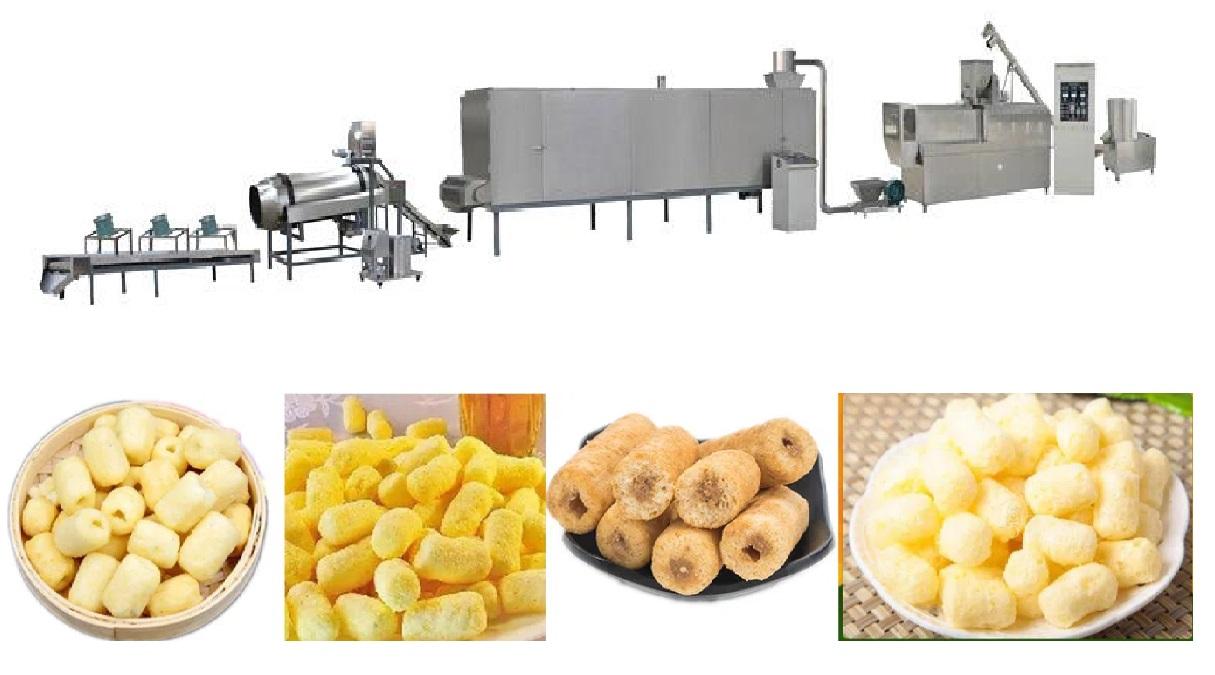
Crunchy on the outside, airy on the inside—cheese balls are a snack-time favorite, but producing them at scale without sacrificing texture or flavor is no small feat. If you’ve ever wondered how commercial kitchens maintain that perfect, consistent quality batch after batch, the answer lies in precision engineering. At MINGDE, we’ve designed a premium cheese balls snack processing making line that turns raw ingredients into uniformly puffed, golden bites with minimal waste and maximum efficiency. Whether you’re expanding your snack brand or upgrading an existing line, understanding the machinery behind the magic is the first step to staying ahead in a competitive market. Here’s what makes our system different—and why consistent quality isn’t just a goal, but a guarantee.
From Curd to Consistent Core
The shift from loose curd to a uniform heart doesn't happen by accident. It demands attention at every stage—gentle cutting, careful stirring, and a steady hand on the temperature dial. What starts as fragile, milk-born clumps gradually tightens into a body that holds its shape without turning rubbery or dry. That balance is where skill lives.
A consistent core means every batch behaves the same way on the palate and under the knife. It comes from reading the curd's texture rather than relying on a timer alone. Small adjustments in acidity, moisture, and resting time accumulate into a final structure that feels intentional, not accidental. Once that rhythm is found, the process stops being guesswork and becomes a repeatable craft.
Precision Shaping Without the Crumbles
Achieving clean, defined edges in shaped foods often feels like a trade-off: you either get the form or you lose the texture. The trick lies in managing moisture and binding without overworking the mixture. A light touch with chilled fats, for instance, keeps layers distinct while still holding a shape when pressed or cut.
Rather than relying on heavy binders that turn everything dense, think about structural support from ingredients that already have natural cohesion. Finely grated vegetables release just enough pectin, while a quick rest in the fridge lets starches hydrate and lock the shape before any heat is applied. The result is a clean profile that doesn't shed crumbs at the first slice.
When shaping by hand, use consistent pressure and avoid re-rolling scraps more than once. Each extra fold or press squeezes out the air pockets that give the final product its delicate crumb. A sharp blade or well-floured cutter does the rest, leaving edges that stay put from board to plate.
Coating That Clings, Not Clumps
The challenge with many surface treatments isn't getting enough material on the substrate—it's keeping that material uniformly distributed once it lands. This coating takes a different route: its formulation breaks the usual cycle of particle attraction that leads to clumping. Instead of relying on heavy solvents or aggressive surfactants to force dispersion, the blend uses a carefully tuned viscosity and a low-surface-energy carrier, so each droplet settles into place and spreads without pulling neighbors into sticky aggregates. The result is a film that hugs every contour, from sharp edges to recessed corners, without ever building up into gritty patches.
During application, you'll notice the liquid moves almost like a thin gel—slow enough to stay where it's put, but fluid enough to self-level across microscopic roughness. That balance is what eliminates the clumping problem at its root. Rather than forming isolated islands that later cure into bumps, the coating's wetting agents work continuously to break up any transient clusters the moment they try to form. The cured surface ends up with a consistent thickness and a smooth, almost glass-like tactile feel, even on vertical or inverted sections where gravity would normally cause sagging and uneven buildup.
In practical terms, this means fewer touch-ups after drying, less material wasted on over-application to compensate for bare spots, and a finish that resists peeling because there are no weak points where clumps create stress concentrations. Whether you're coating intricate metal hardware or large composite panels, the cling-without-clump behavior translates directly into a more reliable, visually clean result—one that holds up under repeated thermal cycling and mechanical wear without cracking or flaking at the edges.
Thermal Control for a Uniform Crunch
Getting a consistent bite across every piece isn't just about setting a timer. The real work happens in how heat moves through the product, whether it's a thin chip or a dense nugget. Small variations in oil temperature or airflow can leave some parts overly browned while others stay soft, so we look at the thermal profile as a whole instead of treating the fryer or oven as a single fixed point.
One trick is to adjust the heat in stages. Starting with a slightly lower temperature lets moisture escape from the core without hardening the surface too early. Then a shorter, hotter finish drives off the remaining surface water and sets that audible snap. This staged approach reduces the risk of a brittle outside hiding a chewy center, which is the usual culprit when only one side of the batch dries properly.
Monitoring the thermal load also matters when you introduce a new batch. Dropping a large amount of cold product into hot oil can cause a temperature dip that recovers unevenly across the fryer. Compensating with a brief boost or reducing the batch size keeps the cooking medium stable, so each piece sees nearly the same heat history and the crunch doesn't vary from the edges to the middle of the tray.
Automated Quality Gates at Every Turn
Think of a production line where every part gets inspected the moment it comes off the machine—not at the end, when fixing problems means tearing everything apart. That's the core idea behind automated quality gates: small, built-in checkpoints that run after each meaningful step, catching issues before they snowball. Instead of a single, nerve-wracking final review, the pipeline itself becomes a series of low-stakes assessments. A linter scans your code for style and subtle bugs right after a commit. A unit test suite fires off, checking that each function still behaves. If anything trips a gate, the pipeline stops and alerts the team immediately, often within seconds, so nobody builds on top of a broken foundation.
What makes these gates practical is that they remove human judgment from routine checks. When a developer merges a change, they don't have to remember to run formatting, security scans, or dependency audits—the automation does it every time, without fatigue or exceptions. This consistency transforms quality from a goal people hope for into a condition that must be met. A deployment doesn't go out because someone "feels good" about it; it goes out because the gates turned green. And because each gate is scoped to a specific concern—code coverage, build success, vulnerability thresholds—teams can see exactly where a failure occurred and fix it fast, rather than sifting through a pile of errors at release time.
The real payoff comes over months, not days. Teams that rely on these automated checkpoints spend less time firefighting and more time improving the product. They gain the confidence to make frequent, small releases, knowing that a gate will catch regressions early. New hires ramp up faster because the gates themselves encode the team's standards—no one needs to memorize a twenty-page style guide or a manual testing checklist. And when something unusual happens, like a sudden spike in code complexity or a license issue in a third-party library, the gates surface it before it becomes a crisis. In the end, automated quality gates don't just enforce rules; they build a culture where quality is continuous, transparent, and calmly managed.
Scaling Up Without Sacrificing Texture
Growing a recipe from a home kitchen batch to a larger production run often uncovers a hidden enemy: texture drift. What felt light and airy in a small mixing bowl can turn dense or gummy when multiplied, not because the formula changed, but because the physical forces did. Heat distribution, mixing shear, resting time, and even the depth of a baking pan shift once quantities increase. The trick is to treat scaling as a series of small adjustments rather than a single leap, testing each increment while paying close attention to how the dough or batter responds to the new volume.
One practical approach is to anchor the process around a fixed variable, such as dough temperature or final proof height, instead of relying solely on time. In a larger batch, friction from a commercial mixer can raise temperature faster, which speeds fermentation and alters crumb structure. Slowing down the mixing speed, using cooler liquids, or dividing the batch for final shaping helps preserve the delicate cell structure that made the original version appealing. Small tweaks like these keep the mouthfeel intact without demanding a complete recipe rewrite.
Texture also suffers when scaling up leads to rushed handling. Larger volumes take longer to portion, shape, or transfer, so the first piece may rest longer than the last, creating uneven results. Setting up a simple staging system, such as covered trays or a cool corner of the kitchen, buys the extra minutes needed without drying out the surface. The goal is not to replicate the small batch exactly but to capture its best qualities at a size that still feels handmade. Once that balance is found, the scaled version can stand confidently next to the original, not as a compromise, but as a worthy continuation of the same idea.
FAQ
The line handles mixing, forming, frying, seasoning, and cooling. It starts with a dough mixer that keeps moisture levels even, moves to a rotary cutter for uniform ball shapes, then passes through a continuous fryer with precise temperature zones. After that, a tumble drum applies seasoning evenly, and a cooling conveyor brings the product to packaging temperature without condensation.
Consistency comes from servo-driven portioning and constant batter viscosity control. The forming head uses interchangeable dies with tight tolerances, and a feedback loop adjusts frying time based on oil temperature and moisture readings. That way you don't get some balls dense and others airy—each one has the same internal crumb and outer crispness.
Depending on configuration, the standard line produces between 500 kg and 1.5 tons of finished cheese balls per hour. For a single eight-hour shift, that's roughly 4 to 12 tons. The exact figure shifts with ball diameter, coating thickness, and whether you run a twin fryer. We usually recommend starting with a target of 6 tons per shift and scaling from there.
Yes. The mixer and extruder are built to handle soft doughs with varying fat and moisture content—cheddar, mozzarella, gouda, or blends. If you want a liquid cheese core, there's a co-extrusion attachment that keeps the filling centered and prevents blowouts during frying.
Most parts that touch product—mixing paddles, forming dies, conveyor belts, and oil filters—are tool-free removable. A full washdown with a dedicated crew takes about 60 to 90 minutes. For allergen-sensitive recipes, the line includes sloped surfaces and no dead corners, so rinsing is straightforward and doesn't hide residue.
It's modular. You can start with a compact footprint that fits in under 200 square meters, then add extra frying lanes, a second seasoning drum, or longer cooling tunnels later. We also adjust the frame height and layout to match your existing packaging machines, so it doesn't force a full factory redesign.
Two trained operators per shift are enough for normal running. The control panel stores recipe parameters—temperature, belt speed, oil turnover—so operators don't have to make manual adjustments each morning. We typically provide three days of on-site training covering startup, cleaning, and troubleshooting common faults like dough bridging or oil temperature dips.
Conclusion
The Premium Cheese Balls Snack Processing Making Line starts by transforming fresh curd into a consistently textured base. Rather than relying on batch variations, the system monitors moisture and firmness from the first stage, so every batch develops the same dense yet creamy center. Shaping follows with a gentle, low-shear extrusion that forms uniform spheres without generating the fine crumbs that typically weaken structure during frying or baking. From there, the coating station applies a thin, even layer of batter or seasoning using a controlled spray and tumble method. This approach prevents the clumping issues common with dry powder coating systems, ensuring each ball gets an identical, clingy coat that stays put through downstream handling.
Thermal management receives equal attention. Multi-zone ovens or fryers adjust airflow and temperature in real time to produce a uniform crunch from the center to the outer shell, eliminating soft spots or overly dark patches. Automated quality gates then check size, coating coverage, and texture at multiple points along the line, rejecting off-spec pieces without interrupting the flow. When production volumes increase, the line's modular design preserves the same gentle handling and precise controls. Texture remains consistent because the equipment scales by adding parallel modules rather than simply speeding up belts or raising temperatures, so a premium result is maintained from pilot runs to full-scale output.
Contact Us
Contact Person: LILY SUN
Email: [email protected]
Tel/WhatsApp: 0086-13969103791
Website: https://www.snackfoodmachinery.com/