

Professional Aramid Fabric: Unraveling the Science Behind Extreme Durability
2026-07-10
When it comes to materials that defy the ordinary, few can match the sheer resilience of professional aramid fabric. From ballistic protection to aerospace engineering, its extreme durability has become a cornerstone of high-performance applications. But what exactly makes this synthetic wonder stand up to forces that would shred conventional textiles? In this post, we peel back the layers of polymer science to reveal the molecular secrets behind its remarkable strength. As we explore, discover how DROTEX is pushing the boundaries of what aramid fabrics can achieve, blending innovation with uncompromising quality.
The Molecular Blueprint of Aramid Strength
The exceptional strength of aramid fibers originates from their rigid, rod-like molecular architecture. At the core lies poly(p-phenylene terephthalamide), a polymer where para-substituted aromatic rings are linked by amide groups. This arrangement forces the chains into an extended, linear conformation with minimal flexibility. The high degree of symmetry and the strong covalent bonds along the backbone allow the molecules to form nearly perfect crystalline arrays when processed. In contrast to typical flexible polymers, the stiff chains align spontaneously during spinning, creating a hierarchical structure where the molecular orientation directly translates into macroscopic fiber tenacity.
Intermolecular forces further amplify the inherent strength. The densely packed chains are held together by a network of interchain hydrogen bonds between the amide groups. These hydrogen bonds, though individually weak, act collectively across the entire length of the fiber to resist axial shear and prevent chain slippage under load. Additionally, the polar aromatic stacking interactions contribute to the cohesion, forming a two-dimensional sheet-like structure. This complex interplay of covalent and non-covalent forces means that stress is distributed uniformly across countless parallel molecules, allowing the material to withstand extreme tension without failure.
The strength blueprint also relies on processing-induced morphological features. During fiber formation, the nematic liquid crystalline phase of the polymer solution passes through fine spinnerets and undergoes extreme elongation. This orients the crystalline domains and untangles the chains, but crucially it also introduces a fibrous substructure of nanofibrils and tie molecules that bridge ordered regions. These bridging chains act as molecular shock absorbers, connecting crystallites and providing pathways for energy dissipation. The result is a material that is not only remarkably strong but also possesses high stiffness and thermal stability, all rooted in a molecular design where every bond and every alignment works in concert.
How Aramid Fibers Defy Heat and Abrasion
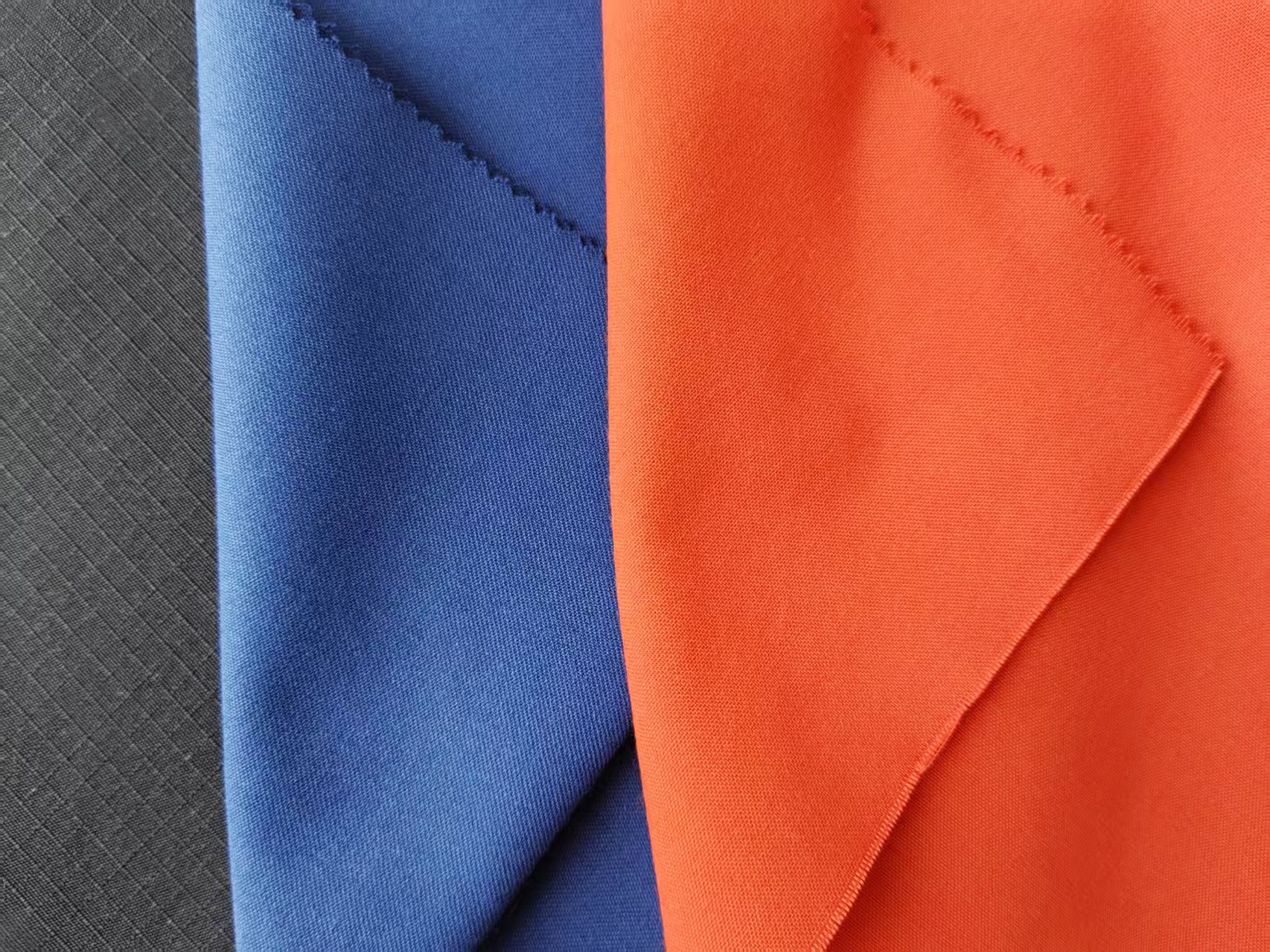
At the molecular level, aramid fibers owe their exceptional thermal resilience to a dense network of aromatic rings linked by strong amide bonds. These rigid polymer chains are packed into crystalline structures that demand immense energy to break, giving the material a decomposition point that typically exceeds 500°C. Unlike many synthetics that soften or melt, aramid maintains its integrity when faced with open flames or glowing embers, forming a protective char layer that continues to shield whatever lies beneath.
When it comes to abrasion, the same backbone that provides heat resistance also delivers outstanding wear performance. The highly oriented molecular chains resist mechanical stress, distributing forces laterally rather than allowing fibers to snap. This tenacity is further enhanced by the fiber's smooth surface and low friction coefficient, which reduces the grinding effect in environments like industrial hoses, conveyor belts, or protective gear constantly rubbing against rough surfaces.
What truly sets aramid apart is how these two properties reinforce each other. In punishing conditions—imagine a firefighter’s jacket scraping against debris mid-rescue—the material won’t simply break down under combined thermal and mechanical abuse. The absence of melt drip, paired with a stubborn refusal to fray or thin out, makes it a go-to across racing suits, armored cables, and even aerospace composites where failure is not an option.
From Lab to Battlefield: Aramid’s Real-World Trials
Aramid's journey out of the laboratory wasn't a straight line from formula to full-scale deployment. Instead, it involved a messy, iterative process where the material was pushed beyond its theoretical limits in conditions that no controlled environment could replicate. Early trials exposed a critical gap between tensile strength on paper and how the fibers responded to repeated stress, heat, and moisture simultaneously. Engineers had to rethink the molecular alignment techniques that had worked flawlessly in a vacuum, because in the field, even a microscopic misalignment led to catastrophic failure during high-speed impact simulations.
One particularly revealing series of tests took place in a disused quarry, where composite panels were subjected to everything from saltwater sprays to extreme temperature swings, all while bearing load. The data loggers captured spikes in vibrational energy that weren't predicted by any computer model, forcing the team to develop a new damping weave architecture. This wasn't about proving the material's worth anymore—it was about stripping away assumptions until only what actually survived remained. By the time the aramid-based prototypes were fitted onto operational vehicles, the focus had shifted to field repairability, because a tear that couldn't be patched in 30 minutes could render a multimillion-dollar asset useless.
The most brutally honest test came from a prolonged deployment in a dusty, high-UV environment where nothing was cleaned or maintained according to manufacturer guidelines. The aramid components not only endured but taught the engineers something unexpected: the UV degradation curve flattened significantly after an initial drop-off, suggesting a self-stabilizing surface effect that had never been documented. That finding, scribbled in a field notebook, would later reshape the lab's accelerated weathering protocols. It was a reminder that the battlefield doesn't care about your engineering certifications—only whether the gear performs on the worst day of a user's life.
When Weight Meets Toughness: Aramid vs. Traditional Materials
Aramid fibers flip the script on conventional material trade-offs. Most traditional options force a compromise: steel brings remarkable strength but weighs you down significantly, aluminum sheds some pounds yet dents and fatigues more easily, and plastics may float like a feather but crumble under real stress. Aramid sidesteps this dilemma entirely, delivering a tensile strength that challenges metals while staying astonishingly light. Picture a rope that can hoist a truck yet feels almost insubstantial in your hand—that’s the kind of unexpected balance aramid achieves.
This blend of lightness and muscle comes down to the molecular choreography inside the fiber. Traditional materials rely on dense, often crystalline atomic arrangements that lump mass and strength together. Aramid, in contrast, arranges its long polymer chains into highly oriented, hydrogen-bonded sheets. These sheets resist stretching along the fiber axis like a microscopic net of unyielding cables, but sideways the chains connect more softly, creating a material that’s extraordinarily tough without the bulk. In protective gear, this means a vest that stops a projectile without immobilizing the wearer under a slab of weight. In aerospace, it translates to components that shave off kilos without sacrificing structural integrity—letting engineers rethink what’s possible when mass budgets tighten.
Real-world comparisons make the advantage stark. Take a panel of aramid composite versus one of glass fiber: at the same thickness, the aramid version often absorbs impacts better while weighing roughly 20 to 30 percent less. Stack that against carbon steel plate, and the weight savings balloon to over 80 percent for equivalent puncture resistance in certain applications. It’s not just about one hero number, though. Traditional materials still have their places—steel’s sheer compressive strength and low cost keep it indispensable in heavy construction, and simple polymers win on upfront price. Yet whenever weight must be minimized and toughness can’t be sacrificed—whether in a racing helmet, a wind turbine blade, or a military vehicle’s spall liner—aramid redefines the performance ceiling, turning an ancient materials dilemma into a matter of chemistry rather than compromise.
The Hidden Chemistry That Makes Aramid Nearly Indestructible
At the molecular level, aramid fibers owe their remarkable toughness to a dense network of hydrogen bonds that stitch the polymer chains together like an invisible seam. These bonds form between the amide groups along the backbone, creating a crystalline structure that distributes stress far more efficiently than typical synthetic materials. When force is applied, the chains don’t simply snap—they tighten, sliding against one another just enough to absorb energy while the hydrogen bonds hold the overall architecture in place. This delicate balance between rigidity and controlled give is what prevents catastrophic failure even under extreme tension.
Another layer of resilience comes from the way aromatic rings are aligned within each fiber. These flat, hexagonal carbon rings stack in a parallel orientation, allowing a phenomenon known as pi-pi stacking to add a supplementary layer of intermolecular adhesion. Combined with the strong covalent bonds along the polymer axis, the result is a material that resists deformation not just from pulling, but also from cutting and piercing—forces that would unravel most textiles. The highly oriented structure ensures that a fracture must break thousands of aligned bonds simultaneously, a feat that demands enormous energy.
Perhaps the most overlooked aspect is the role of the spinning process itself. As the liquid crystal solution is extruded, the polymer chains pre-align while still in solution, locking in a degree of order that thermodynamic forces alone would never achieve. This processing-induced orientation, often called liquid crystalline spinning, transforms a surprisingly ordinary set of chemical groups into a fiber with mechanical properties that rival steel on a weight-for-weight basis. The hidden chemistry isn’t just in the formula—it’s in the carefully choreographed interplay of heat, pressure, and shear that coaxes the molecules into their near-perfect final arrangement.
Beyond Bulletproof: Uncommon Uses of Extreme Durability
Most people equate durability with resisting bullets or surviving drops, but extreme durability has quietly reshaped fields far from any battlefield. Think about deep-sea submersibles that shrug off crushing pressure, or the archival glass protecting ancient manuscripts from time and light. These applications demand materials that don’t just endure—they remain functionally transparent, chemically inert, or dimensionally stable across decades, enabling feats we rarely see but constantly rely on.
Perhaps the most inventive use sits in nuclear waste containment, where glass-ceramic composites trap radioactive isotopes for millennia without degradation. Another unexpected frontier is earthquake engineering: buildings now incorporate shape-memory alloys that bend under seismic stress and snap back undamaged the next day. This kind of durability moves beyond just surviving impact; it’s about designing objects that forgive their own worst days, quietly extending human ambition into places we once thought permanently off-limits.
FAQ
It comes down to the way polymer chains are aligned. In aramid, rigid molecules form long, straight chains with strong hydrogen bonds between them. This creates a dense, crystalline structure that distributes mechanical stress evenly. When force is applied, the load transfers along the chain axis rather than across weak points, preventing fractures. The result is a material that resists cuts, abrasion, and tensile stress far better than most synthetics.
Aramid is inherently flame-resistant due to its high thermal stability. The aromatic rings in its backbone require significant energy to break down, so it doesn’t melt or ignite under typical high-heat conditions. Instead, it carbonizes, forming a protective char layer that insulates the underlying material. That’s why you see it in firefighting gear and race suits—it provides a critical escape window before heat transfer becomes severe.
It’s not just weaving yarns. Professional-grade aramid often involves specialized spinning techniques and post-treatments. Liquid crystalline polymer solutions are spun into filaments at carefully controlled temperatures, then stretched to maximize molecular orientation. The fabric may be coated or laminated with advanced polymers to boost chemical resistance or cut resistance. Some versions also undergo a calendering process that flattens fibers, creating a smoother surface that repels liquids and particulate matter.
Beyond bulletproof vests and fire blankets, it’s in some unexpected places. High-end audiophile speaker cones use it for rigid, lightweight diaphragms that reduce distortion. It reinforces composite materials in helicopter rotor blades, where fatigue resistance is non-negotiable. Even some smartphone cases incorporate a thin aramid layer to provide a lightweight shield that stops sharp objects without adding bulk.
The choice hinges on the failure mode you’re guarding against. Aramid excels in high-temperature environments and has better compressive strength, so it’s preferable for ballistic protection where the projectile hits hard, as it resists squashing. UHMWPE, on the other hand, is lighter and floats in water, making it ideal for marine ropes and lightweight body armor. But if the threat includes heat—like in aircraft accidents—aramid’s thermal resilience wins every time.
Yes, ultraviolet radiation degrades aramid over time by breaking molecular bonds, leading to brittleness and strength loss. To counter this, fabrics are often treated with UV-absorbing coatings or encapsulated in outer layers that block light. In tactical gear, you’ll see aramid concealed between nylon or polyester linings. For storage, keeping the equipment in dark, cool conditions extends its service life significantly.
Conclusion
The exceptional resilience of professional aramid fabric stems directly from its molecular architecture—rigid polymer chains interlinked by hydrogen bonds that align in crystalline patterns, resisting deformation under extreme stress. This structural precision gives aramid its signature ability to withstand temperatures beyond 500°C without melting, while its low thermal conductivity ensures heat dissipates slowly rather than penetrating. Simultaneously, the tightly packed fibers exhibit outstanding abrasion resistance, shrugging off friction that would shred ordinary synthetics. In real-world trials, from ballistic tests to aerospace deployments, aramid repeatedly proves its worth by maintaining integrity where traditional materials fail, offering a remarkable strength-to-weight ratio that redefines what scientists consider physically possible for lightweight protective gear.
The hidden chemistry behind this near-indestructible nature lies in the aromatic rings and amide bonds that distribute energy across the entire fabric surface, effectively absorbing impacts without compromising structural cohesion. Beyond its iconic role in bulletproof vests, this extreme durability opens unconventional doors: aramid reinforces optical cables, lines spacecraft hulls, muffles industrial noise, and even fortifies automotive components. Its versatility challenges the notion that toughness must come at the cost of weight, a balance that continues to drive innovations in fields where failure is not an option.
Contact Us
Contact Person: Sandy
Email: [email protected]
Tel/WhatsApp: 86150 8310 5120
Website: https://www.frdrotex.com