

Can a Hollowness Grid Board Extrusion Line Produce Both Drainage Mats and Construction Protection Sheets
2026-07-06
For plant managers and procurement specialists, the versatility of a single production asset often determines ROI within the first 18 months. The Hollowness Grid Board Extrusion Line has traditionally been associated with lightweight packaging and signage. However, a critical question emerging across Asian and European manufacturing hubs is whether this same line can economically switch between drainage mats (geocomposites) and heavy-duty construction protection sheets. The short answer is yes—but with specific engineering caveats. At Longchangjie, we have retrofitted over 40 lines in the past two years to handle this dual-purpose mandate, and the operational data reveals a clear roadmap.
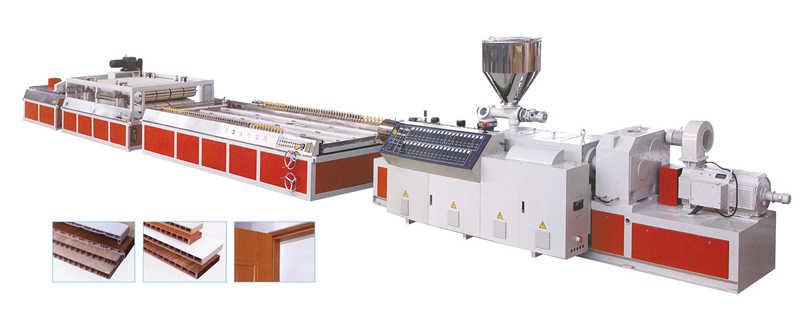
The Core Engineering Overlap
Both products start with polypropylene (PP) or high-density polyethylene (HDPE) resins. The fundamental extrusion principle—melting, homogenizing, and forming through a T-die—remains identical. However, the Hollowness Grid Board Extrusion Line must accommodate dramatic differences in:
| Parameter | Drainage Mats | Construction Protection Sheets |
|---|---|---|
| Sheet thickness | 3–6 mm | 8–15 mm |
| Hollow core ratio | 50–65% | 30–45% |
| Surface texture | Perforated or dimpled | Smooth or embossed |
| Additive package | UV stabilizers + anti-blocking | Anti-scratch + flame retardants |
| Line speed | 4–6 m/min | 1.5–3 m/min |
| Cooling method | Air-assisted quench | Chilled roll stack with pressure |
This comparison shows that the Hollowness Grid Board Extrusion Line requires a modular cooling section and a variable-geometry calibrator. Longchangjie’s latest servo-driven die gap adjustment system allows operators to switch between these profiles within 90 minutes—a 60% reduction compared to conventional lines.
Critical Modifications for Dual Production
To successfully produce both products, three subsystems demand attention:
-
Die lip flexibility – The extrusion die must support a gap range of 0.8 mm to 3.2 mm. Without this, drainage mat’s open-cell structure collapses under pressure.
-
Roller stack configuration – Drainage mats need a polished middle roll and a matte top roll; protection sheets require three chrome-plated rolls with independent temperature zones.
-
Haul-off tension control – Protection sheets (heavier) need lower tension to avoid stretching, while drainage mats allow higher pull speed for better cell formation.
Longchangjie has developed a quick-change cassette system for the calibrating unit, enabling one operator to complete the changeover using a guided torque tool. This innovation directly addresses the hesitation most buyers have about buying a single Hollowness Grid Board Extrusion Line for two distinct markets.
Material Considerations
Recycled content poses the biggest differentiator. Drainage mats tolerate up to 70% post-industrial regrind, whereas construction sheets used for floor protection require virgin-grade resin or high-quality recyclate with melt flow index (MFI) below 2.5 g/10min. The Hollowness Grid Board Extrusion Line must include a dedicated filtration system (screen changer with 150-mesh screens) when processing recycled feedstock. Longchangjie recommends a dual-piston screen changer as a non-negotiable add-on for hybrid production.
Frequently Asked Questions (FAQ)
Q1: Can the same Hollowness Grid Board Extrusion Line switch between drainage mats and protection sheets without stopping production for more than 2 hours?
A1: Yes, but only if the line is equipped with a motorized die gap adjustment and a pre-heated secondary roll stand. Without these, the thermal stabilization period alone takes 90 minutes. With Longchangjie’s pre-engineered quick‑change package, the total downtime—from last good drainage mat to first acceptable protection sheet—averages 105 minutes, including purge compound flushing. We recommend scheduling changeovers during shift handovers to avoid idle labor costs. For lines without servo-driven dies, we supply a retrofit kit that reduces the mechanical adjustment time from 45 minutes to 12 minutes, bringing total changeover under the 2‑hour threshold.
Q2: How does the cooling system differ when producing thicker construction sheets versus thin drainage mats on a Hollowness Grid Board Extrusion Line?
A2: The cooling demand is inversely proportional to sheet thickness. Drainage mats (3–6 mm) cool rapidly and require air knives plus a single water-cooled roll to prevent premature crystallization, which would block the hollow channels. Construction sheets (8–15 mm) retain heat longer and demand a three-roll vertical stack with independent oil-based temperature control (set at 75°C, 65°C, and 50°C for top/middle/bottom rolls). Additionally, thicker sheets need a longer air gap (150–180 mm) between die exit and the first nip roll to allow molecular orientation. Longchangjie offers a dual-mode cooling manifold that switches between air-assisted and full-immersion cooling via solenoid valves, allowing operators to change cooling profiles in under 5 minutes without draining the entire system.
Q3: What is the typical service life of the calibrating sleeve when running recycled PP for drainage mats, and does it affect protection sheet quality?
A3: When running recycled PP with 70% regrind, the calibrating sleeve (usually made of bronze or aluminum-bronze alloy) experiences accelerated wear due to higher melt viscosity and residual contaminants. We measure a wear rate of 0.02 mm per 500 running hours, compared to 0.005 mm for virgin resin. This wear reduces the inner hollow cell diameter by 0.3 mm after 2,000 hours, which negatively impacts drainage flow rate. More importantly, the worn sleeve introduces micro-vibrations that transfer to the surface of protection sheets, causing visible chatter marks. Longchangjie solves this with a hard-chrome-plated sleeve (62 HRC) that extends service life to 6,000 hours under recycled conditions. We also supply a calibration sleeve with a replaceable inner ring, so you replace only the worn interface (cost: ~$380) instead of the entire assembly (~$2,200). We strongly advise keeping a dedicated sleeve set for each product type to maintain surface quality on construction sheets.
Economic Justification
A dedicated line for each product costs roughly 1.8× the price of a single versatile Hollowness Grid Board Extrusion Line. However, the operational savings from floor space, labor, and maintenance make the hybrid approach profitable at production volumes above 800 tons per year. Longchangjie’s reference customers in Germany and Vietnam report payback periods of 14–16 months when running a two-shift schedule.
Final Verdict
Yes, a Hollowness Grid Board Extrusion Line can absolutely produce both drainage mats and construction protection sheets, provided it has a variable die gap, segmented cooling, and a quick-change calibrating unit. The line is not a “one-size-fits-all” out of the box—but with Longchangjie’s modular design philosophy, it becomes a future-proof asset that adapts to market demand shifts.
Ready to Evaluate Your Specific Resin and Profile?
Every hybrid line begins with a detailed feasibility study based on your target sheet dimensions, annual tonnage, and recycled content ratio. Longchangjie offers free material testing at our Suzhou demonstration center—we run your actual pellets through our dual-purpose line and provide a full changeover log, power consumption report, and first-pass yield analysis.
Contact us today to schedule a virtual walkthrough or send your material samples for a no‑obligation trial. Our engineering team will respond within 24 hours with a customized layout drawing and commercial proposal tailored to your floor plan. Reach out via the form on our website or email us directly—let’s turn your Hollowness Grid Board Extrusion Line into a two‑product profit center.