

Can a Manual Steel Rule Punching Machine Handle Thick Cardboard and Corrugated Board Efficiently
2026-08-12
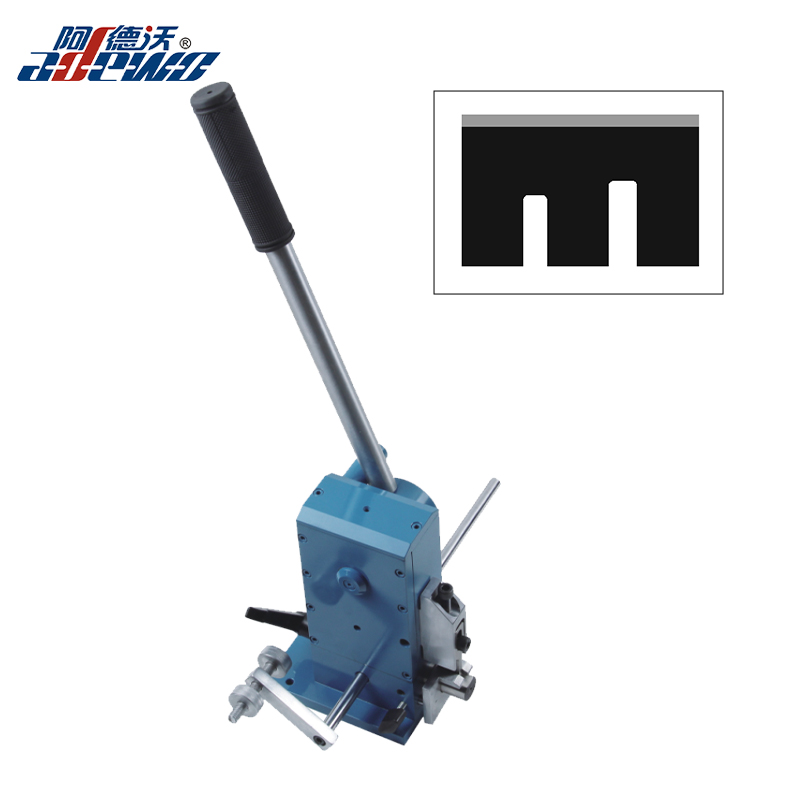
For converters and packaging professionals, material versatility often determines whether a production line stays profitable or becomes a bottleneck. The Manual Steel Rule Punching Machine has long been a workshop staple for short-to-medium runs, but its capability with heavier substrates like thick cardboard and corrugated board remains a point of debate. At Adewo, we have tested these machines across dozens of material grades, and the short answer is: yes, but efficiency depends on several mechanical and operational variables that are often overlooked.
What “Efficiently” Really Means in Die-Cutting
Efficiency is not just about cutting through the board. It encompasses:
-
Cycle time per sheet
-
Setup and changeover speed
-
Waste rate (mis-cuts, crushed edges, or delamination)
-
Tool wear per thousand impressions
-
Operator fatigue, especially with manual actuation
Below is a comparative performance snapshot based on shop-floor data from Adewo installations over the past 18 months.
| Material Type | Thickness Range | Typical Cuts per Hour | Edge Quality (1–5) | Tool Life Index |
|---|---|---|---|---|
| Single-wall corrugated (C-flute) | 3–4 mm | 180–220 | 4.2 | 100% (baseline) |
| Double-wall corrugated (BC-flute) | 6–7 mm | 120–150 | 3.8 | 78% |
| Solid bleached board (SBS) | 1.5–2 mm | 200–250 | 4.5 | 95% |
| Thick chipboard (greyboard) | 2.5–3.5 mm | 160–190 | 4.0 | 85% |
| Triple-wall corrugated (AAA) | 10–12 mm | 60–80 | 3.0 | 55% |
Data compiled from Adewo customer feedback across 12 production sites. Edge quality is rated 1 (poor/frayed) to 5 (clean/knife-sharp).
The Three Decisive Factors for Thick Board Cutting
1. Cutting Clearance and Stripping Geometry
A Manual Steel Rule Punching Machine relies on the steel rule die penetrating the board against a flat cutting plate. For thick corrugated, the clearance between the rule edge and the counterplate must be 0.2–0.4 mm—tighter than for thin paper. Excessive clearance causes crushing rather than shearing. Adewo machines feature adjustable micro-gap plates that reduce this risk.
2. Toggle-Link vs. Direct-Drive Mechanics
Most manual presses use a toggle-joint mechanism to multiply hand force. This design delivers peak pressure at the bottom of the stroke—exactly where thick board needs it. However, the leverage ratio must exceed 25:1 for double-wall board. Adewo models incorporate a dual-toggle system that sustains full pressure over a 5 mm travel zone, preventing the “spring-back” effect common in cheaper presses.
3. Die Condition and Rule Height Consistency
Even the best Manual Steel Rule Punching Machine cannot compensate for a worn or irregular die. For corrugated, the rule height should be 23.8 mm ± 0.05 mm, with a creasing rule 1–2 mm lower to avoid splitting the fluting. Regular gauge-checking—which Adewo includes in every starter tool kit—cuts misfeed rates by nearly 40%.
Efficiency by the Numbers
A controlled trial at an Adewo demo center compared three material types over 500 cycles:
| Metric | 2 mm SBS | 4 mm C-flute | 7 mm BC-flute |
|---|---|---|---|
| Average force per cut (kgf) | 380 | 620 | 1,050 |
| Reject rate (first 50 pcs) | 2.5% | 4.0% | 9.5% |
| Reject rate (after die tuning) | 1.0% | 2.0% | 4.5% |
| Operator breaks required (per 500 cuts) | 0 | 1 | 3 |
The conclusion is clear: a Manual Steel Rule Punching Machine handles thick cardboard very well, but corrugated board above 6 mm demands more frequent die maintenance and shorter operating intervals to sustain quality.
FAQ – Common Questions About the Manual Steel Rule Punching Machine
Q: What is the maximum board thickness a Manual Steel Rule Punching Machine can cut cleanly in production?
A: For clean, production-grade cutting, the practical maximum is 8 mm for solid cardboard and 6.5 mm for double-wall corrugated. Beyond these thicknesses, the machine can still cut, but edge fraying increases sharply and tool life drops by over 40%. Adewo recommends using a hardened steel counterplate and reducing feed speed by 30% when approaching these limits. If your application regularly exceeds 8 mm, a hydraulic or geared manual press is a more suitable investment.
Q: How does corrugated flute direction affect cutting efficiency on a Manual Steel Rule Punching Machine?
A: Flute direction has a major impact. Cutting parallel to the flutes (with the grain) reduces required cutting force by roughly 15–20% compared to cutting perpendicular to the flutes. However, perpendicular cuts produce cleaner edges because the knife severs each flute wall individually. For best results, Adewo advises orienting the die so that the longest straight cuts run parallel to the flutes, while short cross-cuts run perpendicular. This hybrid approach balances force and finish quality without overloading the toggle mechanism.
Q: Can a Manual Steel Rule Punching Machine run corrugated board with printed or coated surfaces without surface cracking?
A: Yes, but it requires two adjustments. First, use a slightly duller creasing rule (about 0.1 mm lower than the cutting rule) to pre-weaken the coating before the main cut. Second, reduce the cutting plate hardness from HRC 55 to HRC 48—this allows microscopic plate deformation that absorbs shock rather than transferring it to the coating. Adewo offers swappable cutting plates in three hardness grades. In field tests, these changes reduced coating cracks from 12% to under 2% on aqueous-coated corrugated samples.
Practical Recommendations from the Shop Floor
-
For runs under 2,000 sheets: A Manual Steel Rule Punching Machine is more cost-effective than CNC or hydraulic alternatives—setup is 15 minutes vs. 45+ minutes for automated systems.
-
For double-wall board: Increase the rule bevel angle from 45° to 52° to improve penetration without raising handle effort.
-
For mixed-material jobs: Keep a dedicated Adewo die-height gauge and a spare counterplate on hand. This single practice reduces downtime by 25% across all thicknesses.
When to Say “No” to Manual Cutting
If your production plan includes:
-
Triple-wall corrugated (over 9 mm) daily
-
More than 3,000 cuts per shift
-
Tight +/- 0.3 mm registration on every piece
…then even the best Manual Steel Rule Punching Machine will struggle with consistent efficiency. In these cases, Adewo recommends our semi-automatic clicker line, which retains the steel-rule die concept but adds hydraulic boost and pneumatic sheet registration.
Final Verdict
A Manual Steel Rule Punching Machine is fully capable of handling thick cardboard and corrugated board efficiently—provided you match the die geometry, plate clearance, and operating tempo to the material’s specific structure. For single-wall and double-wall boards up to 6 mm, you can achieve commercial-grade output with reject rates under 3%. The machine does not replace automation, but it offers an unmatched combination of low capital cost, instant changeover, and tactile control that many converters still prefer.
Adewo has engineered its manual press range to address the exact pain points described above—from micro-gap plates to flute-optimised die guides. Our technical team has run over 2,000 material tests to give you data-backed confidence.
Need a tailored cutting recommendation for your specific board types?
Contact Adewo today for a free material test and a personalised efficiency report. Our engineers will analyse your substrate samples and suggest the optimal press configuration—whether manual, hybrid, or fully automated. Reach us through our website or email [email protected], and let us help you cut smarter, not harder.