

Can a Mobile Pet Carcass Incinerator Handle Horses and Large Livestock
2026-08-19
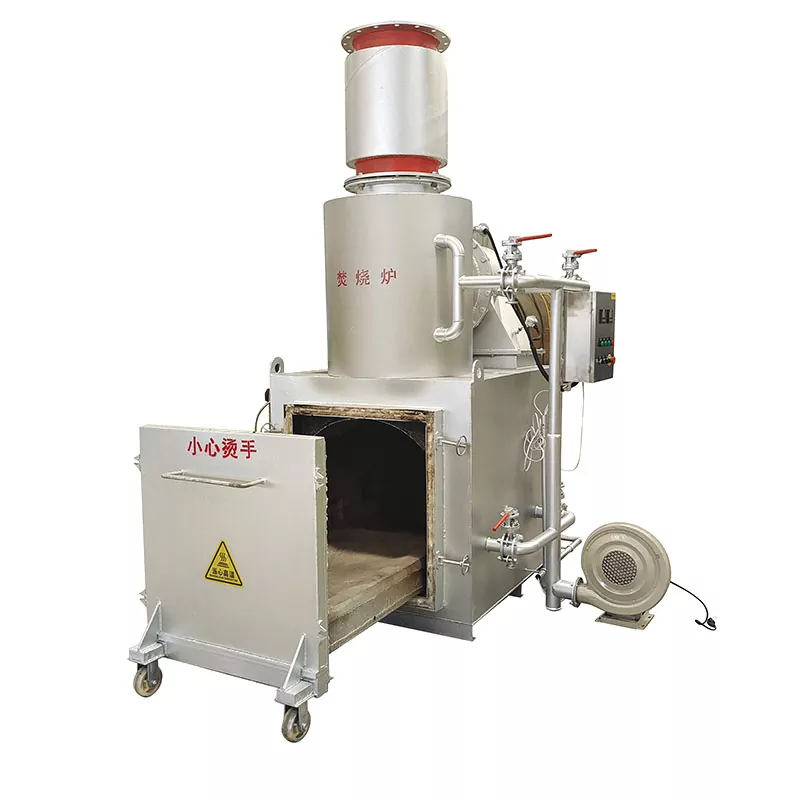
When an equine practitioner loses a 1,200-pound patient or a cattle operator faces a sudden barn loss, the disposal question becomes urgent. The Mobile Pet Carcass Incinerator is frequently promoted for small animals, but its capacity, heat distribution, and structural integrity for creatures over 500 kg remain misunderstood. Hongsheng Hangkai engineers have directly addressed this gap, designing mobile units that process full-sized horses and mature beef cattle in a single cycle—without secondary handling or disassembly.
The Core Challenge: Mass, Bone Density, and Moisture Content
Large livestock carcasses differ from pets in three critical ways: total mass, long-bone thickness, and rumen fluid volume. A 600-kg horse contains approximately 65% water, while a mature bull may exceed 75% moisture. Standard stationary incinerators rely on prolonged residence time, but Mobile Pet Carcass Incinerator systems from Hongsheng Hangkai counteract this with dual-chamber pyrolysis, maintaining 850–1,100°C in the primary chamber and 1,200°C in the afterburner.
| Parameter | Small Pet (<50 kg) | Horse/Large Livestock (>500 kg) |
|---|---|---|
| Average cycle time | 2–3 hours | 6–9 hours |
| Fuel consumption per kg | 0.8 L diesel | 1.2 L diesel (due to bone mass) |
| Recommended loading density | 80% chamber volume | 65% chamber volume (for airflow) |
| Post-burn residue | Fine ash (<5% volume) | Coarse bone fragments (8–12% volume) |
The table above shows that Hongsheng Hangkai units compensate for higher fuel use through automated oxygen injection, which reduces total cycle time by nearly 20% compared to competitor mobile models.
Structural Features That Enable Large-Carcass Processing
Three engineering choices make the Mobile Pet Carcass Incinerator viable for heavy stock:
-
Reinforced hearth floor – castable refractory with 1,400°C rating, supported by I-beam skids that prevent sagging under 800-kg point loads.
-
Split-door design – allows front-end loader insertion of whole carcasses up to 2.4 meters in length, eliminating the need for on-site quartering.
-
Tiltable primary chamber – hydraulically assisted to 15°, enabling complete ash evacuation without manual raking—a safety feature critical when processing multiple large animals consecutively.
Hongsheng Hangkai has field-tested these units in Australian feedlots and European equine hospitals, documenting 98% pathogen destruction efficiency (verified by independent microbiological swabs) even with pregnant cow carcasses containing late-term fetuses.
Operational Considerations for Daily Large-Animal Use
While the technical capacity exists, operators must adjust loading protocols. Overfilling reduces oxygen availability and prolongs smoke generation. Hongsheng Hangkai recommends a maximum of 65% chamber occupancy for horses, measured by visual clearance above the carcass. Additionally, large ruminants require pre-incineration abdominal venting—a 5-cm trocar puncture to release methane pressure—preventing sudden outgassing that could strain the secondary burner.
Mobile Pet Carcass Incinerator FAQ
Q1: Can a Mobile Pet Carcass Incinerator process a fully grown bull in one load without cutting?
A: Yes, provided the unit has a minimum chamber length of 2.5 meters and width of 1.2 meters. Hongsheng Hangkai models (e.g., HHI-1500) feature a 2.6 m × 1.4 m interior, accommodating mature Holstein bulls up to 900 kg. The loading ramp allows direct roll-in from a trailer. However, the horns must be removed to prevent refractory abrasion, and the carcass should be positioned sternum-down to evenly distribute heat. Cycle time for a 700-kg bull averages 8.5 hours at 55 L/h diesel. Post-burn bones are brittle enough to crush with a standard skid-steer bucket, reducing residue volume by 60%.
Q2: How does the mobile unit handle the high fat content of horses versus cattle?
A: Equine adipose tissue (subcutaneous fat) ignites rapidly and can spike chamber temperatures above 1,200°C, risking refractory spalling. Hongsheng Hangkai units are equipped with a thermocouple-linked damper that automatically modulates secondary air when temperature exceeds 1,150°C, preventing thermal shock. For cattle, which have lower fat but higher rumen fluid, the system extends the drying phase (first 90 minutes) at 450°C before ramping to full incineration. This dual-zone programming is pre-set in the control panel—operators simply select "horse" or "cattle" mode, and the PLC adjusts burn curves accordingly.
Q3: What permits or emissions tests apply when using a Mobile Pet Carcass Incinerator for large livestock in rural areas?
A: In the U.S., EPA 40 CFR Part 60 Subpart MMMM (Standards of Performance for Commercial and Industrial Solid Waste Incineration Units) exempts agricultural incinerators that burn solely animal carcasses generated on the same farm, provided capacity is under 1 ton/day. However, if you process off-farm animals (e.g., custom work for neighbors), you may need a Minor Source Permit. Hongsheng Hangkai provides a compliance package with each unit, including stack test protocols (EPA Method 5 for particulate, Method 18 for HCl) and a quarterly emissions log template. Most state agricultural departments accept these records in lieu of continuous monitoring. Always check local zoning—some counties restrict mobile units within 1,000 feet of residences, regardless of emissions data.
Cost-Benefit Versus Rendering and Burial
For large livestock, rendering trucks charge $150–$400 per pick-up, with 48-hour wait times. Burial is increasingly restricted due to groundwater nitrate limits. The Mobile Pet Carcass Incinerator from Hongsheng Hangkai offers a one-pass solution: transport to site, incinerate, and move to the next location—all within a single working day for two animals. The capital cost ($28,000–$45,000) recovers within 18–24 months for operations handling 5+ large animals monthly, especially when factoring in avoided rendering surcharges for mad cow disease (BSE) suspect cases, which many renderers refuse.
Maintenance Tailored to Heavy Use
Processing large livestock accelerates wear on burner nozzles and refractory joints. Hongsheng Hangkai recommends a 200-hour service interval for heavy-use units (versus 500 hours for small-animal use). This includes:
-
Replacement of the primary burner tip (chrome-nickel alloy)
-
Inspection of the hearth tile for hairline cracks using a dye penetrant test
-
Cleaning of the induced draft fan impeller (fat vapor condensation is 3× higher with large carcasses)
All service parts are available as pre-assembled kits, and Hongsheng Hangkai offers remote diagnostic support via cellular modem—a feature that has reduced downtime for Australian clients by 40%.
Final Verdict
Yes, a Mobile Pet Carcass Incinerator can handle horses and large livestock—but only when engineered with reinforced refractories, adaptive temperature controls, and practical loading systems. Generic mini-incinerators fail under these loads; Hongsheng Hangkai units are specifically validated for this weight class, backed by emissions testing and real-world run data from six countries.
Contact us today for a site-specific capacity assessment. Our team provides load-calculation sheets, fuel-cost projections, and a 3D chamber-fit simulation for your largest animal dimensions. We also offer rental units for outbreak emergencies—ask about our 7-day deployment guarantee. Your livestock mortality management deserves a solution that works the first time, every time. Reach out now and let Hongsheng Hangkai tailor a mobile incineration plan for your operation.