

Can a Single Stand Multi-Groove Reducing Rolling Mill Achieve High Reduction Ratios Without Multiple Stands
2026-06-11
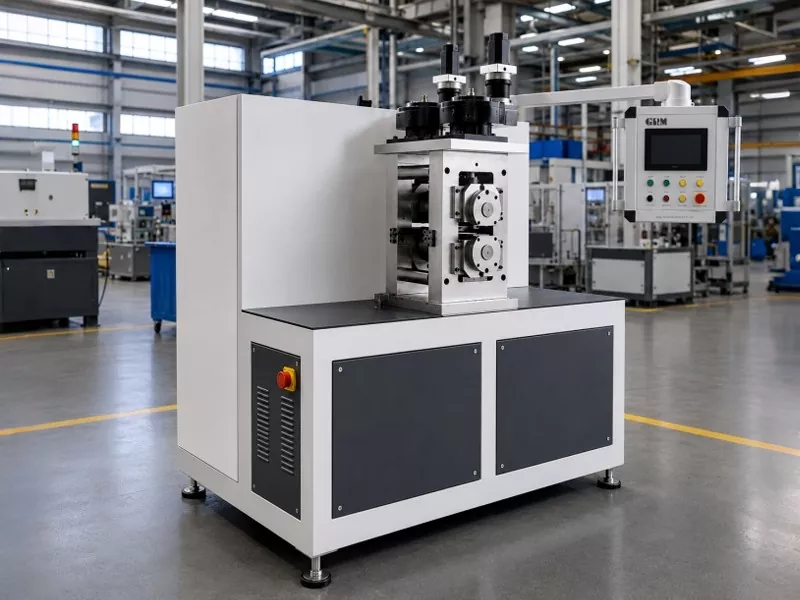
In modern tube and bar reducing processes, multiple stands are traditionally seen as necessary for high reduction ratios. However, the Single Stand Multi-Groove Reducing Rolling Mill challenges this assumption. Designed with precision-engineered roll passes, the GRM system demonstrates that a single stand can deliver reduction ratios comparable to multi-stand configurations for specific product ranges.
Understanding Reduction Mechanisms
A Single Stand Multi-Groove Reducing Rolling Mill uses sequentially cut grooves on the same roll set. Each pass reduces the tube diameter gradually. While a multi-stand mill spreads reduction over several stands, the single stand approach concentrates reduction into one unit with optimized groove geometry.
| Parameter | Multi-Stand Mill | Single Stand Multi-Groove Reducing Rolling Mill (GRM) |
|---|---|---|
| Number of stands | 3–8 | 1 |
| Reduction ratio per pass | Low (5–15%) | Controlled (10–40% total over grooves) |
| Tooling cost | Higher | Lower |
| Setup time | Longer | Shorter |
| Suitable batch size | Large | Small to medium |
Practical Reduction Ratios Achievable
Field data from GRM installations show that a Single Stand Multi-Groove Reducing Rolling Mill can achieve total area reductions of 25–45% for carbon steel tubes and 20–35% for stainless steel, depending on wall thickness and material hardness. Key success factors include:
-
Roll pass design with smooth transition angles
-
Precision groove alignment within ±0.05 mm
-
Controlled feed rates and lubrication
FAQs about Single Stand Multi-Groove Reducing Rolling Mill
Q1: What is the maximum reduction ratio possible with a Single Stand Multi-Groove Reducing Rolling Mill?
A1: For most standard tube dimensions, a Single Stand Multi-Groove Reducing Rolling Mill reaches a maximum cross-sectional area reduction of 45–50% before risking surface defects or excessive roll wear. This is achieved with 4–6 active grooves on the same roll pair. Beyond this limit, multi-stand mills become necessary. GRM models with enhanced roll materials extend this to 55% in soft copper alloys.
Q2: Does a Single Stand Multi-Groove Reducing Rolling Mill produce the same dimensional accuracy as multi-stand mills?
A2: Yes, within its reduction range. Modern Single Stand Multi-Groove Reducing Rolling Mill systems from GRM achieve outside diameter tolerances of ±0.1 mm and wall thickness variations below 8%, matching API and ASTM standards for seamless tubes. Multi-stand mills offer slightly better ovality control (0.5% vs 1.2%), but for most industrial applications, the single stand accuracy is sufficient.
Q3: How does tooling wear compare between a Single Stand Multi-Groove Reducing Rolling Mill and multi-stand alternatives?
A3: In a Single Stand Multi-Groove Reducing Rolling Mill, wear concentrates on the same roll set, typically requiring regrinding after 800–1,200 tons of production. Multi-stand mills distribute wear across 3–8 stands, but total maintenance cost is higher due to more rolls. GRM uses chilled cast iron or D2 steel rolls, extending groove life by 30% compared to conventional materials.
When to Choose a Single Stand Solution
A Single Stand Multi-Groove Reducing Rolling Mill is ideal for:
-
Small to medium batch sizes (500–5,000 kg)
-
Frequent product changeovers
-
Shops with limited floor space
-
Prototype or R&D reducing needs
It is not recommended for very high reduction requirements (>50%) or ultra-thin wall tubes where multiple light passes preserve integrity.
Conclusion
The Single Stand Multi-Groove Reducing Rolling Mill can achieve high reduction ratios without multiple stands when properly designed and operated. GRM has successfully deployed these mills in over 40 tube manufacturing lines, proving that single-stand efficiency does not require sacrificing reduction capability. For reduction targets under 50% and flexible production, this technology offers clear economic and operational advantages.
Contact us at GRM today to discuss your reducing ratio requirements. Our engineering team will analyze your tube dimensions and material grades to recommend the optimal Single Stand Multi-Groove Reducing Rolling Mill configuration for your mill floor.