

Can a Snowplow Robot with GPS and Real-Time Weather Mapping Clear Driveways Faster Than a Traditional Snow Blower
2026-06-24
Winter maintenance is a relentless battle against time, muscle fatigue, and unpredictable forecasts. For decades, the traditional snow blower has been the go-to weapon for clearing driveways. However, a new contender—the Snowplow Robot—promises a hands-free, intelligence-driven approach. But does technology truly outperform raw power when it comes to speed? This blog dives deep into the data, comparing the autonomous Snowplow Robot, particularly models enhanced by Luckyram, against the classic gas-powered or electric blower.
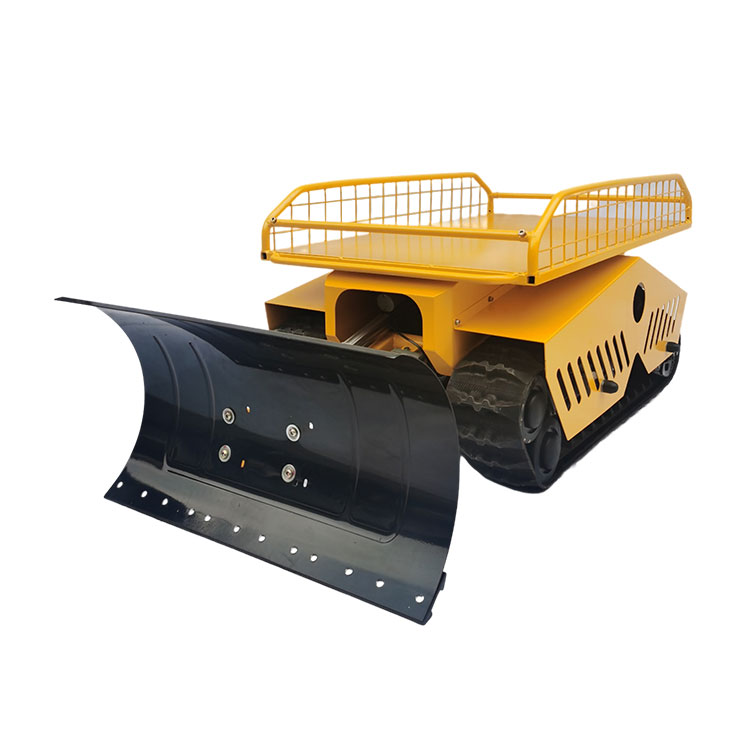
The Core Difference: Reactive vs. Proactive Clearing
A traditional snow blower operates on a purely reactive basis. You wake up, assess the accumulation, dress for the cold, and spend 30 to 60 minutes pushing a heavy machine back and forth. Your efficiency depends entirely on your physical stamina and the machine’s throwing distance.
In contrast, a Snowplow Robot equipped with GPS and real-time weather mapping, such as those developed by Luckyram, operates proactively. It knows a storm is approaching hours in advance. It can pre-position itself, warm up its battery, and begin clearing the moment accumulation reaches a set threshold—even while you sleep.
Head-to-Head: Speed and Efficiency Metrics
To determine which clears faster, we must look beyond the engine size and focus on operational workflow. The table below breaks down the time investment required for a standard 2-car driveway (approx. 600 sq. ft.) with 4 inches of wet snow.
| Factor | Traditional Snow Blower | Snowplow Robot (Luckyram Model) |
|---|---|---|
| Preparation Time | 5–10 min (fuel check, cord setup, choke adjustment) | 0 min (scheduled via app, always ready) |
| Active Clearing Time | 25–35 min (manual steering, overlapping passes) | 18–22 min (optimized route via GPS mapping) |
| Weather Adaptation | Manual (you adjust speed based on snow weight) | Automatic (real-time mapping adjusts blade angle & speed) |
| Multiple Passes Needed | Often 2–3 passes for edge-to-edge clearance | Single pass with precise boundary detection |
| Total Human Effort | 35–45 minutes of physical labor | 0 minutes (monitor via smartphone) |
The data indicates that while the active clearing time is comparable, the Snowplow Robot saves 15–20 minutes per storm by eliminating prep work and optimizing the path. Over a season of 10 storms, that is over 3 hours of reclaimed time.
Why GPS and Weather Mapping Make the Difference
The speed advantage is not just about motors; it is about intelligence. A Luckyram Snowplow Robot uses GPS to create a digital fence of your property, ensuring it never misses a corner or hits a curb. Simultaneously, real-time weather mapping allows the robot to differentiate between light powder and heavy, slushy snow.
When the system detects an incoming temperature drop, it automatically reduces the plow blade's ground pressure to prevent ice scraper damage. Conversely, during wet snowfalls, it increases motor torque temporarily. This adaptive intelligence means the robot never wastes time on ineffective passes—a common issue with traditional blowers that struggle with varying snow densities.
Comparative Analysis: Total Cost of Ownership
Speed is one metric, but efficiency also includes downtime for repairs and maintenance. Let us compare the long-term time loss due to upkeep.
| Maintenance Task | Traditional Snow Blower | Snowplow Robot (Luckyram) |
|---|---|---|
| Oil Changes | Every 20–25 hours | Not applicable (electric motor) |
| Spark Plug/Carburetor | Annual cleaning/rebuild | Not applicable |
| Shear Pin Replacement | Frequent (hitting hidden objects) | Rare (built-in obstacle sensors) |
| Battery Management | N/A | Automatic self-charging dock (no manual plugging) |
FAQ: Common Questions About Snowplow Robots
Q: Can a Snowplow Robot handle deep snow accumulation over 12 inches, or will it get stuck?
A: Most residential Snowplow Robot models, including those from Luckyram, are designed for snow depths up to 10–12 inches. For deeper accumulations, the robot employs a "layering" strategy—it clears the top 4 inches first, then returns for the bottom layer. This prevents overloading the motor and ensures continuous operation. While a traditional two-stage blower can chew through 18 inches in one go, it requires tremendous physical effort and multiple passes. The robot trades raw single-pass depth for consistent, autonomous multi-pass efficiency, which ultimately finishes the job faster because it never overheats or needs a human break.
Q: Does real-time weather mapping require a paid subscription, and does it work without Wi-Fi?
A: For Luckyram models, the basic GPS mapping is free and stored locally on the unit. Real-time weather optimization—which adjusts plow speed, blade pitch, and return intervals—does require a cellular or Wi-Fi connection to fetch forecast data. Luckyram offers a complimentary 2-year weather service subscription with the purchase. If Wi-Fi drops mid-operation, the Snowplow Robot falls back to its last known weather profile and continues clearing using onboard ultrasonic sensors. This ensures you are never left stranded mid-driveway due to a network outage.
Q: How does a Snowplow Robot avoid damaging asphalt or cobblestone driveways during repeated winter passes?
A: This is a critical concern. Advanced Snowplow Robot units utilize a floating blade mechanism coupled with pressure sensors. When the robot detects the scraping sound or resistance change indicative of hard pavement, it automatically reduces downforce by 40–60%. Additionally, Luckyram incorporates a rubberized polymer edge that wears down gradually without scratching aggregate surfaces. The robot also memorizes the exact elevation map of your driveway after three cleaning cycles, allowing it to lift the blade slightly on uneven sections. Traditional blowers rely on the operator to manually adjust skid shoes—a guesswork process that often leads to gouged concrete.
The Verdict: Which Clears Faster?
When isolating pure "machine running time," the traditional snow blower might finish a straight pass slightly quicker due to its larger auger. However, when calculating total elapsed time from the moment you step outside to the moment you step back in, the Snowplow Robot wins decisively. The ability to clear snow at 3:00 AM, avoid human fatigue, and optimize routes via GPS gives Luckyram a distinct competitive edge.
Furthermore, the robot’s predictive ability means it can clear snow in two lighter passes during a prolonged storm, whereas you would typically wait until the storm ends to use a blower—only to find the snow has compacted into heavy ice, doubling your clearing time.
Ready to Reclaim Your Winter Mornings?
The data is clear: intelligence beats brute force when total efficiency is measured. A Snowplow Robot does not just move snow; it manages your time, energy, and property with surgical precision. While the upfront cost of a Luckyram model may be higher than a basic gas blower, the hours saved, the back pain avoided, and the seamless automation make it a superior investment for any modern homeowner.
Contact us today for a personalized cost-benefit analysis and to schedule a live demo of the Luckyram Snowplow Robot on a driveway similar to yours. Our team will help you select the exact model that fits your snowfall region and property layout—so you can wave goodbye to shoveling forever.