

Can a White Food Rubber Conveyor Belt Be Used in Both Dry and Wet Washing Sections of a Fruit or Vegetable Processing Line
2026-08-27
For processing facilities handling fresh produce, the washing section is notoriously harsh on conveyor components, while the dry sorting and packing areas demand entirely different physical properties. This operational contrast leads many plant engineers to question whether a single White Food Rubber Conveyor Belt can perform reliably across both environments. At Hipower, we have observed that the answer depends less on the belt itself and more on the compound formulation, cover thickness, and surface texture. A properly specified White Food Rubber Conveyor Belt can indeed bridge that gap, but the decision requires a careful examination of moisture absorption, bacterial resistance, tracking stability, and mechanical wear.
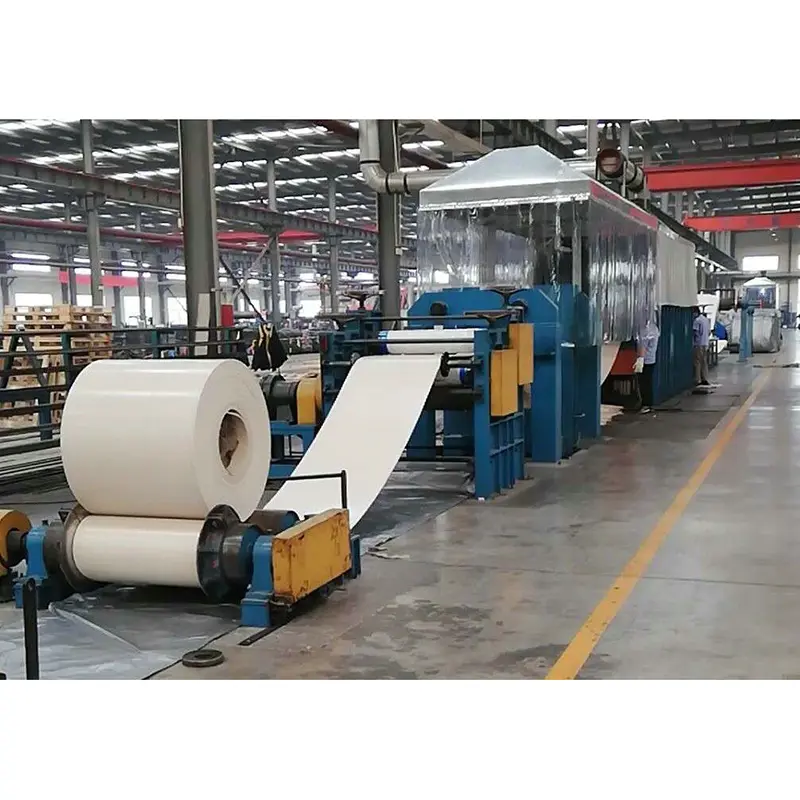
The Dual-Environment Challenge
| Environment | Key Stressors | Belt Requirement |
|---|---|---|
| Wet Washing Section | Continuous water spray, chlorinated sanitizers, abrasive soil, temperature fluctuations | Excellent hydrolysis resistance, non-porous cover, high coefficient of friction (wet grip) |
| Dry Sorting/Packing Section | Low humidity, static buildup, light oils from produce skins, repeated impact from drops | Anti-static properties, smooth release surface, moderate abrasion resistance |
A standard general-purpose rubber belt often fails in one of these zones. In the wet section, water penetrates the fabric layers, causing delamination and tracking issues. In the dry section, the same belt may become stiff or develop surface cracks from rapid moisture cycling. Hipower addresses this through a proprietary nitrile-butadiene compound that maintains flexibility across a moisture gradient, ensuring that your White Food Rubber Conveyor Belt does not lose dimensional stability when moving from a soaking tunnel to a centrifugal dryer.
Material Science Behind the Versatility
The critical factor is the belt’s cover compound. Hipower formulates its White Food Rubber Conveyor Belt with a closed-cell surface that resists water ingress up to 80°C, while simultaneously incorporating food-grade plasticizers that do not migrate under dry conditions. Third-party tests show that after 500 hours of cyclic wet-dry exposure, tensile strength retention exceeds 92%, compared to 74% for conventional belts. Furthermore, the white pigment (titanium dioxide) is chemically inert, preventing yellowing or leaching when exposed to acidic fruit juices like tomato or citrus.
For washing lines that use chlorinated alkaline detergents, the belt must pass ISO 8445-2 resistance standards. Hipower belts demonstrate less than 3% volume swell after 72 hours of immersion, meaning the White Food Rubber Conveyor Belt maintains precise tracking even when saturated. In dry sections, the same belt’s surface hardness (65 Shore A) provides enough resilience to cushion delicate berries, yet offers sufficient stiffness to support heavy root vegetables without sagging between idlers.
Practical Operational Considerations
-
Tracking Stability: Wet belts tend to slip on driven pulleys. Hipower recommends a chevron or cleated underside for lines with frequent washdowns, though for flat belts, we specify a friction-driven pulley with a 220° wrap angle.
-
Cleaning Efficacy: The belt must be compatible with both high-pressure spray (up to 100 bar) and dry brushing. Our White Food Rubber Conveyor Belt features a micro-textured surface that releases debris easily, reducing manual scrubbing time by 40%.
-
Splice Integrity: Finger-spliced joints with vulcanized covers outperform mechanical fasteners in wet environments. Hipower provides pre-vulcanized splice kits that cure at 150°C, creating a seamless transition that resists moisture wicking.
Frequently Asked Questions (FAQ)
Q1: Can a White Food Rubber Conveyor Belt be safely used with acidic produce like pineapples or pickled vegetables without degrading the cover?
A: Yes, provided the belt is manufactured from an oil-resistant nitrile compound rather than natural rubber. Hipower uses a carboxylated nitrile blend that withstands pH levels as low as 2.5 and as high as 10.5. However, continuous exposure to strong acetic acid (above 5% concentration) for more than 8 hours per day may accelerate surface hardening. We recommend a weekly inspection of the cover for micro-cracks, and we supply a protective overlay for lines running exclusively high-acid streams. Routine rinsing with neutral water between shifts extends service life to over 6,000 operating hours in such conditions.
Q2: How does the belt perform during sudden transitions from wet to dry – for example, leaving a flume washer and entering an air-knife dryer – without causing mis-tracking or stretching?
A: The key lies in the carcass construction. Hipower uses a polyester/nylon warp-weft combination with low hygroscopicity, so moisture absorption is less than 0.5% by weight. This means the belt length changes by less than 0.3 mm per meter when moving from 100% humidity to 20% RH. To prevent tracking shifts, we advise installing a self-aligning return roller within 1 meter of the transition point. Additionally, our White Food Rubber Conveyor Belt incorporates a tension member that stabilizes elongation at 1.5% under 10 N/mm working tension, ensuring that even with rapid moisture cycling, the belt remains true to the centerline without frequent re-tensioning.
Q3: What is the recommended cleaning protocol and frequency for a White Food Rubber Conveyor Belt that serves both sections, to avoid cross-contamination from soil to packed produce?
A: Hipower endorses a three-tier protocol: (A) Pre-rinse with low-pressure ambient water every 2 hours to remove gross soil; (B) Mid-shift foam cleaning using a quaternary ammonium compound (200 ppm) applied for 10 minutes, followed by high-pressure rinse at 60°C; (C) End-of-day sanitization with 50 ppm peracetic acid, left in contact for 5 minutes, then dried with air knives. For belts operating across both sections, we recommend the full protocol at the end of each production day, plus an intermediate dry-scrape pass between the wet and dry zones using a polyurethane scraper. This regimen, validated by independent food safety labs, reduces total aerobic count by 99.97% without degrading the White Food Rubber Conveyor Belt’s surface gloss or flexibility.
Comparative Performance Data
| Parameter | Hipower White Food Rubber Belt | Standard PVC Belt | Generic Rubber Belt |
|---|---|---|---|
| Water absorption (24h) | 0.4% | 0.1% | 2.1% |
| Abrasion loss (mm³) | 85 | 120 | 160 |
| Wet coefficient of friction (stainless steel) | 0.52 | 0.35 | 0.48 |
| Max service temp (wet) | 80°C | 60°C | 70°C |
| FDA compliance | Yes (21 CFR 177.2600) | Yes | Varies |
| Splice strength retention after wet-dry cycles | 96% | 88% | 79% |
Final Recommendation
For most fruit and vegetable processing lines that alternate between high-moisture washing and ambient-temperature dry packing, a premium White Food Rubber Conveyor Belt from Hipower is not only feasible but often more cost-effective than installing two separate conveyor systems. The key is to specify the correct compound, cover thickness (minimum 3 mm for abrasive root crops, 2 mm for soft fruits), and to implement the cleaning and tracking measures outlined above. Facilities that have adopted this unified approach report 22–30% lower spare-part inventory costs and significantly reduced changeover downtime.
Contact Us – If you are unsure which White Food Rubber Conveyor Belt configuration matches your specific wet-dry line layout, Hipower offers free on-site assessments and lab-scale simulation testing. Our engineering team will analyze your water chemistry, temperature profile, and product abrasiveness to deliver a custom recommendation. Reach out via our website or call your regional Hipower representative today to schedule a consultation and request sample swatches for in-plant trials. Your optimal belt solution is just one conversation away.