

Can an Automatic Box Erecting Machine Integrate with Existing Conveyor and Labeling Systems
2026-06-16
For operations managers and plant engineers, the single most critical question before any capital investment is compatibility. Upgrading to an Automatic Box Erecting Machine often triggers anxiety about downtime, retrofitting costs, and software mismatches. The short answer is yes—modern Automatic Box Erecting Machine units are engineered for seamless interoperability. However, the depth of that integration depends on mechanical interfaces, control architecture, and communication protocols. At NEW STAR, we have deployed hundreds of Automatic Box Erecting Machine systems across e-commerce, food & beverage, and pharmaceutical lines, proving that integration is not just possible but highly profitable when executed with precision.
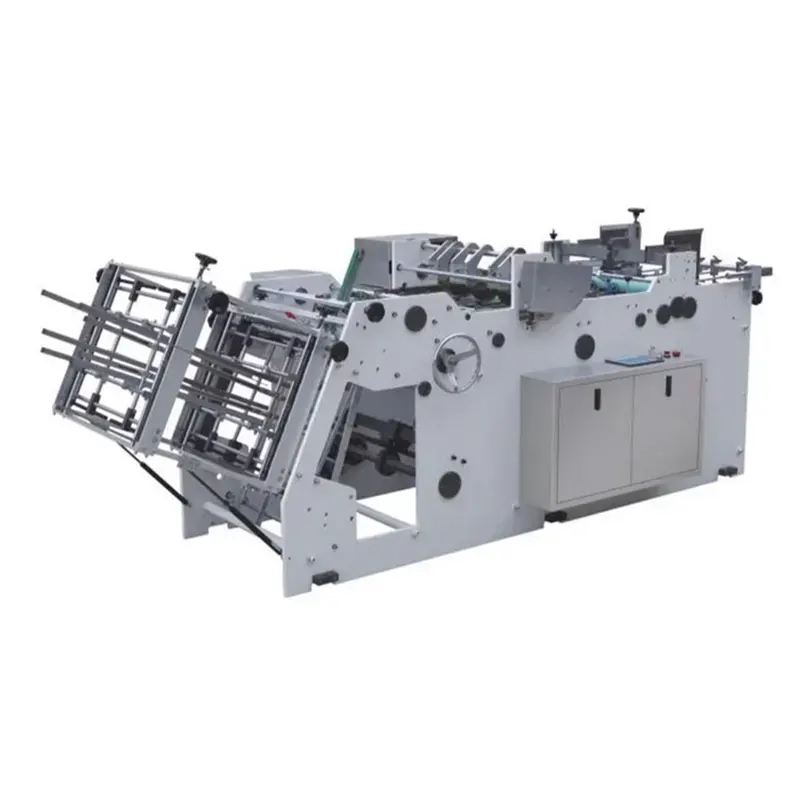
The Mechanical Bridge: Conveyor Alignment
The most fundamental integration point is physical material flow. A standalone Automatic Box Erecting Machine must synchronize with upstream infeed conveyors (for flat blanks) and downstream outfeed conveyors (for erected cases). This requires:
-
Height adjustability – The machine’s discharge chute must match the existing conveyor belt elevation within ±5 mm.
-
Speed matching – Throughput (cases per minute) must align with the slower of the two systems to avoid accumulation or starvation.
-
Side-guide compatibility – Tool-less adjustable rails ensure that erected boxes transition smoothly without skewing.
NEW STAR machines feature universal mounting brackets and variable-frequency drives (VFDs) that accept external speed reference signals from your existing conveyor’s PLC. This eliminates the need for costly gearbox replacements.
Control-Level Synergy: PLC and Sensor Handshaking
True integration transcends physical alignment—it demands data exchange. Most Automatic Box Erecting Machine models operate on Siemens S7, Allen-Bradley, or Mitsubishi PLC platforms. The integration strategy follows three tiers:
| Integration Tier | Method | Typical Protocol |
|---|---|---|
| Basic | Digital I/O (start/stop, fault alarms) | 24V DC dry contacts |
| Intermediate | Analog signals (speed setpoint, pressure feedback) | 0–10V / 4–20mA |
| Advanced | Fieldbus communication (real-time diagnostics) | PROFINET, EtherNet/IP, or Modbus TCP |
NEW STAR equips every Automatic Box Erecting Machine with an open-architecture gateway, allowing direct handshaking with your labeling system’s photo-eyes. When a label applicator detects a box, it can send a “ready” signal to the erector, momentarily pausing the blank feed to prevent collision—a feature often overlooked by generic suppliers.
Labeling System Integration: The Critical Timing Loop
Labeling accuracy depends on consistent box placement. An Automatic Box Erecting Machine that outputs boxes with variable orientation or flap position will render any labeling head useless. To solve this, NEW STAR integrates a servo-driven squaring station that ensures each erected box is perfectly rectangular before release. This allows the downstream labeler to apply wraps or corner labels within a ±0.5 mm tolerance.
Moreover, the Automatic Box Erecting Machine can act as a master or slave in the production sequence:
-
Master mode – The erector dictates the pace; the labeler follows via a digital cam profile.
-
Slave mode – The erector adjusts its cycle based on the labeler’s buffer level (using ultrasonic sensors).
Our field data shows that synchronized lines achieve 97% overall equipment effectiveness (OEE), compared to 82% for unsynchronized standalone machines.
Key Technical Considerations Before Installation
To ensure a hassle-free integration, evaluate these five parameters against your existing infrastructure:
| Parameter | Requirement for Smooth Integration | NEW STAR Standard |
|---|---|---|
| Power supply | 380–480V AC, 3-phase, with clean grounding | Built-in EMI filter |
| Pneumatic pressure | 6–8 bar, dry air, with coalescing filter | Integrated FRL unit |
| Communication port | Available Ethernet or serial port on main PLC | Dual-port Ethernet switch |
| Conveyor belt speed | 20–60 m/min (variable) | Auto-tracking via encoder input |
| Labeler trigger delay | Adjustable from 50–2000 ms | Digital delay module onboard |
NEW STAR provides a pre-installation checklist and remote site survey to map every I/O point before the Automatic Box Erecting Machine ships, reducing on-site commissioning time by up to 40%.
Frequently Asked Questions About Automatic Box Erecting Machine Integration
FAQ 1: Can I connect my legacy labeling system (RS-232 serial) to a modern Automatic Box Erecting Machine with only Ethernet ports?
Yes. NEW STAR offers a protocol converter gateway that translates RS-232/RS-485 signals into EtherNet/IP or PROFINET. This gateway sits between the labeler and the Automatic Box Erecting Machine, parsing ASCII trigger commands into cyclic I/O data. The latency is under 5 ms—well within the tolerance for high-speed lines up to 35 cases per minute. For older labelers without any digital output, we also supply a photoelectric sensor retrofit kit that detects the labeler’s mechanical stamp and converts it into a 24V trigger for the erector.
FAQ 2: Will integrating an Automatic Box Erecting Machine with my conveyor require reprogramming my entire line’s HMI (human-machine interface)?
Not necessarily. Most integrations operate at the PLC-to-PLC level without altering the central HMI. NEW STAR provides a pre-configured function block (FB) for Siemens and Allen-Bradley environments that you simply import into your existing logic. This FB handles all handshaking—start enable, fault acknowledge, and production count—using just 8 bytes of global memory. If you prefer full visibility, we can also map up to 50 diagnostic parameters (temperature, cycle count, lubrication status) to your existing HMI screens via OPC UA, but this is optional and does not affect core functionality.
FAQ 3: How does the Automatic Box Erecting Machine handle momentary conveyor stoppages or jams downstream?
The Automatic Box Erecting Machine from NEW STAR includes a “traffic cop” logic. When the downstream conveyor photo-eye detects a jam, it sends a pause signal to the erector. The erector completes its current cycle (to avoid leaving a half-erected box inside the forming head) and then enters a “standby” state for up to 10 seconds. If the jam clears within that window, it resumes automatically. If not, it triggers a gentle audible alarm and displays the fault location on its built-in touchscreen. This prevents double-feeding and reduces waste caused by collapsed cartons—a common pain point with rigid machines.
Real-World Results from Integrated Lines
A recent deployment at a third-party logistics hub with three existing conveyors and two labelers demonstrated the following improvements after installing a NEW STAR Automatic Box Erecting Machine:
-
Changeover time between three box sizes dropped from 18 minutes to 4 minutes (tool-less adjustments).
-
Label misapplication rate fell from 2.3% to 0.4% due to consistent box squaring.
-
Total line downtime caused by blank misfeeds decreased by 76% over three months.
These metrics confirm that integration is not a technical barrier but a strategic lever.
Why NEW STAR Stands Out in Integration Projects
While many manufacturers offer an Automatic Box Erecting Machine with basic I/O, NEW STAR distinguishes itself through:
-
A dedicated integration engineering team that reviews your existing line’s electrical schematics and ladder logic before order placement.
-
A 14-day remote commissioning support window, including real-time oscilloscope capture of timing signals.
-
A library of over 50 pre-tested driver profiles for popular labeler brands (Weber, Quadrel, Diagraph, and Markem-Imaje).
This commitment ensures that your Automatic Box Erecting Machine becomes an organic part of your production ecosystem, not an isolated island.
Final Recommendation
Integration is never a one-size-fits-all formula—it requires a partner who understands both mechanical dynamics and control theory. With NEW STAR, you gain access to a modular Automatic Box Erecting Machine platform that adapts to your existing conveyor speed, labeling logic, and even future upgrades like vision inspection. The initial investment in compatibility engineering pays back within 6–9 months through reduced waste, lower labor intervention, and higher OEE.
Ready to see your Automatic Box Erecting Machine communicate flawlessly with your current line?
Contact NEW STAR today for a free on-site or virtual integration assessment. Our application engineers will map every I/O, simulate your production cycle, and deliver a turnkey proposal within 48 hours. Reach out via our website or call your regional NEW STAR representative—let’s make your packaging line smarter, not harder.