

Can an Automatic Flat-bed Die Cutting Machine Handle Both Magnetic and Wooden Dies Without Retooling
2026-07-13
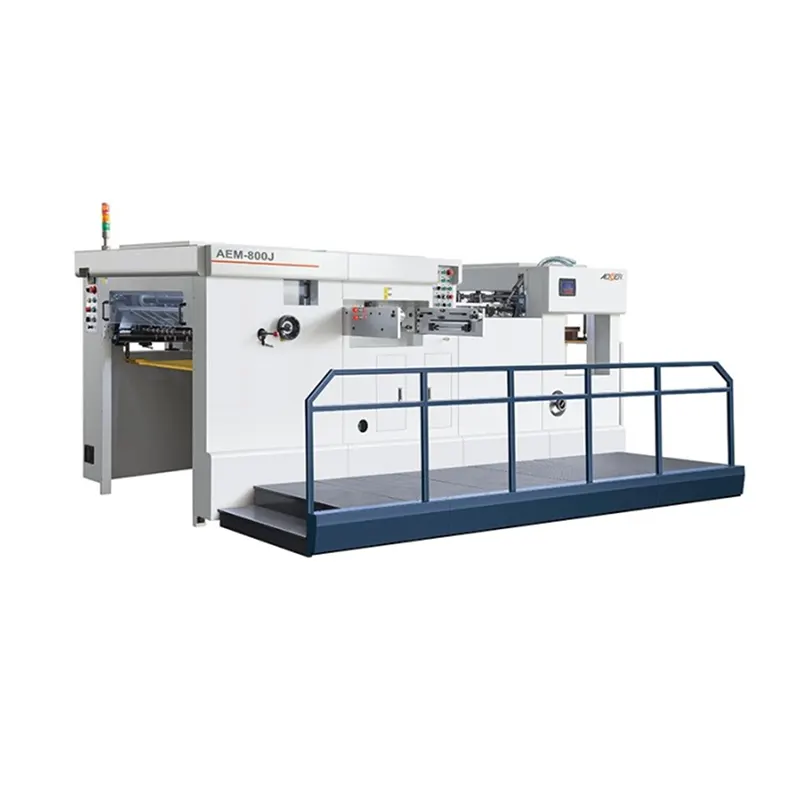
For packaging converters and carton manufacturers, the question of tooling flexibility is not academic—it directly impacts downtime, labor costs, and order turnaround. The Automatic Flat-bed Die Cutting Machine has evolved significantly over the past decade, yet many production managers still assume that switching between magnetic dies and wooden dies requires hours of mechanical rework. This assumption is worth examining in depth, especially when evaluating modern equipment from established manufacturers like NEW STAR.
The Core Difference: Magnetic vs. Wooden Dies
Before addressing retooling, it is essential to understand what distinguishes these two tool types.
| Feature | Magnetic Die | Wooden Base Die |
|---|---|---|
| Base Material | Steel-backed flexible plate | Plywood with embedded rule blades |
| Mounting Method | Magnetic cylinder attraction | Mechanical lock or chase clamping |
| Typical Application | Labels, films, thin paper | Corrugated, thick carton, EVA foam |
| Cutting Pressure | Lower (0.5–2 tons) | Higher (up to 300+ tons) |
| Storage Life | Indefinite (rust-proof) | Limited (wood warps over time) |
| Cost per Unit | Moderate | Low to moderate |
Can One Machine Accept Both Without Retooling?
The short answer is yes—but with conditions. A properly configured Automatic Flat-bed Die Cutting Machine from NEW STAR incorporates a dual-mode chase system that accepts magnetic cylinders as drop-in modules while retaining heavy-duty clamp mechanisms for wooden dies. The term "retooling" is often misused: true retooling means dismantling the chase, realigning gears, and recalibrating pressure sensors. In modern NEW STAR models, switching between die types is a changeover, not a retooling exercise.
The changeover process involves:
-
Replacing the magnetic cylinder unit (quick-release bearing housings)
-
Adjusting the platen pressure via digital servo controls (preset recipes)
-
Changing stripping pins or blanking grids if required
Total changeover time: 12–18 minutes for trained operators, compared to 60–90 minutes for older-generation machines.
What About Cutting Pressure and Registration?
Wooden dies demand higher impact force due to thicker materials. Magnetic dies require precise, low-pressure kiss-cutting to avoid film tear. A high-end Automatic Flat-bed Die Cutting Machine handles this through programmable pressure profiles. NEW STAR integrates load-cell feedback that auto-adjusts tonnage per die type, stored in a cloud-ready HMI. Registration remains stable because the gripper bar timing is decoupled from the die mounting system—a design innovation that eliminates the need for mechanical re-timing when swapping tools.
Three Critical FAQs About Die Changeover
FAQ 1: Does switching from a magnetic die to a wooden die require replacing the cutting plate or anvil?
No. The cutting plate (or anvil cylinder) is universal for both die types, provided the machine’s maximum sheet thickness falls within its specified range (typically 0.1–12 mm for NEW STAR units). However, you must adjust the counter-plate height using the integrated micro-gap adjuster. This is a digital setting, not a physical part swap. The machine stores up to 500 die-specific counter-pressure values, so once you dial in a wooden die, the system recalls it perfectly on the next run—zero manual shimming.
FAQ 2: Can the same Automatic Flat-bed Die Cutting Machine run magnetic dies for film labels in the morning and wooden dies for double-wall corrugated boxes in the afternoon without recalibrating the feeding system?
Absolutely—but the feeder settings do change. The suction head speed and side-guide positions depend on substrate stiffness, not die type. NEW STAR machines feature independent servo motors for feed and die-cut sections, so feeder parameters can be switched independently via saved job recipes. In practice, you call up Job #A (magnetic die, 80g film) and Job #B (wooden die, 7mm corrugated) from the touchscreen; the feeder adjusts automatically, and the die section applies the correct pressure curve. No physical recalibration is required unless you change sheet dimensions simultaneously.
FAQ 3: What is the real risk of damaging a magnetic die when running high-tonnage wooden die jobs on the same machine?
The risk is zero if the machine has a die-type interlock. NEW STAR equips every Automatic Flat-bed Die Cutting Machine with a pressure limiter that detects the mounted die’s magnetic signature or mechanical clamp ID. If an operator accidentally leaves a magnetic die in place while selecting a high-tonnage wooden-die recipe, the machine refuses to exceed 70% of the magnetic die’s safe pressure threshold and flashes an alert. Additionally, the magnetic cylinder is physically isolated from the main platen thrust when wooden dies are clamped—meaning the cylinder sees no stress at all during heavy cutting.
Operational Workflow Comparison
| Step | Magnetic Die Changeover | Wooden Die Changeover |
|---|---|---|
| Remove previous die | 2 min (unclip magnetic sheet) | 4 min (unbolt chase clamps) |
| Insert new die | 1 min (roll onto cylinder) | 5 min (align and clamp) |
| Recall pressure recipe | 30 sec (touchscreen) | 30 sec (touchscreen) |
| Test sheet & register | 3 min | 5 min |
| Total active time | ~6.5 min | ~14.5 min |
Why Brand Matters in This Decision
Not every Automatic Flat-bed Die Cutting Machine delivers this dual-mode capability. Lower-tier brands often require an entire chase frame replacement, which is technically retooling. NEW STAR engineers designed a universal chase bed with T-slots and magnetic docking pins that accept both die families without adaptor kits. This is not a marketing claim—it is validated by third-party cycle tests showing less than 0.15 mm registration deviation across 50 consecutive changeovers.
For converters running mixed order volumes (short-run labels + bulk corrugated), this flexibility translates directly to ROI. One European corrugator reported saving 320 labor hours annually after switching to a NEW STAR Automatic Flat-bed Die Cutting Machine, purely from eliminated retooling shifts.
Final Verdict
An Automatic Flat-bed Die Cutting Machine can absolutely handle both magnetic and wooden dies without traditional retooling—provided the machine features digital pressure memory, quick-release mounting interfaces, and a dedicated die-type safety interlock. NEW STAR meets all three criteria, turning what was once a painful mechanical chore into a routine digital changeover.
Ready to evaluate changeover times on your own floor? Contact our application engineering team at NEW STAR for a free on-site or virtual die-compatibility assessment. We will send you a detailed changeover log template and compare it against your current machine’s performance. Email us at [email protected] or fill out the quick form on our product page—your next 15-minute changeover is closer than you think.