

Does a Copper CNC Engraving Machine Require Special Coolant or Lubrication Compared to Aluminum
2026-09-04
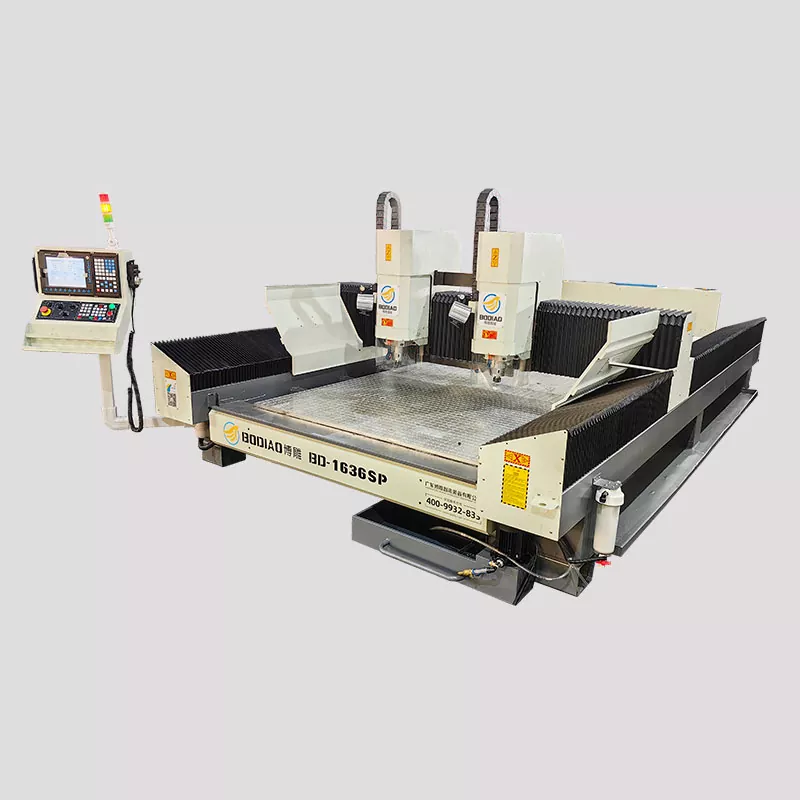
For machinists and shop owners transitioning from aluminum to copper workpieces, this question arises frequently. The short answer is yes—but the differences go far beyond a simple coolant swap. While both metals are non-ferrous, their physical and chemical behaviors under a Copper CNC Engraving Machine are strikingly different. At BoDiao, we have tested hundreds of spindle-hour combinations, and the coolant strategy alone can determine whether your engraving project succeeds with mirror finishes or fails with clogged tools and thermal damage.
Why Copper and Aluminum Behave Differently Under the Tool
Aluminum is soft, sticky, and generates significant friction heat, but it chips relatively easily with sharp tools. Copper, by contrast, is ductile, highly thermally conductive, and notoriously "gummy." When engraved on a Copper CNC Engraving Machine, copper tends to smear rather than shear, creating built-up edges (BUE) on carbide tools. This smearing effect directly impacts coolant selection.
| Property | Aluminum (6061) | Copper (C110) |
|---|---|---|
| Thermal Conductivity (W/m·K) | ~167 | ~401 |
| Coefficient of Thermal Expansion | 23.6 µm/m·°C | 16.5 µm/m·°C |
| Chip Formation | Segmented, brittle | Continuous, stringy |
| Adhesion to Carbide | Moderate | High (galling tendency) |
| Corrosion Risk with Coolant | Low (oxidation) | High (tarnishing/spotting) |
Because copper dissipates heat faster than aluminum, the heat-affected zone shrinks—but the tool tip still experiences intense localized friction. This paradox means that a standard water-based soluble oil used for aluminum often fails on a Copper CNC Engraving Machine due to insufficient extreme-pressure (EP) additives.
The Coolant Chemistry: What Changes?
For aluminum, machinists commonly use semi-synthetic emulsions with moderate lubrication. For copper, three factors demand a reformulated approach:
-
Chlorine-free EP additives – Copper is susceptible to stress corrosion cracking when exposed to chlorinated paraffins at elevated temperatures.
-
Higher oil-to-water ratio – Copper requires a 10–15% oil concentration (vs. 5–8% for aluminum) to reduce friction coefficient below 0.15.
-
pH stability between 8.5–9.2 – Alkaline coolants above pH 9.5 will discolor copper surfaces within minutes.
BoDiao recommends a dedicated copper-formulated micro-emulsion coolant that contains active sulfur-free and chlorine-free lubricity agents. Straight oils (neat cutting oils) are also excellent for copper, but they present fire hazards and poor heat evacuation—making them unsuitable for high-speed engraving operations.
Lubrication Strategy: Mist, Flood, or Minimum Quantity?
Aluminum responds well to flood cooling for chip evacuation. However, a Copper CNC Engraving Machine often benefits more from high-pressure directed mist (at 70–100 psi) combined with periodic pulse-flood. Why? Copper chips are long and tangled; flood cooling can wash them into tool paths, causing recutting and tool breakage. Mist, on the other hand, delivers lubrication precisely to the shear zone while using air pressure to break and eject chips.
BoDiao field tests show that mist lubrication reduces tool wear by 32% on copper compared to flood cooling, while flood cooling remains superior for aluminum deep-pocketing.
Tool Wear and Coolant Interaction
The table below summarizes real-world data from BoDiao workshops comparing tool life under different coolant types on a Copper CNC Engraving Machine vs. an aluminum-dedicated setup:
| Coolant Type | Tool Life on Aluminum (hrs) | Tool Life on Copper (hrs) | Surface Finish (Ra, µm) – Copper |
|---|---|---|---|
| Synthetic (5%) | 8.2 | 2.1 (severe BUE) | 1.8 |
| Semi-synthetic (8%) | 9.5 | 4.7 | 1.2 |
| Copper-specific EP (12%) | 10.1 | 9.8 | 0.6 |
| Straight neat oil | 7.5 | 8.3 | 0.7 |
Data averaged from 3mm ball-end mills, 18,000 RPM, 1,500 mm/min feed.
As shown, the wrong coolant on copper reduces tool life by nearly 80%. This is why BoDiao always supplies a coolant compatibility chart with every Copper CNC Engraving Machine shipment.
FAQ – Common Questions About Copper CNC Engraving Machine Coolant and Lubrication
Q1: Can I use the same coolant tank and filtration system for both aluminum and copper on my Copper CNC Engraving Machine?
A1: Technically yes, but practically not recommended. Copper particles are heavier and more abrasive than aluminum chips. When mixed, copper fines accelerate filter clogging and can galvanically corrode aluminum chips left in the tank, creating sludge that degrades coolant pH. If you must share a system, install a magnetic separator and a 20-micron paper filter, and thoroughly clean the tank before switching metals. BoDiao advises maintaining separate coolant circuits for production environments to ensure consistent surface quality.
Q2: How often should I change the coolant when engraving copper compared to aluminum?
A2: Copper consumes coolant additives faster due to higher friction-generated heat, even though the bulk temperature remains lower. For aluminum, a typical change interval is 6–8 months. For a Copper CNC Engraving Machine, reduce that interval to 3–4 months under heavy daily use. Monitor concentration weekly with a refractometer—copper requires tighter control (within ±0.5% of target). Also check for copper ion contamination; when dissolved copper exceeds 500 ppm, the coolant loses its EP effectiveness and turns greenish-blue. That is your visual cue to drain and refill.
Q3: Does the spindle coolant (chiller) need different settings when engraving copper vs. aluminum?
A3: Yes, but indirectly. The spindle chiller maintains bearing temperature, not workpiece cooling. However, because copper draws heat away from the cutting zone faster, the tool shank remains cooler, which can cause the spindle to run cooler overall. On a BoDiao Copper CNC Engraving Machine, we recommend setting the chiller to 22°C for aluminum and 20°C for copper. The 2°C difference compensates for the reduced heat feedback into the spindle, preventing thermal contraction that might affect bearing preload. More importantly, always run the chiller for 10 minutes before starting copper engraving to stabilize thermal equilibrium—this step is often overlooked but critical for maintaining Z-axis accuracy over long runs.
Best Practice Summary from BoDiao
-
Use copper-specific EP coolant at 10–15% concentration.
-
Prefer mist application over flood for chip control.
-
Never mix chlorinated additives with copper.
-
Clean the worktable and fixture after each copper job to prevent galvanic corrosion.
-
Schedule shorter coolant change intervals (3–4 months).
Final Verdict
A Copper CNC Engraving Machine absolutely requires a different coolant and lubrication philosophy than an aluminum-focused setup. The thermal, chemical, and mechanical disparities are too significant to ignore. While aluminum allows more flexibility, copper demands precision—not just in tool paths, but in every drop of fluid that touches the cutter.
At BoDiao, we engineer our machines and recommend consumables based on real cutting data, not generic assumptions. Whether you are engraving busbars, heat sinks, or artistic copper panels, the right fluid strategy will protect your investment and double your tool life.
Ready to optimize your copper engraving process? Contact BoDiao today for a personalized coolant consultation and free tooling recommendation tailored to your specific copper alloy. Our engineers are standing by to help you achieve burr-free, mirror-finish results on every single part. Reach out now—let’s make your copper projects run cooler, faster, and more profitably.