

Does a Diode Laser Welding Machine Require Regular Maintenance or Calibration
2026-08-26
For manufacturing engineers and shop floor managers, the decision to invest in a Diode Laser Welding Machine often hinges on one practical concern: long-term operational cost. Unlike conventional welding systems that demand frequent electrode changes or gas refills, solid-state laser sources appear almost maintenance‑free. But appearances can be deceptive. The reality is that every precision tool—including a Diode Laser Welding Machine—requires a structured maintenance and calibration schedule to deliver consistent weld penetration, beam quality, and process stability over its service life. ALPHA has engineered its diode laser platforms with modular architectures, yet even the most robust systems depend on operator awareness and routine care.
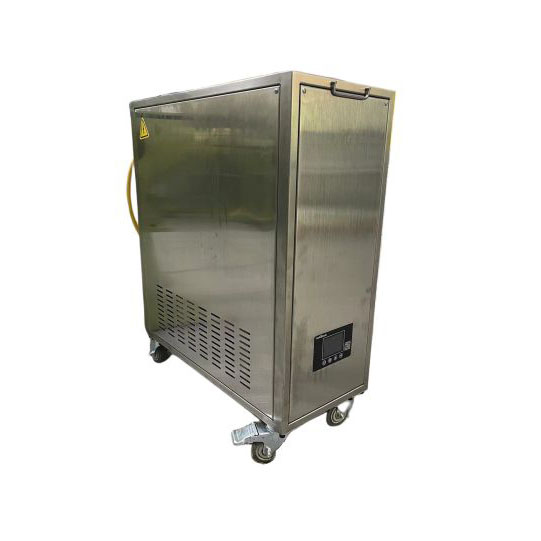
Why Maintenance Matters More Than You Think
A Diode Laser Welding Machine operates by converting electrical energy into near‑infrared light through semiconductor diode arrays. These diodes are sensitive to temperature, particulate contamination, and optical alignment drift. Without preventive interventions, three critical parameters degrade:
-
Output power drops as cooling efficiency declines.
-
Beam focus shifts due to thermal expansion in optics.
-
Process repeatability suffers from window contamination.
Regular maintenance ensures that your Diode Laser Welding Machine maintains its specified kW‑class output, while calibration guarantees that the programmed spot size and focal position match actual performance on the workpiece.
The Core Maintenance Schedule (Recommended by ALPHA)
| Interval | Action | Tool / Method | Responsible Role |
|---|---|---|---|
| Daily (8 hrs) | Inspect protective window for spatter or dust | Visual check + dry air purge | Operator |
| Weekly (40 hrs) | Clean water‑cooling circuit inlet filter | Remove debris with soft brush | Technician |
| Monthly (200 hrs) | Measure beam profile and M² factor | Beam profiler + power meter | Laser engineer |
| Quarterly (600 hrs) | Verify focal position with ramp test | Test coupons + micrometer stage | Quality supervisor |
| Annually (2,000 hrs) | Replace DI resin cartridge and coolant | Conductivity meter < 5 µS/cm | Service partner / ALPHA support |
Calibration: Not Optional, But Predictable
Calibration is distinct from maintenance—it answers the question: “Is the programmed laser power and focus exactly what the workpiece receives?” For a Diode Laser Welding Machine, calibration involves:
-
Power calibration – using a calorimetric power meter to adjust internal PID loops.
-
Focus calibration – using a movable Z‑axis stage to find the true focal plane.
-
Spot size verification – through knife‑edge or slit‑scan measurements.
ALPHA recommends a full calibration cycle every 500 operational hours or whenever optics are replaced. Unlike CO₂ or lamp‑pumped systems, diode lasers exhibit minimal wavelength drift, so frequency calibration is not needed—but amplitude (power) drift of ±2‑3 % can occur after 1,000 hours due to gradual diode degradation. This is well within the compensation range of ALPHA’s closed‑loop feedback system, but only if the system is recalibrated against a traceable standard.
Common Misconceptions
-
“Diode lasers are solid‑state, so they never need alignment.”
False. Thermal cycling slightly shifts mounting brackets. Quarterly checks are prudent. -
“If the power meter reads correct, calibration is unnecessary.”
False. Power at the fiber end may be correct, but focus at the workpiece can shift due to debris on the collimation lens. -
“Maintenance voids the warranty.”
Not with ALPHA – we provide clear, warranty‑friendly maintenance checklists and remote calibration guidance.
Diode Laser Welding Machine FAQ
Q: How do I know when my Diode Laser Welding Machine needs calibration, not just cleaning?
A: The earliest indicator is inconsistent weld bead width or penetration depth on identical parts, despite constant parameters. If your Diode Laser Welding Machine produces a plume that appears visually brighter or whiter than usual, that suggests focal shift. For quantitative confirmation, run a “step‑ramp” test: weld a series of single spots at incremental Z‑heights and measure the melt‑in diameter. If the peak diameter deviates by more than 0.1 mm from your baseline, calibration is overdue. ALPHA’s HMI also displays a “Power Stability” histogram—if this shows >2.5 % variance over an 8‑hour shift, schedule a full calibration.
Q: Can I perform calibration internally, or must I call an external service provider?
A: Most routine calibrations—power offset adjustment and focus offset—can be performed in‑house using ALPHA‑supplied reference targets and a compatible power meter (e.g., Ophir or Gentec). The procedure is documented in the operator’s manual and takes about 45 minutes. However, full M² beam quality calibration and diode‑current balancing require a certified ALPHA field engineer, as these involve internal potentiometers and software locks. For shops without a metrology lab, we recommend an annual on‑site visit. For high‑mix job shops, ALPHA offers a calibration‑as‑a‑service package that includes shipping a pre‑calibrated process head as a swap.
Q: What happens if I skip maintenance for 6 months—will the machine shut down?
A: The Diode Laser Welding Machine will not automatically lock out, but performance degrades incrementally. The most common failure is overheating of the diode stack due to clogged coolant filters, which triggers thermal derating (power reduced to 70 %). Prolonged neglect leads to permanent diode damage—replacing a 6‑kW diode stack costs roughly 40 % of the original machine price. More critically, uncorrected focus drift produces cold welds that pass visual inspection but fail tensile or leak tests, causing downstream scrap. ALPHA’s telemetry system sends predictive alerts when cooling conductivity or diode current exceeds thresholds, but these warnings are useless if ignored. A 15‑minute weekly inspection is far cheaper than a week of production rework.
Final Recommendation from ALPHA
Treat your Diode Laser Welding Machine as you would a CNC machining center—not as a consumable tool, but as a capital asset that demands disciplined care. The total annual maintenance and calibration cost (including consumables and one service visit) typically runs 2‑4 % of the initial purchase price, which is half that of a comparable CO₂ laser system. ALPHA provides a digital maintenance logbook within the touchscreen interface, automatically tracking run‑hours and prompting actions at each threshold.
Ready to Optimize Your Laser Welding Operations?
Every Diode Laser Welding Machine from ALPHA ships with a 24‑month preventive maintenance calendar, remote diagnostics access, and free first‑year calibration verification. Our application engineers are available to review your specific weld schedules and recommend a tailored care plan—whether you run single‑shift prototype work or 24/7 automotive production.
Contact us today to request a maintenance planning worksheet or schedule a live calibration demo at your facility. Let ALPHA help you protect your investment and achieve zero‑defect welding, shift after shift.