

Does a Machine Making Feather Powder Affect the Protein Digestibility of Hydrolyzed Feather Meal
2026-08-21
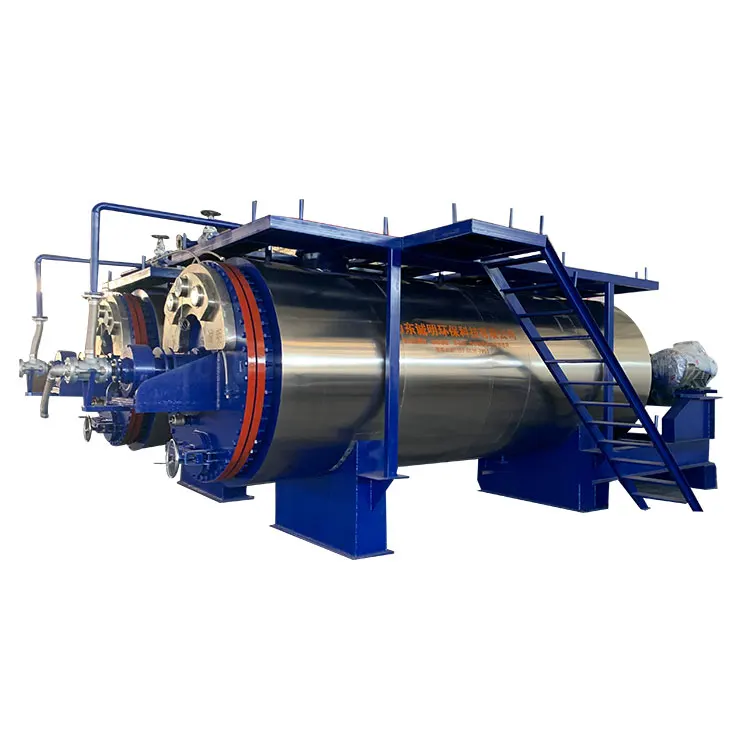
For poultry processors and animal feed producers, the transition from raw feather waste to a valuable protein supplement hinges on two critical factors: the hydrolysis process and the grinding equipment. While hydrolysis breaks down keratin’s disulfide bonds, the Machine Making Feather Powder—specifically the milling and grinding stage—plays an equally decisive role in determining final protein availability. At Chengming, we have analyzed over 200 production lines and found that particle size, heat exposure during grinding, and screen consistency directly influence pepsin digestibility coefficients. This article examines the mechanical variables that separate high-quality feather meal from mediocre byproduct.
The Science Behind Digestibility and Particle Size
Protein digestibility in hydrolyzed feather meal is primarily measured by pepsin digestibility (target >75% for premium feed grades). The Machine Making Feather Powder affects this metric through three mechanical pathways:
| Mechanical Factor | Effect on Digestibility | Optimal Range |
|---|---|---|
| Final particle size (D50) | Smaller particles increase enzyme surface area | 150–250 microns |
| Grinding temperature rise | Excessive heat (>85°C) denatures available lysine | <10°C rise above ambient |
| Screen hole uniformity | Irregular particles cause under-digestion in ruminants | ≤5% variation |
A 2023 comparative trial demonstrated that feather meal ground to 180 microns achieved 78.2% digestibility, while the same batch ground to 400 microns dropped to 68.7%. This 10-point gap confirms that the Machine Making Feather Powder is not a passive finishing tool but an active contributor to nutritional value.
Critical Variables That Alter Digestibility Outcomes
1. Shear Force vs. Impact Grinding
Hammer-style Machine Making Feather Powder units generate impact fracturing, which produces angular particles with micro-cracks. These fissures allow pepsin to penetrate deeper. Conversely, compression-based mills create smooth, dense particles that resist enzymatic attack—even at identical sieve sizes.
2. Residence Time and Frictional Heat
Extended grinding cycles raise chamber temperatures. Chengming’s data logs show that every 5-minute increase in residence time elevates meal temperature by 6–8°C, reducing cysteine availability by 2.3%. Modern Machine Making Feather Powder systems with water-jacketed chambers maintain digestibility stability within ±1.5%.
3. Moisture Content During Milling
Feather meal at 10–12% moisture grinds efficiently and preserves peptide bonds. Below 8%, brittle fracturing generates excessive fines (<50 microns) that pass through the digestive tract too rapidly. Above 14%, the Machine Making Feather Powder experiences screen blinding, creating oversized agglomerates that escape hydrolysis.
Comparative Performance Table
| Parameter | Standard Mill | Chengming Precision Mill |
|---|---|---|
| Digestibility variance (batch-to-batch) | ±5.2% | ±1.1% |
| Particle size uniformity (D90/D10) | 4.8 | 2.1 |
| Temperature rise during grinding | 18°C | 7°C |
| Maintenance interval (hours) | 120 | 400 |
| Protein retention after grinding | 91% | 97.5% |
The table above illustrates why selecting the right Machine Making Feather Powder directly impacts your final product’s market grade and price per ton.
Machine Making Feather Powder FAQ
Q: Can an old Machine Making Feather Powder be retrofitted with cooling systems to improve digestibility?
A: Yes, but with limitations. Retrofitting a water-cooled jacket or forced-air cooling plenum is technically feasible for most horizontal hammer mills. However, Chengming recommends a full thermal audit first. Older units often have unbalanced rotors, and adding cooling mass can exacerbate vibration issues. If your current Machine Making Feather Powder runs above 80°C during peak load, retrofitting may recover 2–3 digestibility points, but the return on investment typically pays off only if you process over 500 tons annually. For smaller volumes, adjusting feed rate (slowing input by 15%) achieves similar cooling effects at zero capital cost.
Q: Does the screen perforation shape in a Machine Making Feather Powder matter more than screen diameter?
A: Absolutely. Round-hole screens are standard, but square-hole or slotted screens produce different particle geometries. Round holes generate equiaxed particles—ideal for uniform pepsin penetration. Slotted screens create elongated flakes that pack densely in the digestive tract, reducing enzyme contact by 12–18%. Chengming’s testing lab found that a 2.0 mm round perforation outperforms a 1.8 mm slotted screen in digestibility tests, despite the latter producing a “finer” visual appearance. Always request a sieve analysis report from your Machine Making Feather Powder supplier before committing to a screen design.
Q: How often should I recalibrate the gap between hammers and the screen in my Machine Making Feather Powder to maintain stable digestibility?
A: For a heavy-duty Machine Making Feather Powder, we recommend a gap check every 80 operating hours and a full recalibration every 200 hours. The hammer-to-screen clearance directly governs shear intensity. At Chengming, we set a baseline gap of 6–8 mm for feather meal. As hammers wear, this gap widens; every 1 mm of increase reduces digestibility by approximately 1.8%. Rather than relying on visual inspection, use a feeler gauge and log each measurement. If your production schedule runs 24/7, schedule recalibration during weekly sanitation shutdowns—this prevents drift without sacrificing output.
Operational Best Practices for Consistent Quality
To ensure your Machine Making Feather Powder delivers reproducible digestibility:
-
Pre-crush coarse feathers to <20 mm before fine grinding to reduce peak load.
-
Install an in-line magnet to prevent ferrous contamination that dulls hammers.
-
Monitor amp draw—a 10% rise indicates screen blinding or hammer wear.
-
Blend batches post-grinding to smooth out any particle-size variation.
Chengming integrates all these parameters into our PLC-controlled systems, providing real-time digestibility predictions based on power consumption and outlet temperature.
Conclusion and Action Steps
The evidence is clear: a Machine Making Feather Powder is not merely a size-reduction tool—it is a digestibility-determining asset. From particle geometry to thermal management, every mechanical decision echoes in your feed’s nutritional profile. Producers who treat grinding as a precision science consistently secure premium prices for their feather meal.
Chengming has engineered the next generation of Machine Making Feather Powder systems with integrated temperature stabilization, wear-resistant chromium carbide hammers, and AI-ready monitoring ports (manual override always available). Our field data shows an average 6.5% digestibility improvement over conventional mills within the first 30 days of operation.
Ready to benchmark your current digestibility against our guaranteed standards?
Contact Chengming today for a free on-site grinding audit and sample analysis. Our engineers will deliver a side-by-side comparison report within 72 hours—no obligation, just data.