

How Can a Fine Blanking Machine Improve Precision Manufacturing Efficiency?
2026-07-08
Article Summary
In modern precision manufacturing, achieving high-quality metal components while reducing production costs and improving efficiency has become a major challenge for manufacturers. Traditional stamping methods often struggle with issues such as secondary machining requirements, material waste, inconsistent accuracy, and limited production efficiency. A fine blanking machine provides an advanced solution by combining precise forming technology with excellent dimensional control, allowing manufacturers to produce complex metal parts with smooth edges and outstanding performance.
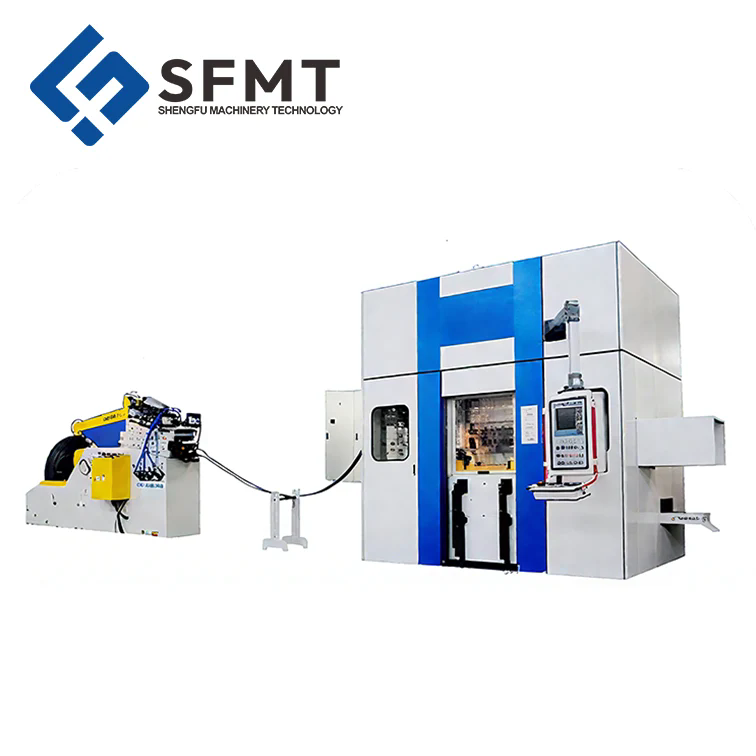
This article explains how fine blanking machines work, why they are essential for precision industries, what problems they solve, and how manufacturers can select the right equipment for their production needs. With advanced manufacturing experience, Shengfu provides reliable fine blanking solutions designed to help companies achieve stable production, higher productivity, and improved product quality.
Table of Contents
- Why Are Fine Blanking Machines Becoming Essential in Modern Manufacturing?
- What Manufacturing Problems Can Fine Blanking Machines Solve?
- How Does a Fine Blanking Machine Work?
- What Are the Key Advantages of Using a Fine Blanking Machine?
- Where Are Fine Blanking Machines Commonly Used?
- How to Choose the Right Fine Blanking Machine?
- What Is the Future Development Trend of Fine Blanking Technology?
- Frequently Asked Questions About Fine Blanking Machines
Why Are Fine Blanking Machines Becoming Essential in Modern Manufacturing?
Precision manufacturing industries are continuously searching for technologies that can deliver better accuracy, lower production costs, and faster manufacturing cycles. Components used in automobiles, electronics, machinery, and industrial equipment often require extremely tight tolerances and smooth cutting surfaces. Conventional stamping processes may not always meet these requirements, especially when manufacturers need parts with complex shapes and high structural strength.
A fine blanking machine is specially designed to produce precision metal parts through a controlled blanking process. Unlike ordinary stamping equipment, fine blanking technology creates cleaner edges, improved flatness, and more accurate dimensions. This reduces the need for additional grinding, machining, or finishing operations.
For manufacturers facing increasing market competition, investing in reliable precision equipment has become an important strategy. Shengfu focuses on providing fine blanking machine solutions that support stable operation, efficient production, and consistent component quality.
What Manufacturing Problems Can Fine Blanking Machines Solve?
Many manufacturers experience similar production challenges when using traditional metal processing methods. These problems can affect productivity, product quality, and overall profitability.
| Common Manufacturing Challenge | How Fine Blanking Machines Provide Solutions |
|---|---|
| Rough cutting edges and burr problems | Advanced fine blanking technology creates smooth and clean cutting surfaces, reducing additional finishing work. |
| High secondary processing costs | Precision forming reduces the need for extra machining operations. |
| Material waste during production | Optimized forming processes improve material utilization. |
| Inconsistent component accuracy | High precision control systems help maintain stable product dimensions. |
| Low production efficiency | Automated production capability increases manufacturing speed. |
By addressing these problems, fine blanking machines allow manufacturers to achieve a more efficient and economical production process.
How Does a Fine Blanking Machine Work?
A fine blanking machine uses a specialized forming process that applies controlled pressure to the metal sheet or workpiece. The process involves a combination of blanking force, counter pressure, and precise die technology to create high-quality components.
During operation, the material is securely positioned inside the die system. The machine applies controlled pressure to prevent material deformation and ensure accurate cutting. This unique process produces parts with excellent dimensional accuracy, smooth surfaces, and strong mechanical properties.
The main working process generally includes:
- Material preparation: Metal sheets or plates are selected according to production requirements.
- Precision positioning: The material is accurately placed into the tooling system.
- Controlled blanking: The machine applies specific forces to complete the cutting and forming process.
- Quality inspection: Finished components are checked to ensure they meet required standards.
Compared with conventional stamping equipment, fine blanking machines provide greater control over the entire manufacturing process, making them suitable for industries requiring high precision.
What Are the Key Advantages of Using a Fine Blanking Machine?
Fine blanking technology offers multiple benefits for manufacturers looking to improve production performance.
- Higher Component Precision: Fine blanking machines can produce parts with tight tolerances, helping manufacturers meet demanding application requirements.
- Excellent Surface Quality: The process creates smooth edges and reduces burr formation, improving the appearance and performance of finished components.
- Reduced Manufacturing Costs: Less secondary machining means lower labor costs, shorter production cycles, and improved resource efficiency.
- Better Material Utilization: The optimized forming process helps reduce waste and increases the value of raw materials.
- Stable Mass Production: Advanced machine structures and control systems support continuous production with consistent quality.
- Wide Application Capability: Fine blanking equipment can process various metal materials for different industrial applications.
Where Are Fine Blanking Machines Commonly Used?
Fine blanking machines are widely used in industries where precision, durability, and reliability are critical.
| Industry | Typical Applications |
|---|---|
| Automotive Manufacturing | Transmission parts, safety components, structural metal parts, and precision assemblies. |
| Electronic Equipment | Precision connectors, brackets, and small metal components. |
| Industrial Machinery | Mechanical parts requiring high strength and accurate dimensions. |
| Hardware Manufacturing | Complex metal components and customized precision products. |
| Energy Equipment | Specialized components used in industrial systems. |
The flexibility of fine blanking technology makes it a valuable choice for manufacturers producing both standard and customized components.
How to Choose the Right Fine Blanking Machine?
Selecting suitable equipment requires careful consideration of production requirements, material characteristics, and future business development plans.
- Production Capacity: Choose equipment that matches current production volume while allowing future expansion.
- Material Compatibility: Confirm that the machine can process the required metal materials and thickness ranges.
- Precision Requirements: Evaluate whether the machine can achieve the accuracy standards required for final products.
- Machine Reliability: Stable operation and durable components are important for long-term manufacturing efficiency.
- Technical Support: A professional supplier should provide installation guidance, maintenance support, and technical solutions.
Working with an experienced manufacturer helps companies reduce investment risks and achieve better production results.
What Is the Future Development Trend of Fine Blanking Technology?
As global manufacturing continues moving toward automation and intelligent production, fine blanking technology is also developing rapidly. Future machines are expected to feature improved automation systems, digital monitoring capabilities, energy-saving designs, and smarter production management.
Manufacturers are increasingly focusing on equipment that can provide not only high precision but also improved operational efficiency. Intelligent control systems will help monitor production conditions, reduce downtime, and improve overall equipment performance.
Companies like Shengfu continue to enhance fine blanking solutions to support manufacturers seeking higher productivity and stronger competitiveness in the global market.
Frequently Asked Questions About Fine Blanking Machines
What materials can a fine blanking machine process?
Fine blanking machines can process various metal materials, including steel, stainless steel, and other alloy materials. The specific material capability depends on machine specifications and tooling design.
Why is fine blanking better than traditional stamping?
Fine blanking provides improved edge quality, higher dimensional accuracy, and reduced secondary processing compared with traditional stamping methods. This makes it more suitable for precision components.
Can fine blanking machines support customized production?
Yes. Fine blanking machines can be adapted with customized dies and production parameters to manufacture different shapes, sizes, and component requirements.
How can manufacturers improve fine blanking production efficiency?
Manufacturers can improve efficiency by selecting suitable equipment, maintaining proper tooling conditions, optimizing production parameters, and working with experienced machine suppliers.
Why choose Shengfu for fine blanking machine solutions?
Shengfu provides professional fine blanking machine solutions focused on precision, reliability, and production efficiency. With advanced manufacturing technology and customer-oriented service, Shengfu helps companies improve their metal processing capabilities and achieve long-term production success.
Conclusion
A fine blanking machine is an essential solution for manufacturers that require precision metal components, efficient production, and consistent quality. By reducing processing costs, improving accuracy, and increasing productivity, this technology helps companies remain competitive in demanding industrial markets.
If you are looking for a reliable fine blanking machine solution to upgrade your manufacturing process, Shengfu is ready to provide professional support and customized equipment solutions. Contact us today to discuss your production requirements and discover how our advanced technology can help improve your manufacturing efficiency.