

How Can a Machining Center Improve Your Manufacturing Efficiency and Precision
2026-07-08
Article Summary
A machining center is one of the most important investments for modern manufacturers seeking higher productivity, better accuracy, and reduced production costs. As industries continue to demand complex components, shorter delivery times, and consistent quality, traditional machining methods often struggle to meet these challenges. This article explains how a machining center can solve common manufacturing problems, improve production performance, and help companies achieve more reliable machining results. It also introduces key factors to consider when selecting advanced machining equipment and explains why professional manufacturers such as Bodiao provide valuable solutions for global machining needs.
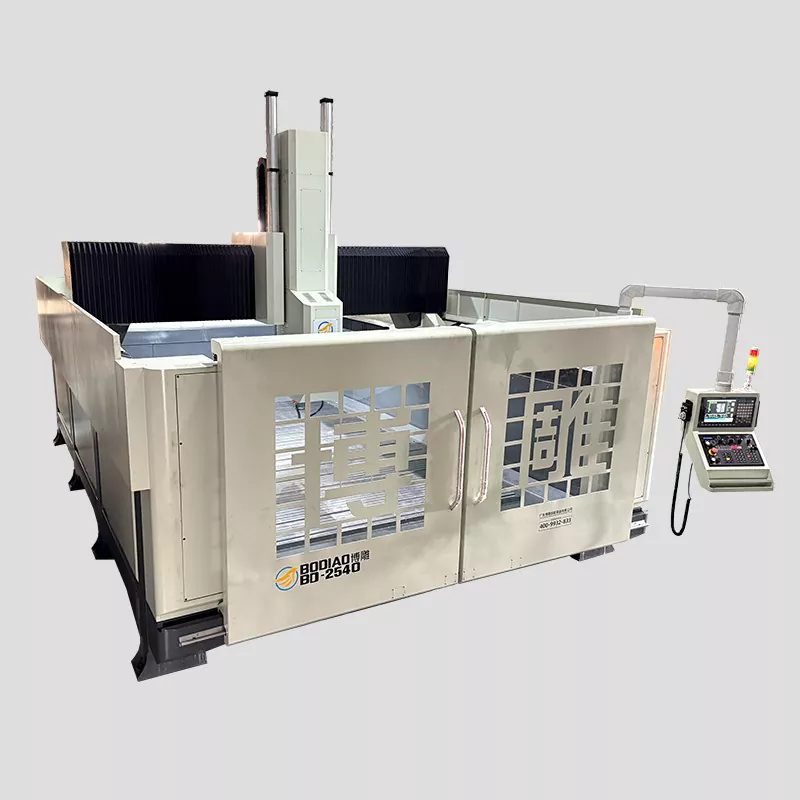
Table of Contents
- 1. What Is a Machining Center and Why Does It Matter?
- 2. What Manufacturing Problems Can a Machining Center Solve?
- 3. How Does a Machining Center Improve Production Efficiency?
- 4. What Should You Consider When Choosing a Machining Center?
- 5. Where Are Machining Centers Widely Used?
- 6. How Is Machining Center Technology Developing?
- 7. Frequently Asked Questions About Machining Centers
Article Outline
- Understanding the role of machining centers in modern manufacturing
- Identifying production challenges solved by CNC machining technology
- Exploring advantages in accuracy, automation, and cost control
- Learning how to select suitable machining equipment
- Discovering industry applications and future trends
What Is a Machining Center and Why Does It Matter?
A machining center is an advanced CNC machine tool designed to perform multiple machining operations automatically. Unlike conventional machines that require separate equipment for drilling, milling, and cutting processes, a machining center integrates various functions into one highly efficient system.
Modern manufacturers rely on machining centers because they provide excellent precision, repeatability, and flexibility. These machines are equipped with automatic tool changers, computerized control systems, and high-speed spindle technology, allowing operators to complete complex machining tasks with fewer manual operations.
For industries such as automotive, aerospace, mold manufacturing, electronics, and precision equipment production, machining accuracy directly influences product quality and market competitiveness. A reliable machining center helps manufacturers maintain strict tolerances while improving production capacity.
Companies like Bodiao focus on providing advanced machining solutions that support manufacturers looking for stable performance, efficient processing, and long-term production value.
What Manufacturing Problems Can a Machining Center Solve?
Many manufacturers face challenges that affect productivity and profitability. These problems often include inconsistent machining quality, high labor costs, long production cycles, and difficulties processing complex components.
A machining center addresses these issues through automation, precision control, and multifunctional capabilities.
| Common Manufacturing Challenge | How a Machining Center Helps |
|---|---|
| Low machining efficiency | Multiple operations can be completed in one setup, reducing production time. |
| Human operation errors | CNC systems provide accurate and repeatable machining processes. |
| Complex component requirements | Advanced control systems handle complicated machining paths. |
| High labor expenses | Automation reduces dependence on manual operations. |
| Unstable product quality | Precise control improves consistency between different batches. |
For manufacturers producing small batches or customized components, machining centers offer the flexibility needed to quickly adjust production requirements without replacing multiple machines.
How Does a Machining Center Improve Production Efficiency?
Improving manufacturing efficiency requires more than increasing machine speed. A truly effective machining solution must improve accuracy, reduce downtime, simplify operation, and optimize the entire production process.
1. Higher Processing Accuracy
Precision is one of the most important advantages of machining centers. CNC control systems minimize human errors and ensure that every machining process follows programmed instructions. This capability is especially important for industries requiring extremely accurate components.
2. Reduced Production Time
Traditional machining often requires transferring workpieces between different machines. This increases setup time and creates additional opportunities for errors. A machining center can complete multiple procedures within one machine, significantly shortening manufacturing cycles.
3. Improved Automation Capability
Automation allows machining centers to operate continuously with less manual intervention. Features such as automatic tool changing and intelligent monitoring systems improve production efficiency and allow manufacturers to achieve higher output.
4. Better Cost Control
Although purchasing a machining center requires initial investment, the long-term benefits are significant. Reduced labor requirements, lower material waste, fewer machining errors, and improved production speed contribute to better overall cost performance.
- Lower operating costs
- Reduced maintenance requirements
- Improved production stability
- Higher utilization of manufacturing resources
What Should You Consider When Choosing a Machining Center?
Selecting the right machining center is essential for achieving expected production results. Different industries have different requirements, so manufacturers should evaluate several important factors before purchasing equipment.
- Machining Capacity: Consider the size, weight, and complexity of the components you need to process.
- Spindle Performance: Higher spindle speed and power can improve machining efficiency for different materials.
- Control System: A reliable CNC system ensures easier operation and better machining accuracy.
- Machine Structure: A strong and stable machine structure improves vibration control and long-term precision.
- After-Sales Support: Technical assistance and spare parts availability are important for continuous production.
Professional manufacturers such as Bodiao understand that every customer has different machining requirements. Providing suitable equipment recommendations and technical support helps companies achieve better production results.
Where Are Machining Centers Widely Used?
Machining centers are widely used across many industries because of their flexibility and high precision. Their ability to process various materials and complex shapes makes them an essential part of modern manufacturing.
- Automotive Industry: Used for engine parts, transmission components, and precision mechanical parts.
- Aerospace Industry: Suitable for manufacturing lightweight and high-strength components with strict accuracy requirements.
- Mold Manufacturing: Provides accurate processing for injection molds, die molds, and complex surfaces.
- Medical Equipment: Supports the production of precision medical components.
- Electronics Industry: Helps manufacture small and accurate parts with excellent consistency.
The wide application range of machining centers demonstrates their importance in improving industrial competitiveness and manufacturing quality.
How Is Machining Center Technology Developing?
The future of machining centers is closely connected with intelligent manufacturing trends. Manufacturers are increasingly adopting technologies that improve automation, efficiency, and production management.
- Smart Manufacturing Integration: Modern machining centers are becoming more connected with digital production systems.
- Higher Automation: Robotic loading, automatic inspection, and intelligent monitoring are improving unmanned production capabilities.
- Energy Efficiency: New machine designs focus on reducing energy consumption while maintaining performance.
- Advanced Control Technology: Improved CNC systems provide faster response and more accurate machining operations.
As manufacturing competition increases worldwide, investing in advanced machining equipment has become an effective way for companies to improve their competitiveness and production reliability.
Frequently Asked Questions About Machining Centers
What is the main advantage of a machining center?
The main advantage of a machining center is its ability to complete multiple machining operations automatically with high accuracy. This reduces production time and improves manufacturing consistency.
What industries need machining centers?
Machining centers are widely used in automotive, aerospace, mold manufacturing, electronics, medical equipment, and many other precision manufacturing industries.
How does a machining center improve product quality?
A machining center uses CNC control technology to maintain stable machining parameters, reducing human errors and ensuring consistent product quality.
Is a machining center suitable for customized production?
Yes. Machining centers are highly flexible and can be programmed for different components, making them suitable for customized and small-batch manufacturing.
Why choose Bodiao for machining center solutions?
Bodiao provides professional machining equipment solutions designed to meet different industrial requirements. With advanced technology and a focus on manufacturing performance, Bodiao helps customers improve efficiency, precision, and production value.
Conclusion
A machining center is more than a production machine; it is a strategic investment that helps manufacturers achieve higher precision, better efficiency, and stronger market competitiveness. By reducing production challenges and improving automation capabilities, machining centers have become essential equipment for modern industrial development.
Choosing the right machining partner is equally important. Bodiao is committed to providing reliable machining solutions that support customers in achieving stable and efficient manufacturing performance. If you are looking for professional machining center solutions to upgrade your production capabilities, please contact us today.