Article Summary
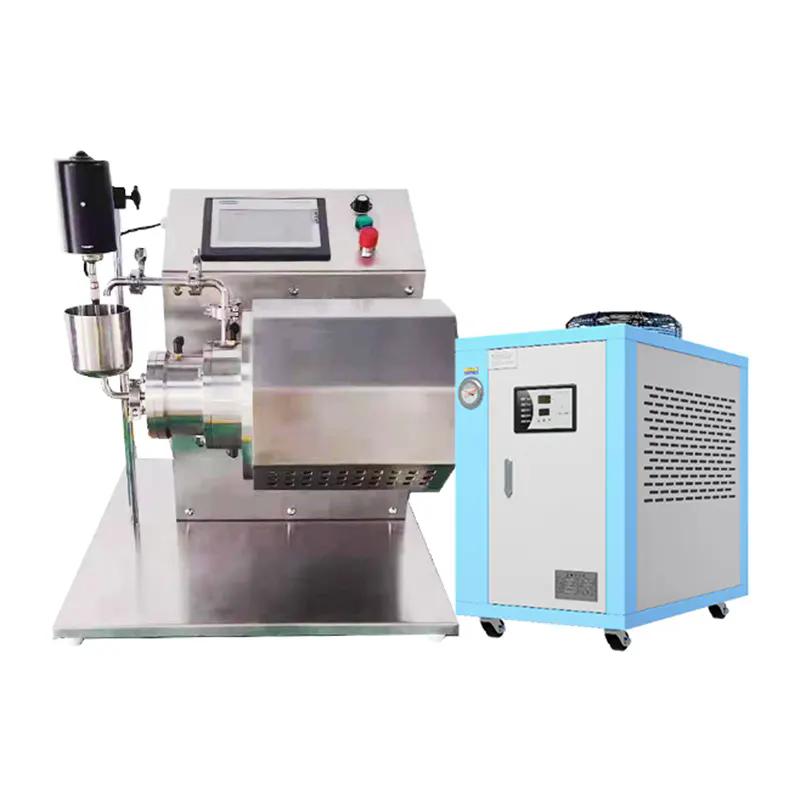
A Sand Mill is a high-performance grinding machine widely used in industries that require ultra-fine particle size reduction, including coatings, inks, pigments, chemicals, pharmaceuticals, and advanced materials. However, many manufacturers still face challenges such as uneven particle distribution, low production efficiency, excessive energy consumption, and unstable product quality. This article explains how a Sand Mill works, why it is essential for modern manufacturing, and how businesses can select the right equipment to achieve better grinding performance. By understanding key factors such as grinding media, processing methods, machine structure, and maintenance strategies, companies can maximize productivity and maintain consistent product standards.
Article Outline
-
Understanding the role of Sand Mill technology in industrial production
-
Exploring the working principle and grinding process
-
Analyzing performance advantages and customer benefits
-
Identifying common industrial applications
-
Learning how to select and maintain suitable equipment
-
Answering common questions from manufacturers and buyers
Why Is a Sand Mill Important for Modern Manufacturing?
In many industrial production processes, achieving precise particle size and uniform dispersion is one of the biggest challenges. Traditional grinding equipment may struggle to provide stable results, especially when manufacturers require extremely fine materials for high-value products. A Sand Mill provides an effective solution by using intensive mechanical energy to break down particles and achieve consistent micron-level grinding performance.
Modern industries increasingly demand products with improved texture, stability, and performance. For example, coatings require excellent dispersion to create smooth surfaces, while inks need uniform pigment distribution to ensure accurate printing results. Without reliable grinding equipment, manufacturers may experience problems such as color inconsistency, poor product stability, and increased production costs.
A professional Sand Mill helps solve these issues through continuous grinding, efficient particle dispersion, and controlled processing conditions. It allows manufacturers to improve product quality while reducing waste and increasing production efficiency.
How Does a Sand Mill Work?
A Sand Mill operates based on the principle of high-speed mechanical grinding and dispersion. The machine contains grinding chambers filled with specially selected grinding media. When the shaft rotates at high speed, the grinding media moves rapidly inside the chamber, creating impact, friction, and shear forces.
These forces continuously reduce the particle size of the processed materials. At the same time, the powerful mixing action ensures that particles are evenly dispersed throughout the product. This process helps manufacturers achieve smooth, stable, and high-quality final materials.
The main working process includes several important stages:
-
Material Feeding: Raw materials enter the grinding chamber through the feeding system.
-
High-Speed Grinding: Grinding media generates strong mechanical forces to reduce particle size.
-
Fine Dispersion: Materials become evenly distributed through continuous circulation.
-
Separation: The finished product is discharged while grinding media remains inside the chamber.
The efficiency of a Sand Mill depends on factors such as grinding media size, rotation speed, chamber design, cooling system, and material characteristics. Proper configuration ensures better grinding results and longer equipment service life.
What Are the Main Advantages of Using a Sand Mill?
Manufacturers choose Sand Mills because they provide significant improvements compared with traditional grinding methods. The following advantages make them an essential choice for many industrial applications:
-
High Grinding Efficiency: The combination of impact and shear forces enables faster particle size reduction and improved production capacity.
-
Excellent Dispersion Performance: A Sand Mill ensures uniform distribution of particles, improving product consistency and stability.
-
Energy Saving Operation: Advanced designs optimize power consumption while maintaining strong grinding performance.
-
Flexible Production Capability: Different models can handle various materials and processing requirements.
-
Improved Product Quality: Fine and uniform particles contribute to better appearance, performance, and durability of finished products.
For companies facing unstable production quality or inefficient grinding processes, upgrading to a reliable Sand Mill can provide long-term operational benefits.
Which Industries Use Sand Mills?
Sand Mills are widely used in industries where fine grinding and dispersion are critical. Their ability to produce consistent particle sizes makes them suitable for many demanding applications.
-
Paint and Coating Industry: Used for pigment grinding and achieving smooth coating performance.
-
Printing Ink Industry: Helps produce uniform pigment dispersion and excellent printing quality.
-
Chemical Industry: Supports the production of additives, compounds, and specialty chemicals.
-
Pharmaceutical Industry: Used in applications requiring controlled particle size and high material consistency.
-
Cosmetics Industry: Helps create smooth textures and stable formulations.
-
Battery and New Material Industry: Provides precise grinding solutions for advanced materials.
As industries continue to develop toward higher precision and better performance, the demand for efficient grinding technology continues to increase.
How Can You Choose the Right Sand Mill?
Selecting the correct Sand Mill requires careful consideration of production requirements, material properties, and expected output quality. Choosing unsuitable equipment may lead to inefficient processing, unnecessary costs, and inconsistent results.
Important factors to consider include:
-
Material Characteristics: Different materials have different hardness, viscosity, and chemical properties that influence equipment selection.
-
Required Particle Size: Manufacturers should select equipment capable of achieving their target fineness level.
-
Production Capacity: The machine size and processing capability should match the company's production volume.
-
Grinding Media Compatibility: Proper grinding media selection improves efficiency and product quality.
-
Equipment Reliability: Durable construction and professional manufacturing standards help reduce downtime.
FUAN focuses on providing reliable Sand Mill solutions designed to meet different industrial grinding requirements. With professional manufacturing experience and attention to product performance, FUAN helps customers achieve stable and efficient production processes.
How Can Proper Maintenance Improve Sand Mill Performance?
Regular maintenance plays an important role in extending the service life of a Sand Mill and maintaining stable production performance. Even high-quality equipment requires proper care to operate efficiently over time.
-
Regular Inspection: Check important components such as seals, bearings, and grinding chambers to identify potential issues early.
-
Cleaning Procedures: Remove residual materials after operation to prevent contamination and maintain product quality.
-
Correct Operating Parameters: Maintain suitable rotation speed, temperature, and processing conditions.
-
Professional Service: Follow manufacturer recommendations for repairs and replacement of wear parts.
A well-maintained Sand Mill not only improves production efficiency but also reduces unexpected downtime and operating expenses.
Frequently Asked Questions About Sand Mills
1. What materials can be processed by a Sand Mill?
A Sand Mill can process various materials including pigments, coatings, inks, chemicals, and other products requiring fine grinding and dispersion.
2. What is the difference between a Sand Mill and traditional grinding equipment?
A Sand Mill provides more efficient particle size reduction and better dispersion performance compared with many traditional grinding methods, especially for applications requiring ultra-fine processing.
3. How long does a Sand Mill usually operate?
The service life depends on equipment quality, operating conditions, maintenance practices, and the materials being processed.
4. How can manufacturers improve Sand Mill efficiency?
Efficiency can be improved by selecting suitable grinding media, optimizing operating parameters, performing regular maintenance, and choosing equipment designed for specific production needs.
5. Why should companies choose professional Sand Mill manufacturers?
Professional manufacturers provide better equipment reliability, technical support, customized solutions, and long-term production advantages.
Conclusion
A Sand Mill is an essential piece of equipment for manufacturers seeking higher grinding efficiency, better dispersion quality, and more stable production performance. By understanding how the machine works, selecting suitable configurations, and following proper maintenance practices, businesses can significantly improve their manufacturing processes.
FUAN provides professional Sand Mill solutions to support customers across different industries with reliable equipment and customized grinding technologies. If you are looking for an efficient grinding solution to improve your production performance, contact us today to discuss your requirements and discover the right Sand Mill solution for your business.