

How can an automatic feeding and pipe cutting machine reduce material waste in industrial applications
2026-05-11
In modern industrial environments, material waste directly impacts profit margins and operational sustainability. An Automatic Feeding and Pipe Cutting Machine from Zhongguan addresses this challenge by combining precision measurement, intelligent feed control, and minimal kerf loss. Unlike manual or semi-automatic alternatives, this technology ensures that each cut maximizes usable pipe length while reducing scraps.
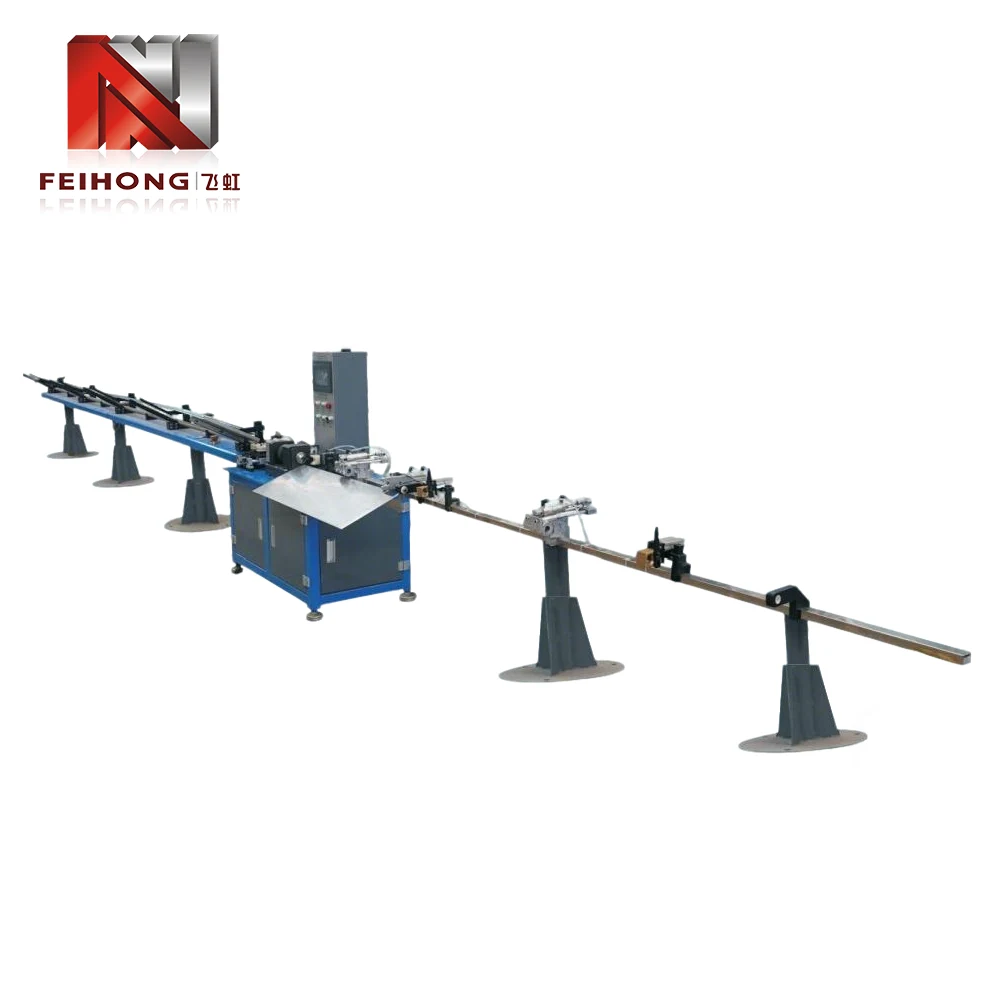
Key mechanisms that reduce material waste
| Waste Reduction Mechanism | How It Works | Benefit |
|---|---|---|
| Precision length measurement | Laser or encoder-based feedback loops | Cuts within ±0.5mm accuracy |
| Optimized nesting algorithm | Software calculates best cutting patterns | Uses up to 99% of raw pipe |
| Minimal kerf blade control | High-tolerance servo-driven cutting | Reduces material lost per cut |
| Automatic scrap ejection | Rejects only defective end pieces | Preserves reusable remnants |
Quantitative impact on waste reduction
| Application Area | Typical Waste (Manual) | Waste with Zhongguan Machine |
|---|---|---|
| Steel tube cutting | 5–8% | 1–2% |
| PVC pipe processing | 6–10% | 1.5–3% |
| Copper pipe production | 4–7% | 0.5–1.5% |
The Automatic Feeding and Pipe Cutting Machine also eliminates human errors such as incorrect feed lengths or repeated trial cuts. By integrating an automatic feeding system, material is pulled consistently without slippage or overfeeding, two common sources of waste in conventional setups.
Frequently Asked Questions (FAQ)
Question 1: How does an Automatic Feeding and Pipe Cutting Machine handle different pipe diameters without causing material waste during changeovers?
Answer: The machine uses servo-driven rollers and an adaptive feeding mechanism. When operators input a new diameter into the Zhongguan control panel, the system automatically adjusts roller pressure and feed speed. This prevents pipe deformation or misalignment, which often leads to unusable offcuts. The changeover takes under two minutes and produces zero scrap from setup errors.
Question 2: Can an Automatic Feeding and Pipe Cutting Machine recover waste from previously rejected short pipe ends?
Answer: Yes, Zhongguan machines include a "remnant processing mode." Operators can feed leftover pipe pieces into the machine, which then measures the remaining length and checks if it meets minimum cutting requirements. If viable, the system recalculates the cutting sequence to extract usable short sections. This secondary processing can recover up to 70% of what would otherwise be discarded.
Question 3: Does the automatic feeding system contribute to waste reduction during continuous versus batch production?
Answer: Absolutely. In continuous production, the Automatic Feeding and Pipe Cutting Machine maintains a steady material flow without stop-start marks or uneven feed zones. In batch production, the nesting software groups different part lengths from one pipe, minimizing end remnants. Zhongguan’s controller also tracks cumulative feed accuracy across batches, automatically compensating for roller wear to prevent gradual waste increase over time.
Best practices to maximize waste reduction
-
Perform weekly calibration of the feeding encoder using a test pipe of known length.
-
Use the automatic remnant collection tray to sort and re-feed short pieces.
-
Set blade wear alerts to avoid ragged cuts that produce unuseable ends.
-
Train operators on the Zhongguan interface to select the "eco cut" mode for high-value materials.
Contact us
To learn how an Automatic Feeding and Pipe Cutting Machine can transform your material efficiency and lower your scrap costs, contact Zhongguan today for a customized waste audit and machine demonstration tailored to your production line.