

How Can Automatic Powder Coating Booths Improve Production Efficiency?
2026-10-27
Article Summary
Automatic powder coating booths are essential components of many industrial finishing lines. They provide an enclosed or controlled spraying area, support automatic spray gun operation, and work with powder recovery and ventilation systems to improve coating consistency and housekeeping. However, automation alone cannot eliminate every coating defect or guarantee lower production costs. Booth design must match workpiece dimensions, conveyor speed, gun configuration, powder characteristics, color-change frequency, and downstream curing requirements. This guide explains how automatic powder coating booths work, which components matter most, how to troubleshoot common defects, and what buyers should evaluate before investing in equipment. It also outlines practical safety considerations and questions to discuss with an industrial coating equipment supplier such as Qingguo.
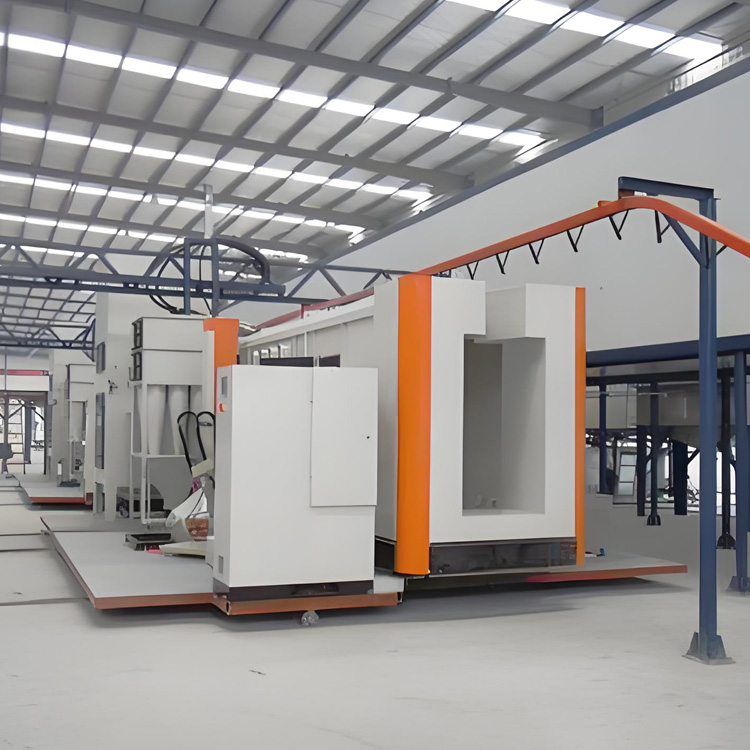
What Are Automatic Powder Coating Booths?
Manufacturers need protective coatings that look consistent, resist wear, and support efficient production. For metal products such as aluminum profiles, electrical enclosures, metal furniture, automotive components, and industrial hardware, powder coating is a widely used finishing method.
Automatic powder coating booths provide a controlled area in which powder coating is applied to workpieces, typically using electrostatic spray guns mounted on reciprocators or other automated equipment. Parts may travel through the booth on an overhead conveyor or another suitable conveying system, allowing successive workpieces to be coated with less manual intervention.
A typical installation combines the booth enclosure, automatic spray guns, gun-moving equipment, powder delivery, overspray collection, ventilation, controls, and conveyor interfaces. Depending on the product geometry and finishing requirements, operators may also use manual spray guns to correct difficult-to-reach areas.
The booth itself is not the same as a curing oven. The booth contains the spraying operation and helps manage overspray, while a separate curing oven normally heats the coated workpieces according to the powder manufacturer's specified curing schedule.
How Does an Automatic Powder Coating Booth Work?
Automatic powder coating combines controlled powder delivery, electrostatic charging, workpiece grounding, and managed airflow. Each stage contributes to the efficiency and quality of the finished coating.
Step 1: Prepare and Convey the Workpiece
Before spraying, the workpiece should be cleaned and pretreated according to the substrate, operating environment, and coating specification. Oil, dust, rust, and other contaminants can compromise adhesion. The part is then loaded onto a conveyor or suitable fixture and transported toward the booth.
Step 2: Detect and Position the Part
In an automated line, conveyor movement, part sensing, programmed gun trajectories, and line controls coordinate spraying with workpiece position. The exact arrangement varies by system. Reliable positioning helps prevent missed sections, unnecessary powder discharge, and inconsistent coverage between parts.
Step 3: Apply Electrostatic Powder
Powder is delivered to electrostatic spray guns and charged through the selected charging technology. The grounded workpiece attracts charged powder particles, helping them deposit on the surface. Gun voltage, current limits, powder flow, atomizing or conveying air, gun distance, and spray angle must be adjusted to the powder and workpiece.
Step 4: Move Automatic Guns Across the Surface
Reciprocators move guns along programmed vertical or horizontal paths, depending on the system design. Gun placement and motion must match the dimensions and shape of the parts. Complex profiles, deep recesses, corners, and narrow channels may require additional guns, alternative angles, or manual touch-up.
Step 5: Collect Overspray
Powder that does not deposit on the workpiece is carried toward the recovery system by controlled airflow. Depending on the design, filters or cyclone-based arrangements separate powder from the exhaust air. Recovered powder must be evaluated and handled according to the system design, powder manufacturer's instructions, and applicable quality requirements before reuse.
Step 6: Cure the Coating
After spraying, the workpiece moves to a curing oven where the powder melts, flows, and cures under the specified conditions. Actual metal temperature and curing time matter; oven air temperature alone does not establish that the coating has received the required cure.
This coordinated process helps manufacturers establish repeatable production conditions while retaining the flexibility to accommodate different workpiece sizes, finishes, and production volumes.
Essential Components of Automatic Powder Coating Booths
Understanding the main components helps buyers assess whether a proposed booth will suit their production requirements.
| Component | Main Function | What Buyers Should Check |
|---|---|---|
| Booth enclosure | Defines the spraying area and helps control powder movement | Dimensions, opening layout, cleanability, material compatibility |
| Electrostatic spray guns | Charge and apply powder to the workpiece | Gun compatibility, output control, available settings, serviceability |
| Reciprocators | Move guns along repeatable programmed paths | Travel range, speed control, mounting arrangement, safety interlocks |
| Powder delivery system | Supplies powder to the spray guns | Stable feed, hose routing, powder compatibility, cleaning access |
| Recovery and filtration | Collects overspray and separates powder from airflow | Filter performance, cleaning method, recovery strategy, maintenance needs |
| Ventilation and controls | Manages airflow and coordinates operating conditions | Airflow design, monitoring, alarms, interlocks, safety compliance |
| Conveyor interface | Moves workpieces through the spraying zone | Part spacing, speed, hanging method, grounding, line synchronization |
Some systems use filter recovery for relatively straightforward production and color changes. Cyclone-based or other engineered recovery arrangements may be considered for specific high-throughput or frequent color-change applications. The most suitable solution depends on powder properties, required cleanliness, production volume, and the manufacturer's system design.
Key Benefits of Automatic Powder Coating Booths for Manufacturers
More Consistent Coating Application
Programmed gun movement and repeatable spray settings can reduce variation caused by differences in manual technique. When workpiece positioning, grounding, and powder delivery are also controlled, manufacturers can develop a more stable process across production batches.
Higher Throughput for Repetitive Work
Automatic guns can spray successive parts while a conveyor maintains production flow. This is especially useful for repetitive components, such as metal brackets, cabinets, profiles, and appliance parts. Actual throughput depends on part spacing, conveyor speed, booth capacity, color changes, curing time, and handling operations.
Improved Powder Utilization
A properly designed recovery system can collect a substantial portion of oversprayed powder. The amount that can be reused depends on equipment design, powder characteristics, contamination control, and the proportion of fresh powder required to maintain finish quality. Buyers should request application-specific performance data rather than assuming a universal recovery rate.
Reduced Routine Manual Spraying
Automation can reduce the amount of repetitive spraying operators must perform. However, personnel are still needed for setup, quality inspection, maintenance, loading, unloading, and certain difficult geometries. Manual correction stations may be useful where the product design prevents full automatic coverage.
Better Integration with Production Planning
When connected to conveyor controls and downstream curing equipment, the booth can form part of a coordinated finishing line. This can improve material flow and make it easier to standardize operating procedures, track defects, and schedule maintenance.
How to Reduce Common Powder Coating Defects
Even an automated coating line can produce defects if operating parameters are unsuitable or upstream conditions change. A structured troubleshooting process helps identify the underlying cause instead of repeatedly adjusting the spray gun without a clear plan.
Uneven Film Thickness
Uneven coating may result from incorrect gun positioning, unsuitable reciprocator speed, irregular part spacing, poor grounding, unstable powder delivery, or inconsistent workpiece geometry. Check the coating thickness at defined measurement locations and compare the results with the approved specification.
Poor Coverage in Recesses and Corners
Deep cavities and narrow channels can be difficult to coat because of electrostatic field effects and the behavior of charged particles. Excessive electrostatic settings can sometimes worsen penetration into recesses. Review gun angle, distance, voltage, airflow, and part orientation. Additional guns or manual correction may be required for certain designs.
Pinholes, Craters, or Surface Contamination
Possible causes include oil, moisture, silicone contamination, substrate outgassing, incompatible powder, or problems with the curing process. Inspect pretreatment, compressed air quality where relevant, powder storage, and substrate condition before changing multiple spray parameters.
Poor Adhesion or Coating Damage
Adhesion problems can arise from inadequate cleaning, unsuitable pretreatment, incompatible materials, incorrect film thickness, or insufficient curing. Confirm the specified pretreatment process and verify the curing schedule against the powder manufacturer's technical data.
Excessive Powder Consumption
Review powder flow, spray timing, gun-to-part distance, conveyor synchronization, and the recovery system. Overspraying, unnecessary gun activation, leaking powder lines, and poor part presentation can increase material consumption without improving the finish.
Record each defect, affected part type, operating conditions, and corrective action. This creates a practical troubleshooting history that can help operators distinguish recurring process problems from isolated incidents.
How to Choose the Right Automatic Powder Coating Booth
Choosing a booth based only on its external dimensions or purchase price can lead to expensive compromises later. The selection process should start with the parts to be coated and the production requirements the equipment must satisfy.
1. Define Workpiece Dimensions and Geometry
Provide maximum and minimum part dimensions, weight, shape, recess depth, and hanging orientation. The supplier needs this information to evaluate booth openings, gun positions, reciprocator travel, and whether additional manual spraying is likely to be necessary.
2. Establish Production Capacity
Specify the number of parts per hour or shift, conveyor speed, part spacing, working hours, and expected product mix. Capacity calculations should account for loading, unloading, color changes, maintenance, and downstream curing rather than considering spraying speed in isolation.
3. Match the Recovery System to Your Operation
Frequent color changes may require a different recovery and cleaning strategy from a line that runs one color for long periods. Discuss color-change time, powder cross-contamination risks, recovery requirements, filter replacement, and how recovered powder will be controlled.
4. Confirm Conveyor and Oven Compatibility
Check whether the proposed booth integrates with the existing conveyor, workpiece fixtures, pretreatment equipment, and curing oven. Ensure that conveyor speed and downstream oven capacity can support the intended production rate.
5. Evaluate Controls and Expansion Needs
Ask about recipe settings, gun control, fault alarms, production monitoring, safety interlocks, and future expansion. Confirm what is included in the quoted scope and which utilities, installation work, and auxiliary equipment must be provided separately.
6. Compare Total Cost of Ownership
Compare the initial equipment price alongside powder usage, energy consumption, maintenance, filter replacement, cleaning time, spare parts, labor, and expected downtime. A lower purchase price may not produce the lowest long-term cost.
Qingguo, operating through Jiangsu Qingguo Intelligent Technology Co., Ltd., provides coating equipment and production-line solutions. Its automatic powder coating booth is designed for conveyorized applications with openings for reciprocators and the option of manual touch-up stations, depending on the workpiece geometry and finishing requirements.
When discussing a project with Qingguo, share drawings or photographs of representative parts, material types, required finish, production volume, available workshop space, and existing line information. These details help establish whether a proposed configuration is suitable for the application.
Integrating an Automatic Powder Coating Booth into a Complete Production Line
A powder coating booth performs best when it is designed as part of a complete finishing process. Poor coordination between pretreatment, spraying, curing, and material handling can undermine the benefits of automation.
Surface Pretreatment
Cleaning and pretreatment remove contaminants and establish a suitable surface for coating. Depending on the substrate and application, the process may include degreasing, rinsing, conversion coating, drying, or other specified operations. The correct process should be determined from the coating system and performance requirements.
Conveying and Workpiece Presentation
Stable fixtures and consistent spacing help ensure that parts pass through the booth in predictable positions. The hanging method must support reliable electrical grounding and allow the spray guns to access the intended surfaces.
Automatic Spraying and Manual Correction
Automatic guns handle repeatable spraying paths, while manual touch-up can address selected areas that are difficult to reach. The need for manual correction should be evaluated during trials because excessive touch-up may indicate a problem with part design, gun configuration, or the automatic spray program.
Curing and Final Inspection
The curing oven must match the powder specification and production load. After curing, inspection may include film thickness, visual appearance, adhesion, and other tests required by the customer's product standard. Test methods and acceptance criteria should be agreed upon before mass production.
For a new installation, request a process flow diagram and a clearly defined equipment scope. Clarify utility requirements, floor space, exhaust arrangements, installation responsibilities, operator training, commissioning, and after-sales support before approving the project.
Safety, Maintenance, and Operating Costs
Powder coating systems require careful attention to combustible dust, electrostatic ignition sources, electrical equipment, ventilation, and powder handling. The specific risks depend on the powder formulation, facility layout, equipment design, and operating conditions.
Control Combustible Dust Risks
Many organic powder coatings can create combustible dust hazards under certain conditions. Booths, collectors, ducts, and surrounding work areas must be designed and operated according to applicable combustible-dust requirements. Do not assume that a powder coating process is fire-safe simply because it does not use conventional liquid paint solvents.
Verify Grounding and Electrical Safety
Workpieces, fixtures, and conductive equipment must be grounded as required by the system design. Inspect grounding connections, spray gun components, and relevant interlocks according to the manufacturer's instructions. Do not bypass safety devices or continue operating with unresolved electrical faults.
Maintain Airflow and Filtration
Follow the prescribed inspection and replacement schedules for filters and other recovery components. Changes in airflow, abnormal pressure readings, powder leakage, or visible dust escape should be investigated promptly. Cleaning methods must be compatible with the equipment and combustible-dust controls.
Use Suitable Cleaning Procedures
Color changes and routine cleaning can introduce contamination if residual powder remains in the booth or delivery system. Follow the equipment supplier's cleaning procedures and use only approved tools and methods. Avoid improvised cleaning practices that could disperse dust or create ignition hazards.
Train Operators and Document Inspections
Provide training for startup, shutdown, fault response, powder handling, cleaning, and emergency procedures. Maintain inspection records and establish clear isolation procedures before maintenance work. Installation and operation should comply with the relevant local regulations and applicable equipment standards.
A Purchasing Checklist for Automatic Powder Coating Booths
Before requesting a quotation, prepare the following information so equipment suppliers can assess the application accurately.
- Workpiece details: Material, dimensions, weight, geometry, and representative drawings or photographs.
- Production requirements: Target output, conveyor speed, operating hours, and expected product mix.
- Coating specification: Powder type, color range, required film thickness, finish, and performance criteria.
- Automation scope: Number and arrangement of automatic guns, reciprocators, sensors, controls, and manual touch-up stations.
- Recovery requirements: Recovery technology, cleaning process, color-change frequency, and powder reuse policy.
- Line integration: Pretreatment, conveyor, curing oven, utilities, available floor space, and exhaust arrangements.
- Safety requirements: Applicable regulations, combustible-dust controls, grounding, interlocks, and operator protection.
- Commercial terms: Equipment scope, delivery schedule, installation, commissioning, training, warranty, and spare parts.
- Acceptance criteria: Test parts, coating quality checks, production trial conditions, and commissioning targets.
Ask shortlisted suppliers to explain how their proposed configuration addresses your specific workpieces and production targets. Where practical, request a representative coating trial and document the agreed acceptance criteria. This helps compare proposals on performance and suitability rather than price alone.
Frequently Asked Questions About Automatic Powder Coating Booths
1. What is the main purpose of an automatic powder coating booth?
Its main purpose is to provide a controlled spraying area for powder application while working with ventilation and recovery equipment to manage overspray. Automatic guns and reciprocators can improve application consistency on suitable workpieces.
2. How does an automatic booth differ from a manual powder coating booth?
An automatic booth typically integrates spray guns with programmed movement and conveyor synchronization. A manual booth relies more heavily on operators to control gun movement. Some production lines combine both methods to handle complex geometries.
3. Can an automatic powder coating booth eliminate coating defects?
No. Automation can reduce certain sources of variation, but defects may still arise from contamination, grounding problems, unsuitable spray settings, powder condition, complex geometry, or incorrect curing. A controlled process and systematic inspection remain essential.
4. What is the difference between a powder coating booth and a curing oven?
The booth is where powder is applied to the workpiece. The curing oven heats the coated part so the powder melts, flows, and cures according to the coating manufacturer's specified schedule. They perform different functions within the finishing line.
5. How much powder can an automatic booth recover?
Recovery performance depends on the booth and collector design, powder properties, airflow, workpiece geometry, and operating conditions. Request application-specific recovery data and clarify whether the quoted figure refers to collection efficiency, reusable powder, or overall material utilization.
6. Are automatic powder coating booths suitable for frequent color changes?
They can be, but the required recovery system and cleaning procedures should be selected for the expected color-change frequency and contamination tolerance. Discuss cleaning time, residual powder control, and the cost of any dedicated equipment with the supplier.
7. Which industries commonly use automatic powder coating booths?
Typical applications include metal furniture, electrical cabinets, aluminum profiles, automotive components, appliances, industrial hardware, and fabricated metal products. Suitability depends on part size, coating requirements, throughput, and system configuration.
8. What information is needed to obtain a quotation from Qingguo?
Prepare workpiece dimensions, material, production targets, required coating finish, powder types, color-change frequency, existing line details, and installation constraints. Drawings or photographs help the Qingguo team understand the application and discuss a suitable equipment configuration.
9. What should buyers check before accepting a new coating line?
Agree on commissioning procedures, representative test parts, coating quality criteria, line operating conditions, safety interlocks, training, documentation, and handover requirements. Acceptance should be based on documented criteria appropriate to the project.
Looking for Automatic Powder Coating Booths for Your Production Line?
Improve your coating process with equipment selected around your workpiece geometry, production capacity, powder recovery needs, and finishing requirements. Qingguo provides industrial coating equipment and production-line solutions for manufacturers seeking a more coordinated approach to surface finishing.
Share your product drawings, target output, coating specifications, and current production setup to discuss a suitable configuration, equipment scope, and project requirements.
Contact Us for a Customized SolutionDiscuss equipment specifications, system integration, project quotations, and technical requirements with Qingguo.