

How can you reduce tool wear when operating an Aluminum Profile Engraving Machine for high-volume production
2026-05-21
High-volume production on an Aluminum Profile Engraving Machine places extreme stress on cutting tools. For workshops running long shifts, tool wear directly impacts precision, surface quality, and operating costs. Bodiao has engineered solutions that help machinists extend tool life while maintaining engraving consistency across thousands of aluminum profiles.
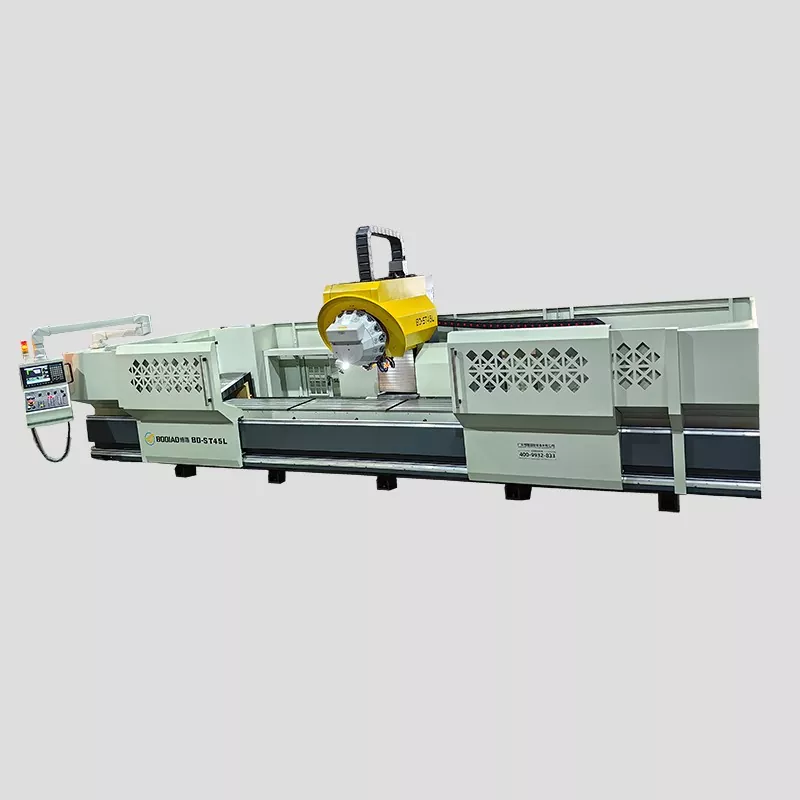
Understanding tool wear mechanisms in aluminum engraving
Aluminum is soft but adhesive. During high-speed engraving, microscopic aluminum particles weld onto tool edges—a phenomenon called built-up edge (BUE). This leads to rapid dulling, chipping, and poor finish quality. In high-volume settings, heat accumulation further accelerates wear. Addressing these factors requires systematic adjustments to machine parameters, tool selection, and cooling strategies.
Proven strategies to minimize tool wear
| Strategy | Implementation on Bodiao Machines | Expected Tool Life Increase |
|---|---|---|
| Optimized chip load | 0.001–0.003 inch per tooth, adjusted via spindle speed | 40–60% |
| Mist cooling system | Directed air-oil nozzles at cutting zone | 50% reduction in BUE |
| Diamond-like carbon (DLC) coated tools | Paired with high-torque spindle | 2–3x longer than uncoated |
| Tool path programming | Trochoidal milling + ramping entries | 30% less thermal stress |
Critical parameters to control
-
Spindle speed range – Keep between 12,000–18,000 RPM for aluminum profiles. Above 20,000 RPM increases friction without productivity gain.
-
Feed rate matching – Use the formula: Feed (IPM) = RPM × chip load × flute count. Bodiao control software automates this calculation.
-
Peck depth – Limit to 0.5× tool diameter per pass in deep grooves.
Cooling and lubrication rules
Flood coolant works but creates cleanup issues. For high-volume Aluminum Profile Engraving Machine operations, Bodiao recommends minimum quantity lubrication (MQL) with 70% ethanol + 30% vegetable ester. This evaporates quickly, prevents chip welding, and leaves no residue on finished profiles.
Tool inspection schedule
After every 200 engraved profiles:
-
Measure tool diameter with laser micrometer
-
Check flank wear (<0.15 mm acceptable)
-
Inspect cutting edge under 20× magnification
Frequently Asked Questions about Aluminum Profile Engraving Machine tool wear
Q1: How often should I replace the engraving bit on an Aluminum Profile Engraving Machine when running 500 profiles per day?
A1: Under Bodiao-recommended parameters (18,000 RPM, 60 IPM feed, MQL cooling), a solid carbide single-flute bit typically lasts 3,000–4,000 linear meters of engraving. For 500 profiles averaging 2 meters of engraved path each, replacement is needed every 3–4 production days. Visual signs like raised burrs or inconsistent depth indicate earlier replacement. Bodiao machines include a tool life monitoring feature that alerts operators at 85% of estimated wear.
Q2: Does climb milling or conventional milling reduce tool wear on an Aluminum Profile Engraving Machine?
A2: Climb milling reduces tool wear by 25–35% in aluminum profile engraving. In climb milling, the cutting edge engages with maximum chip thickness at entry and exits with zero thickness, minimizing friction and heat. Conventional milling creates rubbing and smearing, accelerating BUE formation. Bodiao CNC systems default to climb milling for finishing passes, with automatic tool path verification to prevent backlash issues.
Q3: Can using a larger tool diameter reduce wear on an Aluminum Profile Engraving Machine?
A3: Only up to a point. Increasing tool diameter from 3 mm to 6 mm improves heat dissipation and stiffness, reducing wear per linear meter by approximately 40%. However, tools above 8 mm require higher torque and generate more cutting force, which can distort thinner aluminum profiles (e.g., 1–2 mm wall thickness). Bodiao recommends a 6 mm micro-grain carbide tool with 2 flutes for general high-volume work, switching to 3 mm only for fine details below 0.5 mm line width.
Preventive maintenance for the machine itself
Tool wear is not only about the bit. A misaligned spindle or loose linear guides multiply wear rates. Bodiao Aluminum Profile Engraving Machine models feature automatic spindle runout checks (<0.01 mm) and guide rail lubrication reminders every 200 operating hours. Monthly calibration of axis squareness ensures engraving forces remain balanced across the tool.
Final checklist for high-volume production
-
Use only fresh, annealed aluminum profiles (T0 or T4 temper, not T6)
-
Keep chip evacuation clear with Bodiao’s integrated vacuum table
-
Store tools in dry cabinets – humidity accelerates edge oxidation
To implement these wear reduction strategies on your production line, contact us today for a Bodiao application engineer to assess your Aluminum Profile Engraving Machine setup and recommend tooling packages tailored to your volume targets.