

How Do Box Column Welding Lines Improve Structural Welding Efficiency?
2025-12-18
Abstract: Box Column Welding Lines have become a critical solution for the fabrication of large structural steel components. This article provides an in-depth exploration of how these systems operate, their technical specifications, and their applications in modern manufacturing. Additionally, the piece addresses frequently asked questions regarding operational efficiency, maintenance, and compatibility, offering actionable insights for industrial users seeking high-performance welding solutions.
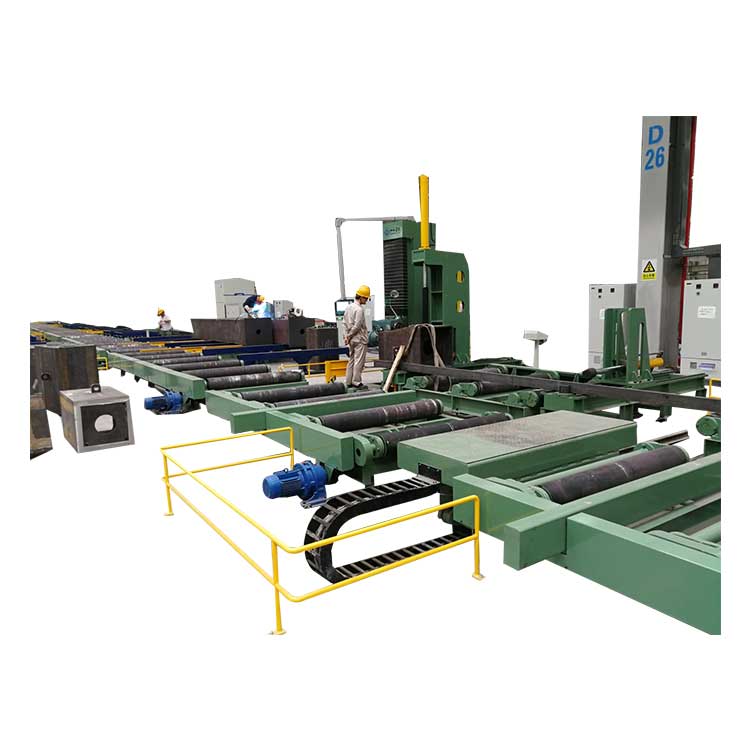
Table of Contents
- Introduction to Box Column Welding Lines
- Technical Parameters
- Frequently Asked Questions
- Applications and Operational Insights
- Conclusion and Brand Information
Introduction to Box Column Welding Lines
Box Column Welding Lines are specialized automated systems designed to handle welding tasks for box columns and structural steel frameworks. These lines integrate multiple processes including precise alignment, seam tracking, and robotic welding to ensure consistent weld quality while improving production throughput. The central purpose of these systems is to reduce manual intervention, increase operational safety, and maintain consistent structural integrity in heavy fabrication tasks.
The core workflow involves the feeding of box columns onto the welding line, where automated positioning systems ensure precise alignment. High-precision welding robots then execute longitudinal and circumferential welds according to programmed paths. The integration of sensors and feedback loops allows for real-time monitoring and adjustment, reducing errors and minimizing rework.
Technical Parameters of Box Column Welding Lines
Understanding the specifications of Box Column Welding Lines is critical for evaluating performance and compatibility with existing manufacturing systems. Below is a detailed table summarizing key technical parameters:
| Parameter | Description |
|---|---|
| Column Width Range | 300mm - 1500mm |
| Column Height Range | 2000mm - 12000mm |
| Welding Method | MIG/MAG, Submerged Arc Welding (SAW) |
| Automation Level | Fully Automated with PLC Control |
| Production Capacity | Up to 15 columns per 8-hour shift |
| Alignment Accuracy | ±1mm |
| Power Supply | 380V 50Hz Three-phase |
| Control System | Industrial PLC with HMI Interface |
| Material Compatibility | Carbon Steel, Stainless Steel, Alloy Steel |
| Safety Features | Emergency Stop, Light Curtain, Safety Interlocks |
Frequently Asked Questions About Box Column Welding Lines
Q1: How can the welding line ensure uniform weld quality across large box columns?
A1: Uniform weld quality is achieved through a combination of automated positioning systems, robotic welding arms, and real-time feedback from seam tracking sensors. These sensors continuously monitor the weld seam position and adjust the robot trajectory to maintain consistent penetration and bead formation, minimizing defects such as undercut or porosity.
Q2: What maintenance routines are necessary to maintain optimal performance?
A2: Regular maintenance includes cleaning and lubricating robotic axes, inspecting the welding torch for wear, calibrating seam tracking sensors, checking the PLC control system, and replacing consumables such as welding wire and gas nozzles. Preventive maintenance schedules typically involve weekly, monthly, and quarterly inspections to ensure uninterrupted operation and prolong equipment lifespan.
Applications and Operational Insights
Box Column Welding Lines are widely adopted in sectors requiring precise fabrication of steel structures, including construction, shipbuilding, and heavy machinery manufacturing. By automating welding, these systems reduce labor dependency, enhance production efficiency, and ensure compliance with industry standards such as ISO 3834 for welding quality management.
Node 1: Operational Efficiency
These welding lines streamline production by integrating feeding, alignment, welding, and inspection in a single workflow. Automation reduces cycle time and increases throughput, allowing facilities to meet higher demand without compromising quality. Additionally, robotic welding improves repeatability, which is crucial for structural integrity in load-bearing applications.
Node 2: Adaptability and Customization
Modern Box Column Welding Lines can be adapted to different column sizes and welding methods. This adaptability ensures that manufacturers can process various structural profiles without additional equipment. Modular design also allows integration of future upgrades such as new welding heads or enhanced sensor systems, extending the machine’s operational life.
Node 3: Safety and Compliance
Safety is a primary concern in welding operations. These lines incorporate multiple protective measures, including emergency stops, safety curtains, and interlocks. Compliance with local and international safety standards reduces workplace accidents and potential regulatory penalties. Operators are also trained to monitor machine performance via HMI interfaces, ensuring safe interaction with automated equipment.
Node 4: Cost Efficiency and ROI
Although the initial investment in a Box Column Welding Line can be substantial, long-term cost savings are achieved through reduced labor costs, minimized rework, lower material wastage, and increased production speed. The ROI is typically realized within a few production cycles, making these systems a financially viable solution for large-scale manufacturing operations.
Conclusion and Brand Information
Box Column Welding Lines represent a critical advancement in automated steel fabrication, offering unmatched precision, efficiency, and safety. For companies seeking reliable welding solutions for structural steel, JINFENG WELDCUT provides state-of-the-art equipment tailored to industrial needs. To explore how these systems can integrate into your production process, contact us for consultation and technical support.