
How do material selection and heat treatment affect ring type special shaped forgings
2026-05-14
Material selection and heat treatment directly determine the mechanical properties, dimensional accuracy, and service life of Ring Type Special-shaped Forgings. At Tongxin, we have observed that even minor changes in alloy composition or tempering cycles can significantly alter how these complex components perform under high stress, thermal cycling, or corrosive environments. Understanding this relationship is essential for engineers who specify Ring Type Special-shaped Forgings for aerospace, power generation, or heavy machinery applications.
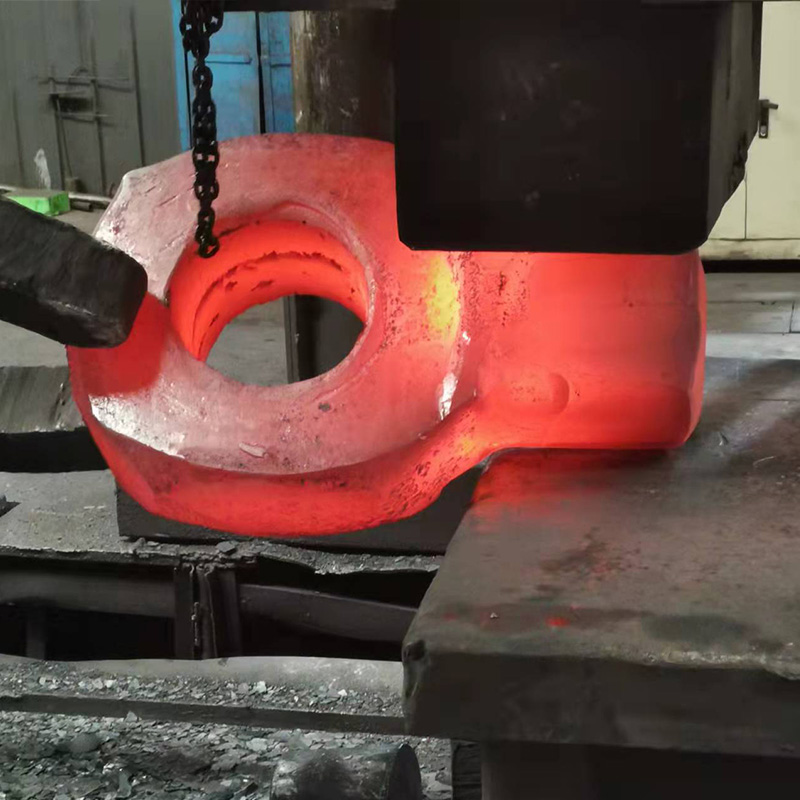
The table below summarizes how different material families respond to common heat treatment processes in the context of Ring Type Special-shaped Forgings.
| Material Family | Typical Heat Treatment | Effect on Ring Type Special-shaped Forgings |
|---|---|---|
| Carbon steel (e.g., AISI 1045) | Normalizing + tempering | Improved toughness and machinability; reduced residual stress |
| Alloy steel (e.g., 4140, 4340) | Quenching + high tempering | High tensile strength and impact resistance; suitable for large-section rings |
| Stainless steel (e.g., 304, 316) | Solution annealing + rapid cooling | Enhanced corrosion resistance and uniform grain structure |
| Nickel-based superalloys (e.g., Inconel 718) | Aging + precipitation hardening | Exceptional creep resistance at elevated temperatures (>600°C) |
In addition, the following list highlights the critical ways Tongxin optimizes material and thermal cycles for Ring Type Special-shaped Forgings:
-
Grain refinement through controlled austenitization, preventing brittle phases in complex ring geometries.
-
Uniform hardness distribution by selecting alloys with hardenability matching the forging’s variable cross-sections.
-
Dimensional stability via stress-relieving anneals before final machining of asymmetrical ring profiles.
-
Fatigue life extension achieved by avoiding temper embrittlement in medium‑carbon low‑alloy steels.
FAQ – Ring Type Special-shaped Forgings
Q1: What happens if the wrong material is chosen for Ring Type Special-shaped Forgings in high‑temperature service
A1: An unsuitable material, such as plain carbon steel instead of a nickel‑based alloy, will undergo rapid softening, creep, and oxidation at elevated temperatures. For Ring Type Special-shaped Forgings exposed to turbine or furnace environments, this leads to permanent deformation within hours, loss of bolting preload, and eventual fracture. Tongxin always matches the alloy’s creep‑rupture strength and oxidation resistance to the actual operating temperature curve of the component.
Q2: How does heat treatment prevent distortion in Ring Type Special-shaped Forgings with uneven wall thickness
A2: As‑forged Ring Type Special-shaped Forgings often contain non‑uniform residual stresses due to their asymmetric geometry. Tongxin applies a subcritical stress relief anneal before any hardening step. The component is heated to 550‑650°C (depending on alloy), held long enough for stress relaxation, then cooled slowly. This treatment reduces distortion during subsequent quenching by more than 60%, ensuring that the final ring meets tight roundness and flatness specifications.
Q3: Can the same heat treatment be used for all Ring Type Special-shaped Forgings made of 4140 steel
A3: No. The optimal heat treatment for 4140 Ring Type Special-shaped Forgings depends on the desired hardness, section thickness, and shape complexity. Thin‑wall rings may require oil quenching and low tempering (HRC 45‑50) for wear resistance, while thick‑hub rings need polymer quench and high tempering (HRC 28‑32) to avoid quench cracking. Tongxin simulates the cooling behavior of each unique ring geometry before selecting the austenitizing temperature, hold time, quenchant, and tempering schedule.
To achieve reliable, long‑lasting performance from your Ring Type Special-shaped Forgings, Tongxin provides full material traceability, custom heat treat protocols, and non‑destructive testing for every batch. Contact us today with your ring drawing and service conditions—our engineers will recommend the optimal material and thermal cycle for your specific application.