

How Do Mechanical Power Press Brake and Clutch Systems Function
2026-01-15
Understanding the precise and reliable operation of the brake and clutch system is fundamental to the safe and productive use of a Mechanical Power Press. This core assembly acts as the command center, dictating when the ram moves and, most critically, when it must stop. At ETONE, we engineer these critical systems with a focus on durability, precision, and above all, operator safety.
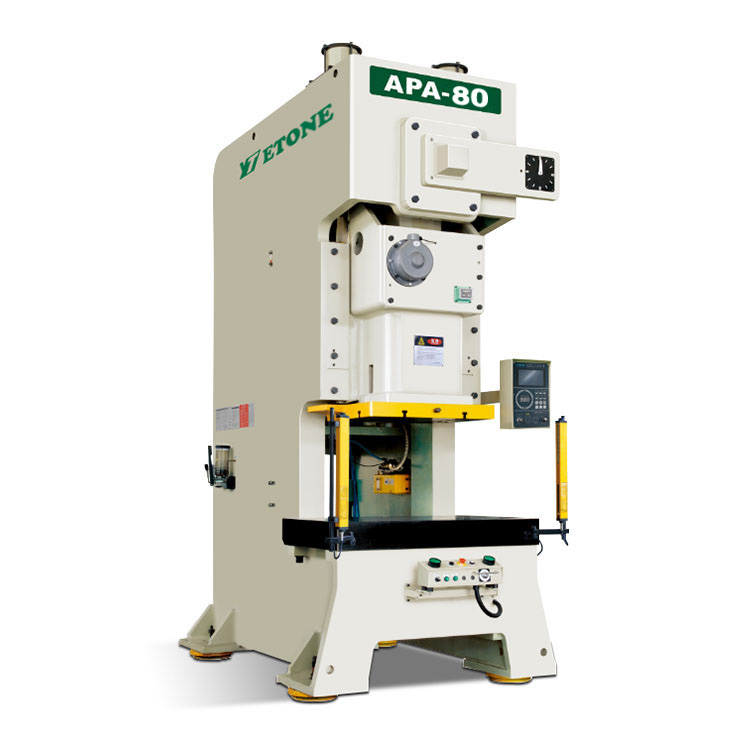
At its core, the system manages the transfer of energy from the continuously rotating flywheel to the ram. Here is a simplified breakdown of the sequence:
-
Engagement (Clutch): Upon a command signal (from a foot pedal, button, or automated system), the clutch mechanism engages. This action connects the flywheel's rotational energy to the crankshaft, initiating the downstroke of the ram.
-
Power Stroke: The connected system converts rotational force into linear motion, driving the ram and tooling through the workpiece.
-
Disengagement & Stopping (Brake): Once the cycle command ends, the clutch disengages. Simultaneously, the brake is applied, halting the rotation of the crankshaft and bringing the ram to a complete stop at the top of its stroke.
The interplay between these components is what allows for controlled single-stroking or continuous operation. A key design priority is fail-safe functionality, where the brake automatically engages if power is lost or a fault is detected. The performance of these systems is defined by several critical parameters:
| Component | Primary Function | Key Performance Indicators |
|---|---|---|
| Clutch | Transmits power from flywheel to crankshaft | Engagement Speed, Torque Capacity, Durability |
| Brake | Stops crankshaft/ram motion | Stopping Time, Torque Capacity, Heat Dissipation |
| Monitor | Oversees cycle position | Accuracy, Response Time to Fault Signals |
Mechanical Power Press FAQ
Q: How often should the brake and clutch system on a press be inspected?
A: Adherence to a strict inspection schedule is non-negotiable. Daily checks should include visual inspections and testing of the brake stop time. A comprehensive inspection by a qualified technician, following both ETONE guidelines and OSHA regulations (e.g., 29 CFR 1910.217), should be performed at least weekly or before each production run if the press is used intermittently.
Q: What is the most common sign of brake wear or malfunction?
A: The most telling indicator is an increase in brake stopping time or "stopping distance." If the ram does not halt consistently at the top of the stroke within the manufacturer-specified time, it signifies wear. Other signs include unusual noises (squealing, grinding), overheating of the brake housing, or a burning smell.
Q: Can old friction-based clutch/brake systems be upgraded?
A: Yes, many older Mechanical Power Press machines can be retrofitted with modern systems. ETONE often recommends upgrading to a Pneumatic Friction Clutch and Brake system or an innovative Servo-Direct Drive. These upgrades significantly improve safety through monitored stopping performance, reduce maintenance, and offer greater control over ram motion for enhanced productivity.
Ensuring your press's clutch and brake are functioning flawlessly is paramount for protecting both your personnel and your investment. Compromised performance in this system is not an option. If your press is exhibiting signs of wear, failing stop-time tests, or simply requires a professional assessment, do not delay. Contact us today to schedule a service inspection or discuss a safety upgrade with our ETONE engineering specialists. Let us help you maintain a safe and efficient stamping operation.