

How Do Plate Cutting Machines Improve Industrial Efficiency?
2025-11-26
Plate Cutting Machines are crucial in modern manufacturing and metal processing industries. They are designed to cut, shape, and prepare metal plates of varying thicknesses with precision and speed, significantly improving productivity and reducing material waste.
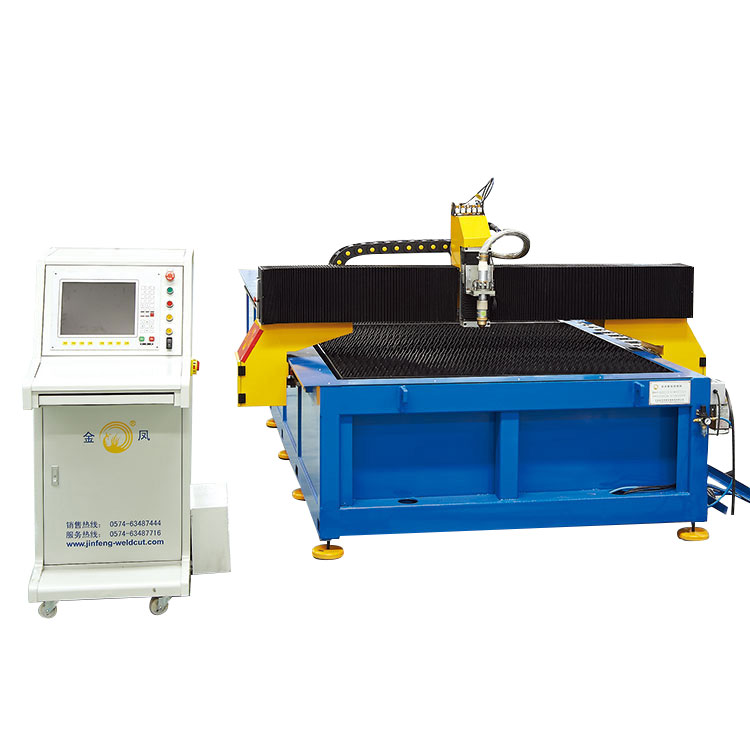
What Are Plate Cutting Machines and How Do They Work?
Plate Cutting Machines are specialized equipment engineered to cut metal sheets or plates with high accuracy. They are widely used in industries such as shipbuilding, construction, automotive manufacturing, and heavy machinery production. The core purpose of these machines is to ensure that metal plates are cut to exact specifications while minimizing material loss and maximizing production efficiency.
Working Principle:
Plate Cutting Machines use different cutting technologies depending on the type and thickness of the metal:
-
Plasma Cutting: Employs ionized gas at high temperatures to slice through thick steel plates. Ideal for fast and precise cutting of medium to thick metals.
-
Laser Cutting: Uses a focused laser beam to cut metal with high precision. Suitable for thin to medium plates and applications requiring intricate designs.
-
Oxy-Fuel Cutting: Uses a combination of fuel gas and oxygen to burn through thick steel. Common in heavy industrial applications with thicker metals.
-
Water Jet Cutting: Utilizes high-pressure water mixed with abrasive materials to cut metals without generating heat, preserving material properties.
Key Technical Specifications of Plate Cutting Machines:
| Parameter | Typical Range / Specification |
|---|---|
| Cutting Thickness | 0.5 mm – 300 mm |
| Cutting Speed | 0 – 15000 mm/min |
| Accuracy | ±0.1 mm – ±0.5 mm |
| Plate Width | Up to 4000 mm |
| Plate Length | Unlimited (depends on machine design) |
| Power Source | Electric, Hydraulic, or Gas |
| Control System | CNC (Computer Numerical Control) |
| Machine Weight | 1,500 – 20,000 kg |
These specifications allow businesses to select machines that match their production scale, material type, and cutting precision requirements.
Why Are Plate Cutting Machines Essential for Industrial Applications?
The increasing demand for precision, speed, and cost efficiency has made Plate Cutting Machines indispensable in modern manufacturing.
Key Advantages:
-
High Efficiency and Productivity: Automated cutting reduces labor time and increases output. CNC-controlled machines allow continuous operation without fatigue-related errors.
-
Material Savings: Precise cutting minimizes scrap, lowering raw material costs.
-
Versatility: Capable of handling different materials including carbon steel, stainless steel, aluminum, and other metals.
-
Enhanced Safety: Reduces manual cutting risks associated with hand tools or traditional methods.
-
Consistent Quality: Achieves uniform thickness and dimensions, essential for assembly and fabrication processes.
Emerging Trends:
-
Integration of AI-driven CNC systems for real-time cutting optimization.
-
Adoption of hybrid cutting technologies combining plasma and laser for superior performance.
-
Focus on energy-efficient machines reducing operational costs and environmental impact.
How to Choose the Right Plate Cutting Machine?
Selecting the appropriate Plate Cutting Machine requires analyzing multiple factors, including plate thickness, material type, cutting precision, and production volume.
Selection Criteria:
-
Material and Thickness: Determine the primary metals to be processed and their thickness ranges. Plasma and oxy-fuel cutting are better for thick plates, while laser cutting is ideal for thin plates.
-
Cutting Speed and Accuracy Requirements: High-speed CNC machines are suitable for large-scale production, while precision-focused applications need laser cutting with micron-level accuracy.
-
Operational Flexibility: Machines with modular design and CNC programmability allow faster adaptation to diverse cutting projects.
-
Maintenance and Durability: Evaluate service requirements, machine longevity, and availability of replacement parts.
-
Cost Efficiency: Balance initial investment against production efficiency and long-term savings from material optimization.
Common Questions About Plate Cutting Machines:
-
Q1: What is the typical lifespan of a Plate Cutting Machine?
A1: Lifespan varies depending on usage, maintenance, and technology type. Well-maintained CNC plasma or laser cutters can operate efficiently for 10–15 years. Regular servicing, timely replacement of consumables, and proper operation extend machine longevity. -
Q2: Can a single Plate Cutting Machine handle multiple metals?
A2: Yes, modern machines with multi-mode cutting capabilities can process carbon steel, stainless steel, aluminum, and even non-ferrous metals. The choice of cutting method (plasma, laser, oxy-fuel, or water jet) depends on material thickness, hardness, and desired cutting precision.
Future Trends and Conclusion
Plate Cutting Machines are evolving rapidly to meet the increasing demands of modern manufacturing. The focus is on automation, precision, energy efficiency, and reduced operational costs. Emerging technologies such as AI-assisted CNC, hybrid cutting systems, and integrated material handling solutions are shaping the next generation of plate cutting machines.
For businesses seeking reliable, high-performance Plate Cutting Machines, JINFENG WELDCUT provides a wide range of options tailored to industrial requirements. From plasma and laser systems to water jet and hybrid cutters, their machines are designed to deliver maximum efficiency, precision, and safety.
Contact us today to explore advanced Plate Cutting Machine solutions that elevate production capabilities and reduce operational costs.