

How Do You Adjust Tension on a Single Thread Blind Stitch Machine for Thin to Medium-Thickness Material
2026-07-14
If you work with lightweight garments, curtain hems, or delicate upholstery, you already know that a Single Thread Blind Stitch Machine is indispensable for invisible stitching. But when you move from heavy denim to Thin to Medium-Thickness Material, tension adjustment becomes the single most critical skill. Get it wrong, and you get loose loops, skipped stitches, or fabric puckering. Get it right, and your hems lie flat, stretch properly, and hold firmly.
At Suote, we have spent years helping sewing professionals master this precise art. This guide walks you through every step of tension tuning specifically for Single Thread Blind Stitch Machine Thin to Medium-Thickness Material applications.
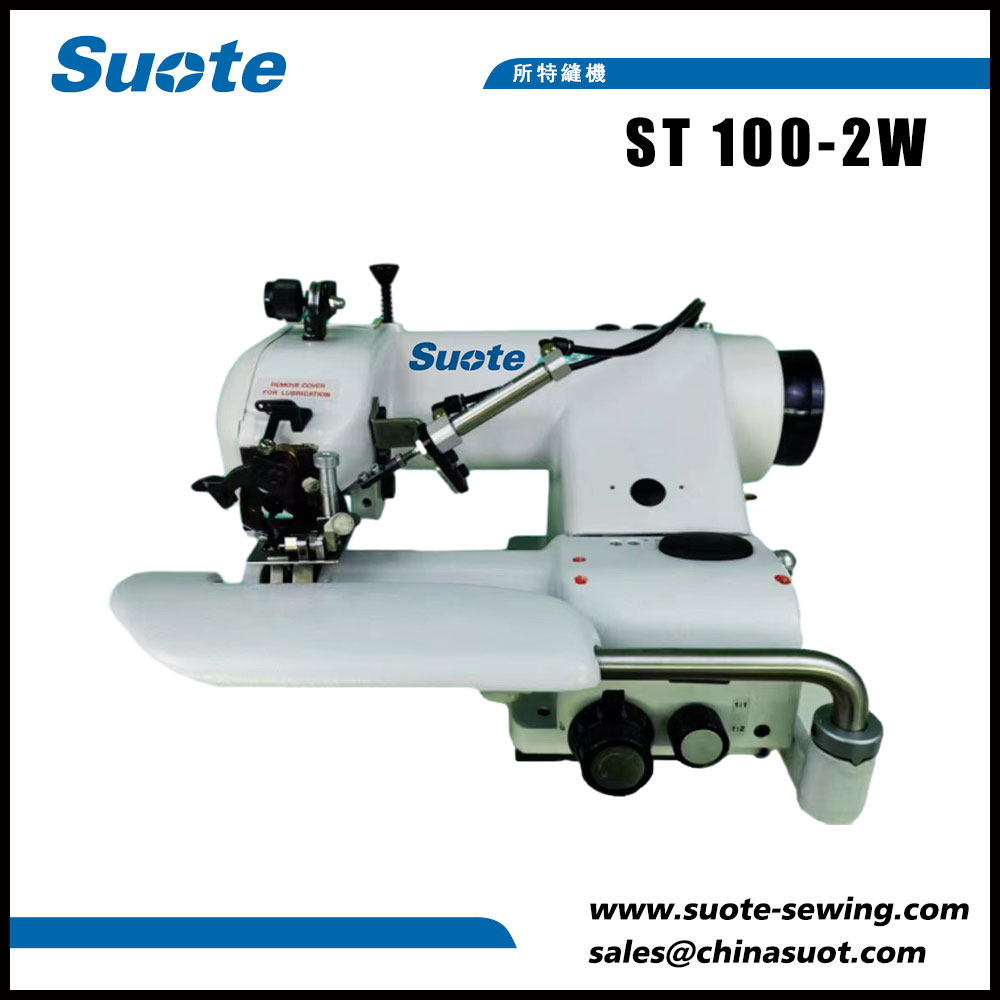
Why Tension Matters More on Thin to Medium Fabrics
Unlike thick suitings or canvas, Thin to Medium-Thickness Material has less internal friction. The looper thread needs just enough pull to form a secure chain stitch without distorting the fabric face. Too much tension causes the thread to cut into the material, creating a visible ridge. Too little tension leaves a loose, insecure stitch that unravels under light stress.
For a Single Thread Blind Stitch Machine, tension affects three visible outcomes:
-
Stitch formation – whether the loop catches consistently
-
Fabric flatness – no tunneling or gather at the hem edge
-
Thread consumption – balanced feed prevents breakage
The 5-Step Tension Adjustment Process
Follow this sequence exactly. Do not skip the preparation steps—they determine whether your adjustments actually hold.
| Step | Action | What to Check |
|---|---|---|
| 1 | Thread path inspection | Ensure thread passes through every guide without friction burns |
| 2 | Needle selection | Use size 70/10 to 80/12 for Thin to Medium-Thickness Material |
| 3 | Looper thread tension dial | Start at midpoint (3 on a 1–6 scale) |
| 4 | Presser foot pressure | Lighten by ½ turn from standard setting |
| 5 | Test-stitch on scrap | Run 12 inches, then inspect top and underside |
Detailed Adjustment Mechanics
Looper Tension Dial – This is your primary control. Turn clockwise to increase tension (tighten stitch), counter-clockwise to decrease. For Single Thread Blind Stitch Machine Thin to Medium-Thickness Material, we recommend:
-
Silk or fine polyester (40–50 wt) – set dial to 2–2.5
-
Cotton or core-spun (30 wt) – set dial to 3–3.5
-
Nylon or textured thread – set dial to 4 (requires higher grip)
Needle Thread Tension – On most Suote models, this is fixed or minimal because the machine uses a single needle thread plus a looper. However, if your machine has an upper thread regulator, keep it looser than the looper by about 20%. This prevents the needle from pulling the fabric upward during stitch formation.
Presser Foot Relationship – Here is the non-obvious rule: loosen presser foot pressure before adjusting tension. For Thin to Medium-Thickness Material, excessive foot pressure compresses the fabric, making it artificially stiff. When you release pressure, the fabric flows naturally, and your tension setting becomes accurate for real production.
Common Tension Problems and Fixes
| Symptom | Cause | Correction |
|---|---|---|
| Loops appear on the right side | Looper tension too low | Increase dial by ½ number |
| Thread breaks every 6 inches | Looper tension too high OR burr on guide | Decrease dial, then polish thread path |
| Stitches skip every 3rd hem | Needle too large for material | Switch to size 70/10 |
| Fabric tunnels (gathers) | Presser foot too heavy | Reduce foot pressure, re-test tension |
| Loose chain at hem edge | Both tensions imbalanced | Reset dial to 3, adjust in ¼ increments |
Pro Tips from Suote’s Technical Team
-
Test on the actual hem fold – not flat fabric. Fold thickness changes tension needs.
-
Run at 70–80% of max speed during adjustment. High speed masks small tension errors.
-
Mark your dial position with a white pen once you find the sweet spot for each thread type.
-
For Single Thread Blind Stitch Machine Thin to Medium-Thickness Material, always use a ball-point needle if the material has any elastane or spandex content.
FAQ – Single Thread Blind Stitch Machine Thin to Medium-Thickness Material
Q1: How often should I re-adjust tension when sewing the same Thin to Medium-Thickness Material batch?
A: Re-adjust every time you change thread cones, even if the material is identical. Thread dye lots, humidity, and cone winding tension vary between batches. At Suote, we advise a 5-stitch test every morning and after each thread change. For continuous production, check tension every 2 hours—heat from the looper mechanism can slightly alter thread drag. Keep a logbook of dial settings per thread brand and material weight; this reduces re-adjustment time from 5 minutes to 30 seconds.
Q2: Can I use the same tension setting for woven and knit Thin to Medium-Thickness Material on a Single Thread Blind Stitch Machine?
A: No. Wovens (e.g., shirting, poly-cotton) require a firmer looper tension (dial 3–3.5) because the yarns do not stretch. Knits (e.g., jersey, interlock) need a looser setting (dial 2–2.5) plus a 10% reduction in presser foot pressure. The knit’s recovery force pulls on the thread differently. If you set knit tension as tight as woven, you will see wavy edges and popped stitches after the first wash. Always test on a folded sample that matches the final seam allowance.
Q3: What is the fastest way to diagnose if my tension problem is mechanical versus thread-related on a Single Thread Blind Stitch Machine Thin to Medium-Thickness Material?
A: Perform the “drop test.” Unthread the machine, take 12 inches of your thread, and hang a 5-gram weight (or a small binder clip) on one end. Let the thread pass through all guides and the looper eye. If the thread does not slide freely with a steady, light drag, clean the guides with a lint-free cloth and check for grooves. Then, re-thread and set tension to 3. Run a test on paper tissue—if the tissue tears or pulls, the issue is mechanical (burr or misalignment). If the tissue stitches cleanly but your fabric puckers, the issue is purely tension calibration. This 2-minute test saves hours of guessing.
Final Checklist Before Production
-
Thread path clean and unobstructed
-
Needle size matched to material thickness
-
Looper tension dial set per thread type
-
Presser foot pressure reduced for Thin to Medium-Thickness Material
-
Test stitch on 3 layers of folded scrap (simulates real hem)
-
Stitch count per inch = 6–8 for lightweight, 5–6 for medium-weight
Why Choose Suote for Your Blind Stitch Needs
Suote manufactures precision-engineered Single Thread Blind Stitch Machine models with micro-adjustable tension dials, laser-etched scales, and quick-release presser feet. Every machine is factory-tested on Thin to Medium-Thickness Material before shipping. Our technical support team responds within 4 business hours with video-guided diagnostics—because we know that your production line cannot wait.
Contact Us
Getting perfect tension on your Single Thread Blind Stitch Machine Thin to Medium-Thickness Material is a skill, but the right machine and support make it effortless. If you have tried every setting and still see irregular stitches, or if you want a customized tension chart for your specific fabric mix, contact Suote today. Email us at [email protected] or use the live chat on our website. Tell us your material type, thread brand, and desired stitch length—we will send you a starting dial setting within one working day. Your seamless hems are just one conversation away. Reach out now.