

How Do You Choose the Right Cold Heading Machine for a High-Speed Screw Production Line
2026-09-08
Selecting the optimal equipment for a Screw Production Line with Cold Heading Machine is not a generic procurement decision—it directly determines your output rate, material yield, and per-unit production cost. For fasteners manufacturers aiming at high-volume orders, the choice becomes even more critical because a mismatched cold heading machine can create bottlenecks that wipe out your profit margin. At YWC, we have engineered and supplied hundreds of forming solutions across Asia, Europe, and the Americas, and we consistently see that the best selections are built on five measurable pillars: forming force, cutoff system precision, feed length accuracy, tooling durability, and downstream integration.
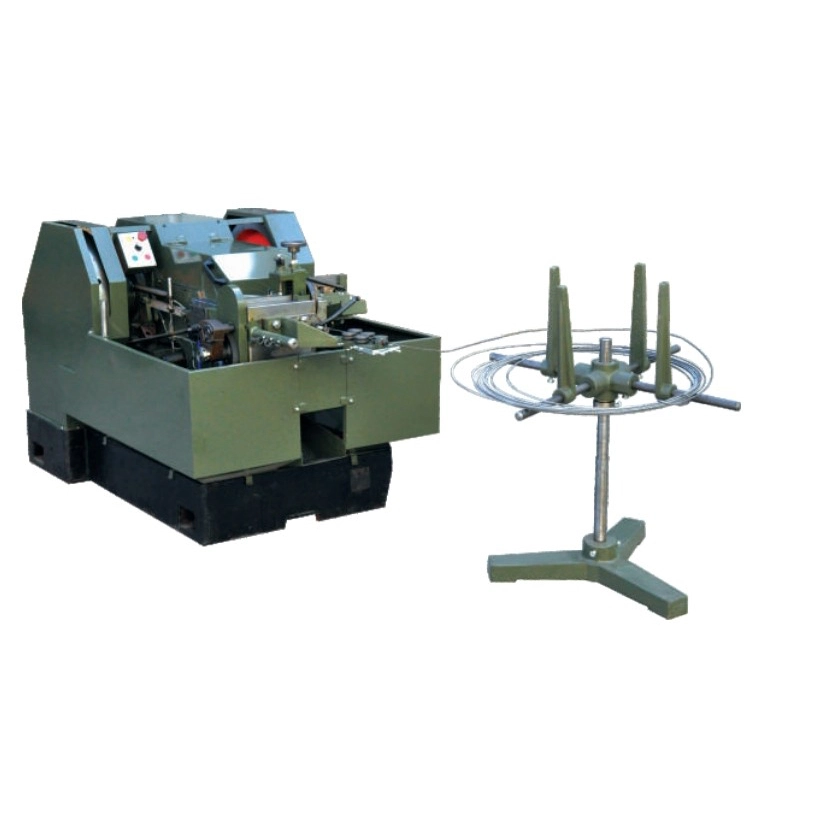
1. Start with Output Speed vs. Part Complexity
High-speed does not mean “one speed fits all.” A Screw Production Line with Cold Heading Machine operating at 300 parts per minute (ppm) for a simple M4 screw may struggle to hold 150 ppm for a stepped shoulder bolt with a deep recess. The right choice begins with a parts family analysis: list every screw diameter, length, head style, and thread type you plan to run over the next 36 months. Then compare that against the machine’s maximum cut-off length and knockout stroke. YWC recommends plotting a speed-compatibility matrix before issuing any purchase order.
| Parameter | Low-Complexity Screws (e.g., pan head) | High-Complexity Screws (e.g., flange + undercut) |
|---|---|---|
| Recommended ppm range | 250 – 350 | 120 – 200 |
| Required forming stations | 2 – 3 | 4 – 5 |
| Tooling changeover time (min) | 15 – 25 | 45 – 70 |
| Preferred drive type | Servo direct-drive | Hydraulic‑assisted servo |
2. Evaluate the Cutoff and Feed System Separately
In a high-speed Screw Production Line with Cold Heading Machine, the cutoff quality affects 70% of downstream rejection—crooked ends, burrs, and length variation all trace back to this station. Look for a cold heading machine that offers positive cutoff with an independent cam, not a generic shear plate. YWC integrates a dual-guide cutoff system that maintains ±0.05 mm length consistency even at 280 ppm. Additionally, verify the feed roll design: grooved rolls with pneumatic pressure adjustment outperform spring-loaded rolls in maintaining wire tension during rapid acceleration.
3. Tooling Life and Quick-Change Features
Unexpected downtime for punch or die replacement is the number-one hidden cost in any Screw Production Line with Cold Heading Machine. The right machine should offer pre-set tool cartridges that allow you to swap an entire station in under 8 minutes. YWC machines come with a tool-life monitoring display that counts strokes per tool and alerts operators 500 strokes before the recommended replacement limit. For high-speed lines, we strongly advise investing in tungsten-carbide inserts for the first three stations—they cost 40% more upfront but last 3.2× longer than steel alloys in our internal tests.
4. Integration with Downstream Threading and Inspection
A cold heading machine does not operate in isolation. Your Screw Production Line with Cold Heading Machine must synchronize with thread rollers, washers, and optical sorters. The key metric here is cycle-time matching—if your header outputs 300 ppm but your threader only runs at 220 ppm, you are building inventory buffers, not efficiency. YWC provides a line-balancing calculator that maps each machine’s real throughput, including rejection rates, and recommends buffer sizes or speed adjustments. Ask your supplier for a signed throughput guarantee covering the entire line, not just the header.
5. Energy Consumption and Cooling Strategy
High-speed forming generates significant heat in the die box and punch holders. Without active oil cooling, your Screw Production Line with Cold Heading Machine will experience thermal expansion, leading to diameter drifts of up to 0.02 mm within 90 minutes of continuous running. Choose a cold heading machine with a closed-loop chiller rated at least 2× the calculated heat load. YWC equips all high-speed models with a variable-frequency oil pump that reduces energy use by 18–22% compared to fixed-speed pumps, while maintaining oil temperature within ±2°C.
FAQ – Common Questions About the Screw Production Line with Cold Heading Machine
Q1: What is the maximum wire diameter a high-speed cold heading machine can handle without sacrificing speed?
A1: For a typical Screw Production Line with Cold Heading Machine operating above 250 ppm, the practical upper limit is 12 mm wire diameter for carbon steel and 10 mm for stainless steel (due to higher work-hardening). Beyond these sizes, the forming force required increases non-linearly, forcing you to reduce speed by 30–40% to avoid punch breakage. YWC offers a dual-ram design that extends this limit to 14 mm for carbon steel while keeping speed above 220 ppm, but we always recommend running a sample batch on your actual material grade before finalizing specifications—many competitors advertise larger capacities but cannot sustain them over an 8-hour shift.
Q2: How do I calculate the total cost of ownership (TCO) for a cold heading machine in a high-speed screw line?
A2: TCO for a Screw Production Line with Cold Heading Machine should include: (a) initial capital cost, (b) annual tooling consumption (punches, dies, cut-off knives), (c) electrical power consumption at full load, (d) lubricant and coolant replacement costs, (e) scheduled maintenance labor (every 2,000 operating hours), and (f) unscheduled downtime cost—typically valued at $150–$300 per minute of lost output. YWC provides a TCO spreadsheet that factors in your local utility rates and labor wages. In our benchmark, a quality machine that costs 25% more upfront usually delivers 40% lower TCO over 5 years because tooling lasts longer and breakdowns are rare. Always ask the supplier for mean time between failures (MTBF) data from actual installations.
Q3: Can I retrofit an existing screw production line with a newer cold heading machine without changing the entire conveyor and sorter system?
A3: Yes, but you must match three interface parameters: (a) exit height from the heading machine to the conveyor (standard is 950–1050 mm, but YWC offers adjustable feet with ±80 mm range), (b) part transfer pitch—the distance between the header’s ejection point and the threader’s infeed star wheel, and (c) signal protocol for the PLC handshake (most modern lines use Profinet or EtherCAT). YWC provides a retrofit kit that includes adapter rails, sensor relocators, and a signal converter, allowing you to upgrade your Screw Production Line with Cold Heading Machine in a single weekend shutdown. We recommend a site survey by our engineers to measure your existing conveyor pitch and sorter gate timing—this avoids mismatched part spacing that causes jams at the thread roller infeed.
Final Checklist Before Signing the Order
-
□
Run your top 5 screw SKUs on the supplier’s demonstration line at your target speed for 4 continuous hours.
-
□
Request a tooling cost-per-thousand-parts guarantee in writing.
-
□
Verify spare parts availability—critical wear parts (cut-off die, main punch) must ship within 48 hours.
-
□
Confirm that the control system supports remote diagnostics and OPC-UA data export for your MES.
Choosing the right cold heading machine for a high-speed Screw Production Line with Cold Heading Machine is a balancing act between peak speed, part quality, and long-term reliability. YWC has delivered over 1,200 forming lines worldwide, and our engineering team provides pre-sales sample testing, on-site installation supervision, and operator training. We do not sell a standard box—we configure each machine based on your screw drawings, material certificates, and shift schedule.
Contact us today with your parts drawings and target output per shift. Our application engineers will return a line configuration proposal, TCO comparison, and a live video of your sample screws being formed on our test floor—within 48 hours. Let YWC help you build a Screw Production Line with Cold Heading Machine that runs faster, lasts longer, and earns you more per million pieces.