

How Do You Maintain a HIPS Plate Production Line for Maximum Uptime
2026-10-22
Keeping a HIPS Plate Production Line running at peak performance is not simply a matter of fixing breakdowns when they occur. For processors who rely on consistent output, planned maintenance is the difference between profitable operation and costly downtime. At Granplas, we have seen how a structured maintenance program extends equipment life, protects sheet quality, and keeps delivery schedules predictable. This guide outlines the practical steps, schedules, and checkpoints that professional operators use to sustain maximum uptime on a HIPS Plate Production Line.
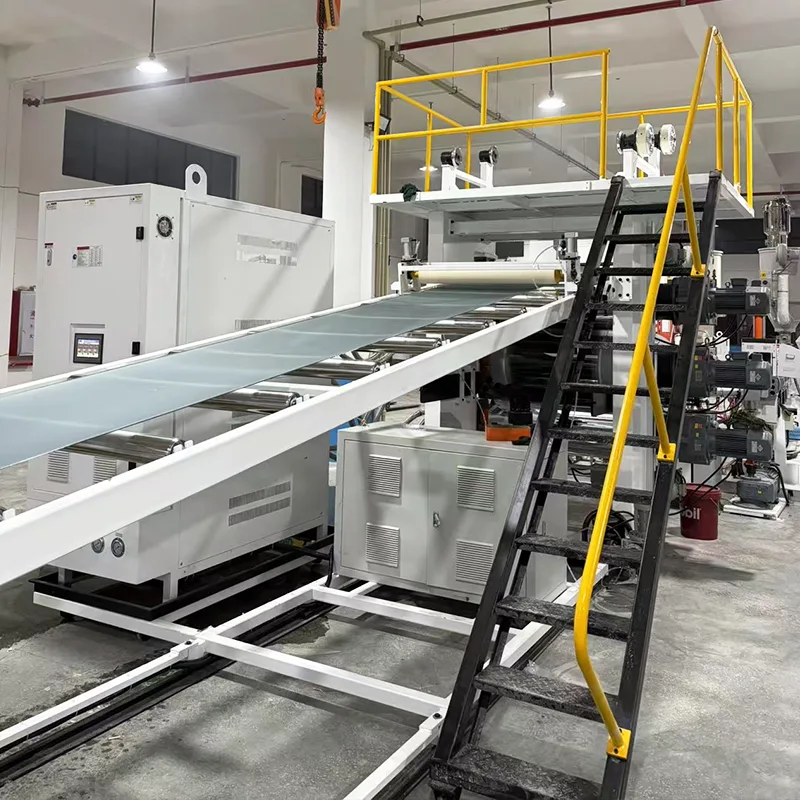
Why Planned Maintenance Matters
A HIPS Plate Production Line combines an extruder, die, calendering or polishing rolls, cooling system, haul-off, and winding unit. Each component wears at a different rate, and neglect in one area quickly affects the whole line. Planned maintenance reduces unplanned stops, lowers scrap rates, and preserves the dimensional accuracy of the finished sheet. Granplas recommends treating maintenance as a production activity with defined owners, checklists, and records rather than as reactive repair work.
Daily Maintenance Checklist
Daily routines catch small issues before they become failures. Operators should complete these checks at the start and end of every shift:
-
Inspect the die lip and polishing rolls for residue, scratches, or polymer buildup.
-
Verify cooling water temperature and flow rate against the process sheet.
-
Check haul-off belt tension and winding alignment.
-
Listen for unusual noise or vibration in the gearbox and motor.
-
Record melt pressure, screw speed, and sheet thickness readings.
-
Confirm that safety guards and emergency stops function correctly.
Weekly and Monthly Maintenance Schedule
The table below summarizes a practical maintenance cadence for a HIPS Plate Production Line. Intervals should be adjusted according to throughput and material formulation.
| Interval | Task | Component | Acceptance Criteria |
|---|---|---|---|
| Weekly | Clean and inspect die lip | Extrusion die | No carbon buildup; uniform lip gap |
| Weekly | Check roll surface temperature uniformity | Polishing rolls | Deviation within ±2°C |
| Monthly | Inspect gearbox oil level and color | Gearbox | Oil within sight glass; no discoloration |
| Monthly | Clean heat exchanger and filters | Cooling system | Flow rate restored to baseline |
| Quarterly | Check screw and barrel wear | Extruder | Wear within manufacturer tolerance |
| Quarterly | Calibrate thickness gauge | Measurement system | Accuracy within ±0.01 mm |
| Annually | Full electrical and safety audit | Control cabinet | Compliance with site standards |
Critical Spare Parts and Lubrication
Uptime depends heavily on having the right parts on hand. Granplas advises stocking die lip inserts, heater bands, thermocouples, filter elements, haul-off belts, and winding cores. Lubrication should follow the equipment manufacturer's specification, with gearbox oil sampled periodically for contamination. Keeping a spare-parts register linked to the maintenance schedule prevents emergency procurement and shortens repair time.
Operator Training and Documentation
Even the best schedule fails without trained operators. Staff should understand start-up and shutdown sequences, how to interpret melt pressure trends, and when to escalate anomalies. Maintain a maintenance log for every HIPS Plate Production Line, recording tasks completed, parts replaced, and observations. This data supports root-cause analysis and helps Granplas engineers advise on process optimization.
Frequently Asked Questions
How often should the die lip be cleaned on a HIPS Plate Production Line?
The die lip should be inspected daily and cleaned weekly, or more frequently if melt pressure rises or surface defects appear, because polymer buildup disturbs sheet thickness and finish.
What causes thickness variation in HIPS sheet production?
Thickness variation usually comes from die lip gap changes, roll temperature inconsistency, haul-off speed fluctuation, or worn screws, so each factor should be checked against the maintenance checklist in sequence.
How can I reduce unplanned downtime on a HIPS Plate Production Line?
Reducing unplanned downtime requires a documented preventive schedule, critical spare parts inventory, operator training, and trend monitoring of melt pressure, motor current, and roll temperatures so deviations are corrected before failure.
Build Uptime Into Your Operation
A disciplined maintenance program protects output, quality, and equipment value. Granplas supports processors with line design, spare parts planning, and technical service for HIPS Plate Production Line projects. Contact us today to review your maintenance strategy and request a tailored service plan for your production line.