

How Do You Set the Cylinder-to-Flat Clearance on a Carding Machine Correctly
2026-07-03
Setting the cylinder-to-flat clearance is one of the most critical adjustments on any Carding Machine. This tiny gap—measured in thousandths of an inch—directly determines fibre transfer, neppiness, carding intensity, and ultimately yarn strength. Get it wrong, and you lose yield; get it right, and your Carding Machine delivers consistent sliver quality shift after shift. At Ceres, we have spent decades refining this procedure across thousands of installations, and we confirm that correct clearance setting is non-negotiable for modern high-speed Carding Machine operations.
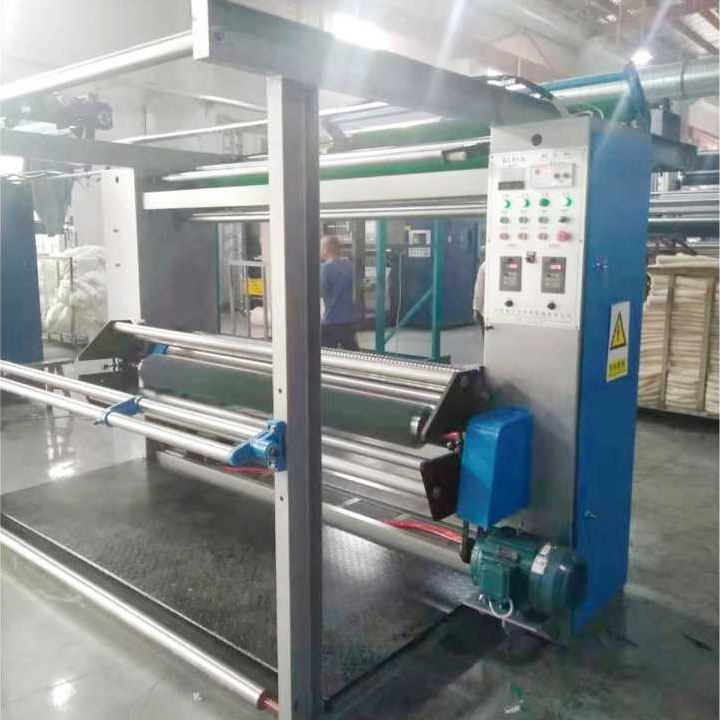
Why This Clearance Matters More Than You Think
The cylinder carries the main clothing (wire points), while the flats run overhead with opposing wire angles. The gap between them is where the actual "carding" happens—fibres are opened, parallelised, and minor impurities are removed. If the clearance is too wide, the Carding Machine loses carding action, producing coarse sliver with high nep counts. If too narrow, wire damage, flat stripping issues, and even fire risks from metal-to-metal contact arise. Ceres recommends a baseline of 0.20–0.30 mm for cotton, but the final value depends on fibre type, production speed, and clothing wear.
Step-by-Step Procedure for Correct Setting
| Step | Action | Critical Checkpoint |
|---|---|---|
| 1 | Stop the Carding Machine and lock out power. | Ensure cylinder is stationary and cooled down. |
| 2 | Clean all clothing surfaces—cylinder, flats, and doffer. | Residual fibre falsifies feeler gauge readings. |
| 3 | Mount dial gauges or electronic sensors on the flat bar supports. | Use at least 3 measuring points (feed, middle, delivery). |
| 4 | Rotate the cylinder manually by 2–3 full revolutions. | Check for high spots on the cylinder clothing. |
| 5 | Adjust the front and rear flat-bending screws incrementally. | Turn each screw by 1/8 turn max per iteration. |
| 6 | Insert feeler gauges (0.15 mm, 0.20 mm, 0.25 mm) between cylinder wire tips and flat wire tips. | Gauge should just slide with light resistance—no forcing. |
| 7 | Repeat measurements after every 90° cylinder rotation. | Average the readings; maximum deviation ≤ 0.03 mm. |
| 8 | Lock all adjusting nuts and recheck one final time. | Record final values in the Carding Machine logbook. |
Best Practices from Ceres Engineering
-
Always set clearance with the Carding Machine at operating temperature (run idle for 30 minutes before final adjustment).
-
Use plastic feelers instead of metal ones to avoid scratching the clothing.
-
For recycled fibres, increase clearance by +0.05 mm to accommodate bulkier tufts.
-
Replace flat tops if the average deviation exceeds 0.05 mm—Ceres offers precision-ground flat bars for retrofits.
Common Mistakes to Avoid
| Mistake | Consequence | Corrective Action |
|---|---|---|
| Setting clearance only at one side | Uneven sliver CV% and periodic thick places | Always measure both drive side and non-drive side |
| Using worn feeler gauges | Underestimated gap → clothing collision | Calibrate gauges weekly or use digital probes |
| Forgetting to re-tension the flats | Clearance drifts within 2 hours of production | Re-tension after every major adjustment |
| Ignoring cylinder eccentricity | False readings at different rotation angles | Mark the high spot and set clearance based on that point |
Frequently Asked Questions (FAQ) about Carding Machine Clearance
Q1: How often should I recheck the cylinder-to-flat clearance on my Carding Machine?
A1: Ceres advises a full recheck every 500 operating hours for standard cotton processing, and every 300 hours for synthetic or recycled fibres. Additionally, you must recheck after any flat grinding, cylinder reclothing, or if you notice sudden increases in sliver nep count (above +30% from baseline). During daily shift starts, a quick "go/no-go" check with a 0.20 mm feeler at the middle position is sufficient—if it passes, you can run; if not, schedule a full procedure. Always document each recheck in a dedicated log, as trending data helps predict clothing wear cycles.
Q2: Does the cylinder-to-flat clearance change with production speed on a Carding Machine?
A2: Yes—and significantly. At higher doffer speeds (above 120 m/min), centrifugal forces lift the fibre web slightly, effectively reducing the dynamic clearance by 0.02–0.04 mm. Therefore, Ceres recommends setting the static clearance 0.03 mm wider than your target dynamic gap. For example, if your desired running clearance is 0.22 mm, set it to 0.25 mm when the Carding Machine is stationary. Also, faster speeds generate more heat, causing cylinder expansion—so always perform final fine-tuning after the machine has reached thermal equilibrium (about 45 minutes of steady running). Ignoring this leads to unpredictable clearance drift and premature clothing failure.
Q3: What tools do I need to set this clearance accurately on a modern Carding Machine?
A3: For professional results, Ceres recommends a kit that includes: (a) a set of precision plastic feeler gauges (range 0.10–0.50 mm in 0.02 mm steps), (b) two magnetic-base dial indicators with 0.01 mm resolution for simultaneous side-by-side measurement, (c) a cylinder eccentricity gauge to locate high spots before you start, and (d) a torque wrench for the flat-bending screws (set to 8–10 Nm to avoid thread stripping). For Carding Machine models equipped with automatic flat-setting systems (like those from Ceres digital retrofits), you will also need the manufacturer’s handheld programmer to input offset values. Never rely solely on built-in digital displays—always cross-check with physical feelers at three points across the width.
Real-World Performance Data (Ceres Field Tests)
| Clearance Setting | Nep Count (per gram) | Sliver CV% | Production uptime |
|---|---|---|---|
| Too wide (0.40 mm) | 210 | 5.8% | 96% (but poor quality) |
| Optimal (0.22–0.25 mm) | 85 | 3.2% | 98.5% |
| Too narrow (0.15 mm) | 72 | 3.0% | 89% (frequent flat jams) |
The optimal zone delivers the best balance—and that is exactly what Ceres engineered clearances achieve on every retrofit project.
Final Checklist Before You Start Production
-
All locknuts securely tightened.
-
Feeler gauge readings documented for feed, middle, and delivery.
-
Cylinder rotated 3 full turns—no metallic rubbing sound heard.
-
Flat speed and cylinder speed matched per Ceres recommendation chart.
-
Suction system active to remove loose fibres during the first 10 minutes.
Correctly setting the cylinder-to-flat clearance transforms your Carding Machine from a problem child into a precision instrument. It reduces waste, lowers energy consumption, and extends clothing life by up to 40%. Ceres has helped over 200 mills worldwide standardise this procedure with customised gauges, training modules, and remote monitoring tools.
Contact Us today for a free clearance audit of your Carding Machine—our Ceres engineers will visit your site, measure your current settings, and provide a detailed optimisation report within 48 hours. Let us make your Carding Machine perform at its peak—because every micron counts.