

How Does a Block Making Production Line Improve Modern Construction Material Manufacturing?
2026-08-31
Article Summary
A Block Making Production Line is an advanced manufacturing solution designed to produce high-quality concrete blocks, paving blocks, bricks, and various environmentally friendly construction materials efficiently. With increasing demand for sustainable building products, manufacturers need equipment that can reduce labor costs, improve production consistency, and maximize resource utilization.
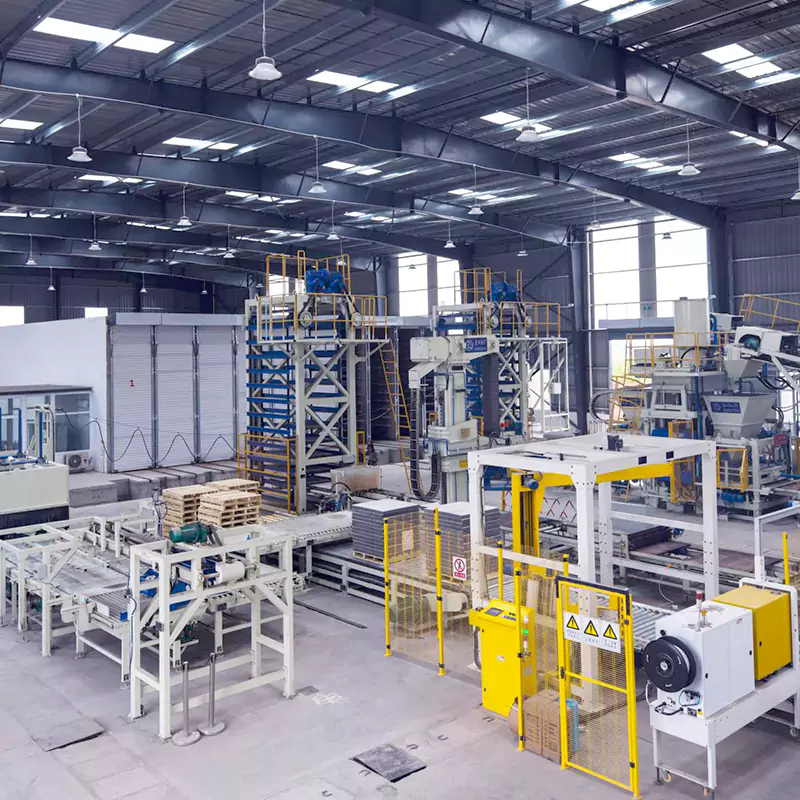
Modern production lines integrate automatic batching, mixing, molding, conveying, palletizing, and curing processes to create a complete manufacturing system. Silver Horse provides intelligent block-making solutions that help customers achieve stable output, reliable product quality, and flexible production capabilities for different construction applications.
Table of Contents
- What Is a Block Making Production Line?
- How Does a Block Making Production Line Work?
- What Are the Main Components of the Production Line?
- Why Should Businesses Invest in an Automatic Block Making Production Line?
- How Does Silver Horse Provide Reliable Block Manufacturing Solutions?
- How to Choose the Right Block Making Production Line?
- Frequently Asked Questions
What Is a Block Making Production Line?
A Block Making Production Line is a complete industrial system used for producing concrete blocks and other construction materials through automated processes. Unlike traditional manual production methods, modern lines combine mechanical equipment and intelligent control systems to improve efficiency, accuracy, and production capacity.
The system can manufacture different products, including hollow blocks, solid blocks, paving stones, curbstones, artificial stones, and ecological bricks. By adjusting molds and production parameters, manufacturers can quickly switch between different product specifications to meet changing market requirements.
For construction material producers, the biggest challenges are often high labor expenses, inconsistent product quality, material waste, and limited production capacity. A well-designed production line addresses these problems by providing continuous operation, precise control, and optimized resource utilization.
| Traditional Production Challenges | Block Making Production Line Solutions |
|---|---|
| High dependence on manual workers | Automated processes reduce labor requirements and improve efficiency |
| Uneven product quality | Precise vibration and pressure systems ensure consistent block density |
| Low production speed | Continuous automated operation increases daily output |
| Material waste problems | Accurate batching and mixing improve material utilization |
| Difficult production management | Intelligent control systems simplify monitoring and operation |
How Does a Block Making Production Line Work?
A complete block manufacturing process involves several important stages. Each stage plays a critical role in determining the final quality, strength, and appearance of the finished products.
-
Raw Material Preparation
Cement, sand, stone powder, industrial waste materials, and other aggregates are prepared according to the required formula. Precise measurement ensures stable material performance. -
Automatic Batching and Mixing
The batching system accurately controls the proportion of different materials. The mixer then creates a uniform mixture to improve block strength and durability. -
Molding and Compacting
The mixed material enters the block machine mold. Through vibration and pressure technology, the material is compacted into the required shape and density. -
Block Transfer and Palletizing
After molding, automatic systems transport finished blocks and arrange them efficiently for curing. -
Curing Process
Controlled curing allows blocks to achieve the required strength and stability before delivery or construction use.
The integration of these processes creates a smooth production workflow that minimizes manual intervention and improves overall manufacturing reliability.
What Are the Main Components of the Production Line?
A professional Block Making Production Line consists of multiple machines working together. Each component contributes to production efficiency and product quality.
| Equipment | Main Function | Production Benefit |
|---|---|---|
| Raw Material Storage System | Stores and supplies aggregates | Ensures continuous production operation |
| Automatic Batching Machine | Measures different materials accurately | Improves formula consistency |
| Concrete Mixer | Produces uniform concrete mixtures | Enhances block strength |
| Block Making Machine | Forms blocks through vibration and pressure | Creates precise and durable products |
| Automatic Stacking System | Transfers and organizes products | Reduces manual handling |
| Control System | Manages production parameters | Improves operation accuracy |
Advanced manufacturers such as Silver Horse focus on combining efficient mechanical structures with intelligent control technologies. Their production solutions include automated processing systems that support stable operation and flexible product manufacturing.
Why Should Businesses Invest in an Automatic Block Making Production Line?
For companies producing construction materials, investing in automation is not only about increasing output. It is also about improving long-term competitiveness.
- Higher Production Efficiency: Automated production reduces downtime and allows factories to achieve continuous manufacturing.
- Better Product Quality: Precise control of vibration, pressure, and material ratios improves block strength and appearance.
- Lower Operating Costs: Reduced manual labor requirements help manufacturers control production expenses.
- Flexible Product Manufacturing: Different molds allow production of multiple block types for various applications.
- Environmental Benefits: Many systems can utilize industrial waste and construction waste as raw materials, supporting sustainable development.
Silver Horse develops block manufacturing equipment focused on efficient production and resource utilization. Its block and stone integrated solutions are designed to support customers requiring reliable and adaptable manufacturing systems.
How Does Silver Horse Provide Reliable Block Manufacturing Solutions?
Choosing the right equipment supplier is an important decision for companies that want to establish or upgrade a block manufacturing facility. A reliable supplier should not only provide machines but also offer complete solutions based on production requirements, factory conditions, product types, and future expansion plans.
Silver Horse focuses on providing professional block production solutions that help manufacturers improve production efficiency and product consistency. By combining advanced manufacturing technology with practical industrial experience, Silver Horse supports customers in building efficient production systems suitable for different construction material markets.
A complete solution from Silver Horse can help customers address several common challenges:
- Unstable Product Quality: Precise molding systems and controlled production parameters help maintain consistent block strength and appearance.
- Complex Production Management: Automated control systems simplify operation monitoring and improve production scheduling.
- Limited Factory Efficiency: Integrated production processes reduce unnecessary manual handling and improve workflow.
- Changing Market Demand: Flexible mold replacement allows manufacturers to produce different block specifications.
| Customer Requirement | Silver Horse Solution | Expected Result |
|---|---|---|
| Need higher production capacity | Automated block production systems with optimized workflow | Increased daily production output |
| Need stable product quality | Accurate mixing, vibration, and pressure control technology | More uniform and durable blocks |
| Need reduced labor costs | Automatic conveying and control systems | Lower dependence on manual workers |
| Need customized production | Flexible equipment configuration and mold options | Support for various construction products |
How to Choose the Right Block Making Production Line?
Selecting suitable block manufacturing equipment requires careful evaluation. Different businesses have different production goals, available space, investment budgets, and product requirements. Choosing the wrong system may result in unnecessary costs, inefficient operation, and limited future development.
The following factors should be considered before purchasing a Block Making Production Line:
| Selection Factor | Important Considerations |
|---|---|
| Production Capacity | Determine required daily output according to market demand and business plans. |
| Product Type | Select equipment that supports required products such as hollow blocks, paving blocks, or special bricks. |
| Automation Level | Consider whether semi-automatic or fully automatic operation better matches factory requirements. |
| Factory Layout | Ensure the production line fits available space and allows efficient material movement. |
| Energy Consumption | Evaluate equipment efficiency to control long-term operating costs. |
| After-Sales Support | Choose a supplier that provides technical assistance and maintenance services. |
Before making a final decision, manufacturers should analyze both current production needs and future expansion possibilities. A properly designed production line can continue providing value for many years and adapt to changing construction industry requirements.
What Are the Applications of Block Making Production Lines?
Block Making Production Lines are widely used in construction material industries because they can manufacture products suitable for different infrastructure and building projects.
- Residential Construction: Producing concrete blocks for walls, foundations, and structural applications.
- Commercial Buildings: Providing durable construction materials for offices, shopping centers, and industrial facilities.
- Road and Landscape Projects: Manufacturing paving blocks, curbstones, and decorative outdoor products.
- Municipal Engineering: Supporting urban development projects requiring large quantities of standardized blocks.
- Eco-Friendly Construction: Producing blocks using recycled materials and industrial by-products.
The versatility of modern production lines allows manufacturers to serve multiple markets while improving production flexibility.
What Problems Can a Block Making Production Line Help Solve?
Many construction material manufacturers face operational problems that affect profitability and competitiveness. A modern automated production line provides practical solutions to these challenges.
| Common Problem | Impact on Business | Production Line Improvement |
|---|---|---|
| High labor requirements | Increased production expenses | Automation reduces manual operation needs |
| Inconsistent block dimensions | Customer complaints and material waste | Precision molding improves product accuracy |
| Slow production speed | Difficulty meeting large orders | Continuous operation increases capacity |
| High raw material waste | Reduced profit margins | Accurate batching improves utilization |
| Limited product variety | Restricted market opportunities | Multiple molds support different products |
Future Development Trends of Block Manufacturing Equipment
The construction industry is moving toward higher efficiency, automation, and environmental responsibility. Block manufacturing equipment is also developing toward smarter and more sustainable solutions.
- Higher Automation: More intelligent control systems will reduce manual intervention and improve production monitoring.
- Energy Efficiency: New equipment designs focus on reducing energy consumption while maintaining output.
- Resource Recycling: More production lines will support recycled materials and environmentally friendly manufacturing.
- Digital Management: Data monitoring and smart factory technologies will improve production analysis and maintenance planning.
- Customized Production: Flexible systems will allow manufacturers to respond faster to market changes.
Companies investing in advanced block manufacturing technology can achieve better production performance while preparing for future construction industry demands.
Frequently Asked Questions
What materials can be used in a Block Making Production Line?
A Block Making Production Line can typically process materials including cement, sand, gravel, stone powder, fly ash, and certain recycled materials. The exact material formula depends on the required block type and performance standards.
How much space is required for a block production line?
The required factory space depends on the equipment configuration, automation level, production capacity, and curing method. Manufacturers should design the layout according to material storage, machine installation, and finished product handling requirements.
Can one production line manufacture different types of blocks?
Yes. Many modern systems support mold replacement, allowing manufacturers to produce different products such as hollow blocks, solid blocks, paving stones, and other concrete products.
What are the advantages of an automatic block production line compared with manual production?
Automatic production lines provide higher efficiency, better product consistency, lower labor dependence, and improved production management compared with traditional manual methods.
How can manufacturers maintain a block making production line?
Regular maintenance includes checking mechanical components, cleaning equipment, inspecting electrical systems, and following supplier maintenance recommendations. Proper maintenance helps extend equipment service life and maintain stable production.
Conclusion
A Block Making Production Line is an effective solution for construction material manufacturers seeking higher efficiency, stable quality, and long-term production advantages. Through automated batching, mixing, molding, conveying, and curing processes, modern systems help businesses overcome traditional manufacturing limitations.
Selecting the right production equipment requires consideration of production capacity, product requirements, factory conditions, and future development plans. With professional experience and reliable manufacturing capabilities, Silver Horse provides customized block production solutions designed to support different customer needs.
If you are looking for an efficient, durable, and customizable Block Making Production Line to improve your manufacturing performance, please contact us today. Silver Horse is ready to provide professional solutions and help you build a more competitive construction material production system.