

How Does a Brushed Stator Production Unit Deliver High-Precision Motor Manufacturing Results?
2025-12-11
A Brushed Stator Production Unit is a specialized manufacturing system engineered to automate winding, positioning, forming, and testing processes for brushed motor stators. Its core purpose is to enhance consistency, reduce manual error, and streamline mass-production workflows in industries such as household appliances, power tools, automotive components, and small machinery.
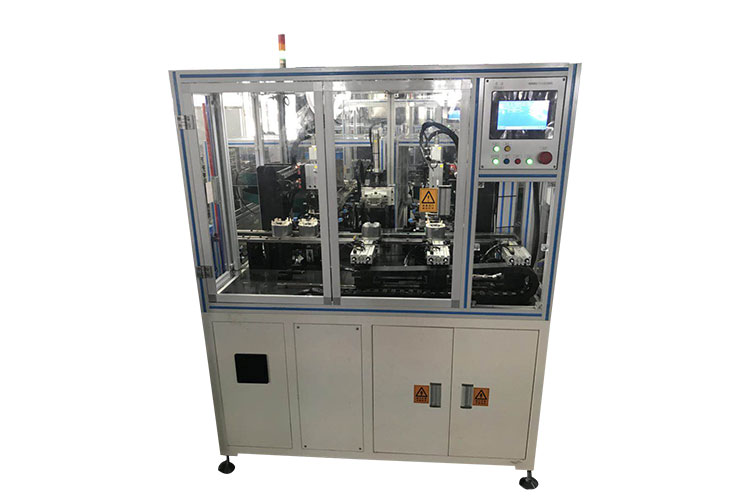
A Brushed Stator Production Unit is built to execute multiple stator-related processes with precision. Its primary architecture typically integrates mechanical fixtures, servo positioning systems, programmable controllers, wire-guiding tension systems, quality-feedback sensors, and optional automated feeding or unloading modules. By consolidating these functions into a unified line, facilities can achieve higher throughput and uniform winding performance across all series of brushed motors.
Key Technical Parameters of a Typical Brushed Stator Production Unit
The following table outlines common parameters required by engineers when comparing production capabilities:
| Parameter Category | Typical Specification Range | Description |
|---|---|---|
| Stator OD Range | 20–90 mm | Supports multiple brushed motor sizes |
| Winding Speed | 800–2,200 RPM | Dependent on wire diameter and coil count |
| Wire Diameter | 0.18–1.0 mm | Suitable for various brushed motor models |
| Slot Count Compatibility | 2–12 slots | Adjustable per stator structure |
| Tension Control Accuracy | ±3% | Ensures tight, uniform coil formation |
| Positioning System | Servo-driven, 0.01 mm accuracy | Guarantees precise wire placement |
| Control Interface | PLC + HMI | Allows programmable customization |
| Power Supply | 220V/380V | Configurable for regional standards |
| Cycle Time | 6–18 seconds per stator | Based on complexity of winding task |
| Automation Level | Semi-automatic or fully automatic | Adjustable for production scale |
These parameters illustrate how the Brushed Stator Production Unit integrates mechanical stability, software precision, and customization flexibility to support high-volume manufacturing. Facilities typically scale the system according to line balancing, upstream processing, and downstream testing requirements.
How the Unit Achieves Consistent Performance
To ensure repeatability, the system uses a combination of:
-
Automated tension feedback to adjust wire pull force in real time
-
Servo-controlled mandrels that maintain consistent winding alignment
-
Programmable coil layering logic that applies identical patterns across batches
-
Optional camera-based quality inspection to flag deviations before final assembly
This integrated workflow helps eliminate variability caused by operator experience and manual techniques. It also enables tighter tolerance control, which is essential for motor performance, noise-reduction, and durability.
How Does Advanced Automation Improve Brushed Stator Manufacturing Efficiency?
Automation plays a central role in modern stator production. A Brushed Stator Production Unit not only improves throughput but also reduces scrap rates, stabilizes motor quality, and decreases reliance on manual labor—especially in high-demand industries. This section examines how automated processes restructure production lines and enhance operational reliability.
Automated Steps Typically Included in a Brushed Stator Production Unit
-
Stator Feeding and Positioning – Automated grasping or jig-based loading ensures stators are placed with correct angular alignment.
-
Wire Tension Adjustment – Sensors calibrate tension dynamically based on wire diameter and coil configuration.
-
Slot Winding Execution – Servo systems guide precise movements to distribute coils uniformly.
-
Layer Compression and Forming – The system performs post-winding shaping to ensure consistent coil height and geometry.
-
Lead Wire Handling – Automated cutting, hooking, or soldering depending on application needs.
-
Quality Verification – Resistance, alignment, and coil integrity checks are applied to detect out-of-range units.
Throughput Impact
Automated stator production lines significantly reduce per-unit manufacturing time compared with manual methods. Traditional manual winding requires extensive skill and involves large variations in coil compactness, angle, and tension. In contrast, a well-calibrated production unit delivers:
-
Higher uniformity across thousands of stators
-
Reduced need for rework
-
Predictable daily output volumes
-
Shorter order-to-shipment cycles
Operational Advantages for Manufacturers
Automation produces strategic advantages including:
-
Improved line balancing with predictable cycle times
-
Scalable production capability during peak demand
-
Reduced human fatigue and risk of operator-induced defects
-
Lower long-term operational costs due to reduced waste
-
Enhanced compatibility with digital factory management systems
These benefits position the Brushed Stator Production Unit as a critical asset for competitive, large-scale brushed motor manufacturing.
How Will Production Requirements Shape the Future Development of Brushed Stator Units?
Manufacturing environments are evolving quickly as equipment buyers demand higher precision, energy efficiency, and adaptability. The Brushed Stator Production Unit is expected to continue developing in several strategic directions. This section outlines how these future trends influence procurement decisions, production planning, and long-term factory investments.
Key Developmental Directions
-
Higher Levels of Automation
Future systems are expected to integrate robotic handling, AI-like process learning algorithms, adaptive error compensation, and multi-station integration. This enables a fully connected production environment capable of handling complex processes with minimal operator input. -
Improved Energy Efficiency
Manufacturers increasingly evaluate energy consumption per production cycle. Efficiency-oriented control systems, energy-saving servo motors, and optimized machine cycles help reduce environmental impact. -
Smaller Footprint, Higher Output
Facilities with limited floor space require compact machines capable of delivering higher throughput. Modular architectures and integrated multi-function units address this demand. -
Enhanced Digital Monitoring and Traceability
Data capture technologies provide real-time visibility into winding tension, cycle timing, component traceability, and maintenance requirements. This supports predictive maintenance and reduces unexpected downtime. -
Broader Compatibility with Motor Variants
Growing markets for electric tools, small appliances, and personal mobility devices increase the need for multi-spec stator compatibility. Units capable of handling varied coil shapes, slot patterns, and wire materials will dominate future investments.
Why These Trends Matter
Procurement decisions increasingly rely on long-term scalability, not just immediate production capability. Equipment lifespan, ease of maintenance, and compatibility with evolving product lines drive ROI. Companies planning to expand into multiple brushed motor families especially benefit from adaptive, high-precision systems capable of meeting tomorrow’s product demands.
How Can Manufacturers Select the Right Brushed Stator Production Unit for Long-Term Operational Needs?
Choosing the correct Brushed Stator Production Unit requires deep evaluation of technical specifications, future planning, production scale, and integration requirements. This section explains how to assess suitability and maximize return on equipment investment.
Key Factors for Selection
-
Production Volume Requirements
Facilities with high output needs should prioritize units with rapid cycle times, automated feeding modules, and multi-station winding capabilities. -
Stator Size Range
Buyers should evaluate compatibility with current and future stator series to avoid investing in equipment with limited scaling ability. -
Wire Accuracy and Tension Stability
High-precision tension control prevents coil deformation and ensures motor compliance with performance standards. -
Maintenance and Upgrade Path
Units designed with modular components, easy-access maintenance points, and expandable control modules provide long operational life. -
Actual Cost Structure
Cost analysis should consider:-
Initial equipment investment
-
Operational electricity usage
-
Consumables and spare parts
-
Expected labor cost reduction
-
Production yield improvement
This holistic view helps determine true long-term cost effectiveness.
-
-
Integration with Existing Production Lines
Compatibility with upstream rotor assembly or downstream testing stations ensures efficient line balancing and minimal bottlenecks.
Commonly Asked Questions
Q1: What types of brushed motors can a Brushed Stator Production Unit support?
A1: These systems generally support a wide variety of brushed motors used in vacuum cleaners, mixers, power tools, automotive accessories, and small household appliances. Compatibility depends on the stator’s diameter, slot structure, and wire specifications. High-grade units typically support multi-specification production with programmable adjustments.
Q2: How does the system maintain coil uniformity during high-speed winding?
A2: Uniformity is achieved through a combination of constant-tension feedback loops, servo-controlled positioning, precise coil layering algorithms, and real-time motion correction. This ensures that each layer maintains consistent distribution, minimizing vibration and electrical noise during motor operation.
Final Summary and Contact
A Brushed Stator Production Unit delivers substantial value to manufacturers seeking high-precision, high-output, and repeatable stator winding capabilities. Its integration of mechanical automation, programmable control systems, tension stability mechanisms, and multi-spec compatibility makes it central to modern brushed motor manufacturing lines. As industries evolve toward higher efficiency and smarter production, the selection of an advanced unit directly influences operational stability, output consistency, and product quality.
For organizations evaluating equipment for long-term production scalability, SHUAIRUI® provides robust, reliable, and precision-engineered stator production solutions tailored to a wide range of brushed motor applications. To explore equipment specifications, customization options, or integration planning, please contact us for further consultation.