Article Summary
A reliable compressed air system is essential for modern industrial operations, but many companies struggle with high energy consumption, unstable air supply, frequent maintenance, and rising operating costs. A centrifugal air compressor provides an advanced solution by using high-speed rotating impellers to deliver large volumes of compressed air with excellent efficiency and reliability.
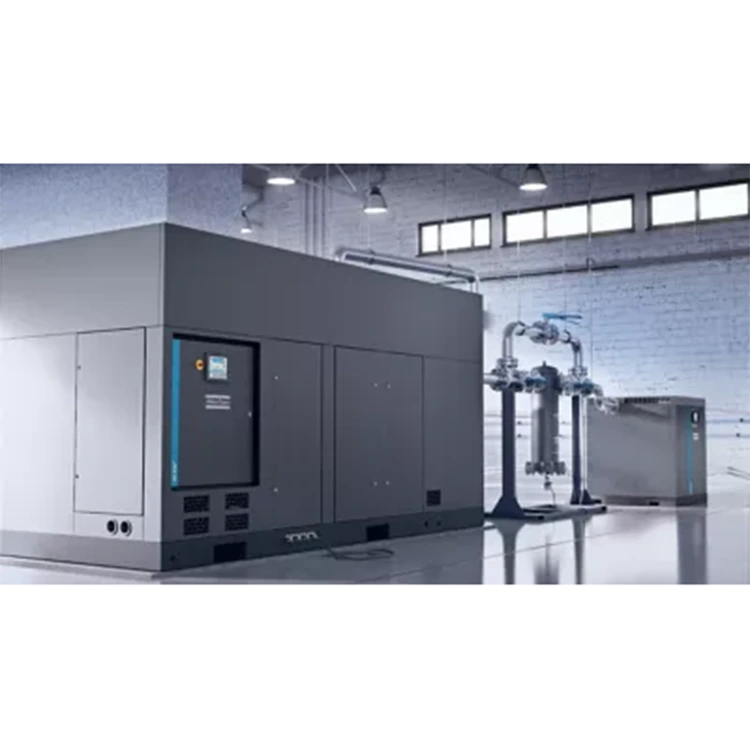
This article explains how a centrifugal air compressor works, why industries choose this technology, what challenges it can solve, and how businesses can select the right compressed air solution. Based on professional experience from DECHUAN, this guide provides practical insights into improving system performance, reducing energy waste, and maintaining long-term operational stability.
Article Outline
-
Understanding the basic structure and operating principle of centrifugal air compressors
-
Exploring efficiency advantages for large-scale industrial production
-
Identifying common compressed air challenges and effective solutions
-
Choosing suitable equipment according to application requirements
-
Maintaining reliable operation through proper management
What Is a Centrifugal Air Compressor?
A centrifugal air compressor is a dynamic compression machine designed to produce compressed air by converting mechanical energy into pressure energy through high-speed rotating components. Unlike positive displacement compressors that compress air inside a chamber, centrifugal compressors use aerodynamic principles to continuously accelerate and compress airflow.
The equipment is widely used in industries requiring large quantities of clean and stable compressed air, including chemical processing, manufacturing, electronics, energy, food production, pharmaceuticals, and large industrial plants.
DECHUAN develops centrifugal air compressor solutions designed to meet demanding industrial requirements. The company focuses on providing efficient compressed air equipment that helps customers improve productivity while controlling energy consumption.
Modern industries require compressed air systems that can operate continuously with minimal interruption. A centrifugal air compressor is particularly suitable for applications where high flow capacity, reliability, and energy efficiency are critical.
How Does a Centrifugal Air Compressor Work?
The working principle of a centrifugal air compressor is based on centrifugal force and aerodynamic energy conversion. The compression process usually includes several important stages:
-
Air intake: Ambient air enters the compressor through the inlet system.
-
Impeller acceleration: High-speed rotating impellers increase the velocity of the incoming air.
-
Diffusion process: The diffuser converts kinetic energy into pressure energy.
-
Multi-stage compression: Multiple impellers can further increase pressure levels when required.
-
Air delivery: Compressed air is supplied to industrial equipment through the pipeline system.
Because the compression process is continuous and does not require oil injection into the compression chamber, centrifugal air compressors can provide clean compressed air suitable for sensitive production environments.
|
Component
|
Function
|
|
Impeller
|
Provides acceleration energy to the air through high-speed rotation.
|
|
Diffuser
|
Transforms airflow velocity into increased pressure.
|
|
Motor or Drive System
|
Supplies mechanical power for compressor operation.
|
|
Cooling System
|
Controls operating temperature and improves stability.
|
|
Control System
|
Monitors performance and adjusts operation conditions.
|
Why Choose a Centrifugal Air Compressor for Industrial Applications?
Many industrial facilities face increasing pressure to reduce energy costs while maintaining production efficiency. Selecting the right compressor technology can significantly influence overall operational expenses.
A centrifugal air compressor offers several important benefits:
-
High energy efficiency: Designed for continuous high-volume air demand, centrifugal compressors can achieve excellent efficiency under stable operating conditions.
-
Large airflow capacity: They are suitable for factories and plants requiring substantial compressed air output.
-
Low maintenance requirements: Fewer wearing components help reduce downtime and maintenance frequency.
-
Clean air production: Oil-free compression technology supports applications requiring high air purity.
-
Stable operation: Advanced control systems help maintain consistent pressure and airflow.
For companies operating large production facilities, improving compressed air efficiency can create significant long-term economic advantages.
What Industrial Problems Can a Centrifugal Air Compressor Solve?
Compressed air problems can affect production efficiency, product quality, and operating costs. A properly designed centrifugal air compressor system can address many common challenges.
|
Common Challenge
|
How a Centrifugal Air Compressor Helps
|
|
High energy consumption
|
Efficient aerodynamic design reduces unnecessary energy loss during compression.
|
|
Unstable air pressure
|
Advanced control systems help maintain consistent output performance.
|
|
Frequent equipment maintenance
|
Reliable components reduce mechanical wear and service requirements.
|
|
Air contamination concerns
|
Oil-free compression supports cleaner air applications.
|
|
Large production demand
|
High airflow capacity meets continuous industrial requirements.
|
Selecting the correct compressor technology is not only about equipment purchase cost. Businesses should consider energy consumption, maintenance expenses, reliability, and total lifecycle value.
How to Select the Right Centrifugal Air Compressor?
Choosing a suitable centrifugal air compressor requires a detailed understanding of operational conditions. The wrong selection may lead to inefficient performance, unnecessary energy costs, or insufficient air supply.
Important selection factors include:
-
Required airflow: Determine the actual compressed air demand of the facility.
-
Operating pressure: Select equipment according to required pressure levels.
-
Working environment: Consider temperature, humidity, and installation conditions.
-
Energy efficiency: Evaluate long-term power consumption rather than only initial investment.
-
Reliability requirements: Choose equipment suitable for continuous operation.
-
Service support: Ensure technical assistance and maintenance availability.
DECHUAN provides professional compressed air solutions according to different industrial application requirements, helping customers achieve reliable and efficient production performance.
How to Maintain a Centrifugal Air Compressor for Long-Term Performance?
Although centrifugal air compressors are designed for reliability, proper maintenance is essential to maximize service life and maintain efficiency.
-
Regularly inspect air filters and inlet systems.
-
Monitor vibration levels and operating parameters.
-
Check cooling system performance.
-
Maintain proper lubrication for supporting components.
-
Inspect control systems and sensors periodically.
-
Record operating data to identify potential issues early.
Preventive maintenance allows companies to avoid unexpected shutdowns and improve overall equipment availability.
Centrifugal Air Compressor Compared with Other Compressor Types
Different compressor technologies have different application advantages. Understanding these differences helps companies make better equipment decisions.
|
Feature
|
Centrifugal Air Compressor
|
Traditional Compressor
|
|
Airflow Capacity
|
Excellent for large-scale applications
|
Usually better for smaller demand ranges
|
|
Energy Efficiency
|
Highly efficient under continuous operation
|
Efficiency varies depending on load conditions
|
|
Maintenance
|
Lower mechanical wear
|
May require more frequent component replacement
|
|
Air Quality
|
Suitable for clean air requirements
|
Depends on compressor design
|
Frequently Asked Questions
Q1: What industries use centrifugal air compressors?
Centrifugal air compressors are commonly used in industries such as manufacturing, chemical processing, electronics, pharmaceuticals, energy, and large industrial facilities that require continuous compressed air supply.
Q2: Is a centrifugal air compressor suitable for small factories?
Centrifugal compressors are generally designed for high-volume applications. Smaller facilities should evaluate their airflow demand before choosing this technology.
Q3: Why are centrifugal air compressors considered energy efficient?
They use aerodynamic compression technology and are optimized for continuous operation with large airflow requirements, which can reduce energy consumption in suitable applications.
Q4: How long can a centrifugal air compressor operate?
With proper installation, operation, and maintenance, centrifugal air compressors can provide reliable service for many years in industrial environments.
Q5: Why choose DECHUAN centrifugal air compressor solutions?
DECHUAN focuses on providing dependable compressed air solutions with attention to efficiency, performance, and industrial application needs.
Conclusion
A centrifugal air compressor is an effective solution for industries that require reliable, high-volume, and energy-efficient compressed air. By using advanced compression technology, it helps companies reduce operating challenges, improve production stability, and achieve better long-term performance.
When selecting compressed air equipment, businesses should consider airflow requirements, operating conditions, energy consumption, and maintenance needs. With professional solutions from DECHUAN, customers can build a more efficient and dependable compressed air system.
For more information about high-performance centrifugal air compressor solutions and customized industrial applications, please contact us today. DECHUAN is ready to provide professional support and help your business achieve more efficient compressed air management.