

How Does a Closed Eccentric Gear Press Improve Industrial Production?
2026-01-09
Summary: Closed eccentric gear presses are critical in high-precision metal forming, offering exceptional rigidity, stroke accuracy, and durability. This guide examines different press types, technical parameters, typical applications, and best practices for selecting the right model, aiming to solve common manufacturing challenges.
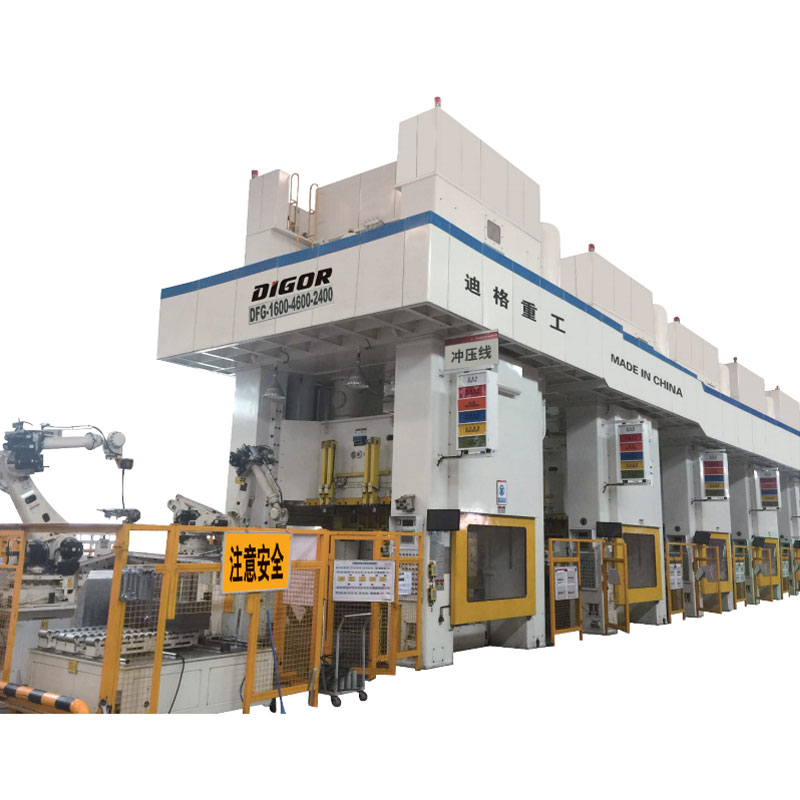
Table of Contents
- Overview of Closed Eccentric Gear Press
- Technical Specifications and Features
- Types and Configurations
- Typical Industrial Applications
- How to Select the Right Press
- FAQs
- Conclusion
Overview of Closed Eccentric Gear Press
Closed eccentric gear presses are advanced forming machines designed for precision metalworking. Unlike open-frame presses, these machines feature a fully enclosed gantry frame that provides superior rigidity. The eccentric gear mechanism drives the slide through a connecting rod, supported at both ends by bearing blocks. This design allows for long stroke capability, excellent resistance to lateral loads, and precise force transmission, making it ideal for processing high-strength materials and large molds.
Technical Specifications and Features
Key attributes of closed eccentric gear presses include:
| Feature | Specification | Benefit |
|---|---|---|
| Frame Structure | Integrally welded or prestressed tie rod | Minimal deflection, high rigidity |
| Eccentric Gear | Forged alloy steel, HRC 58–62, lifespan >10 years | Long-term durability and precision |
| Guide Rail | Eight-sided rectangular with adjustable wear plate | Low temperature rise, consistent accuracy |
| Clutch | High-torque wet clutch, semi-permanent maintenance-free | Reliable operation, low maintenance |
| Control System | 10-inch touchscreen, 99 die recipes, OPC-UA support | Flexible production management and data tracking |
| Safety | CE, CSA, ISO 13849-1 certified, hydraulic overload protection | Ensures operator safety and machine reliability |
Types and Configurations
Closed eccentric gear presses can be categorized based on nominal force, stroke, and application:
- Single-Point Eccentric Gear: 250–3000 kN, 100–500 mm stroke, suitable for small automotive parts and home appliance housings.
- Four-Point Eccentric Gear: 3000–24000 kN, 300–900 mm stroke, ideal for automotive panels and high-strength steel forming.
- Servo Eccentric Gear: 500–5000 kN, programmable 0–60 spm, perfect for multi-position progressive dies and online inspection.
- Cold-Forged Eccentric Gear: 1000–8000 kN, 100–400 mm stroke, designed for cold-forged gears and bearing rings.
Typical Industrial Applications
Closed eccentric gear presses are widely used across various sectors:
- Automotive Panels: Single-step deep drawing of 0.7–1.2 mm high-strength steel outer panels.
- Battery Pack Trays: Forming 6 mm aluminum profile extrusions with high precision and adjustable speed.
- Home Appliance Back Panels: High-speed blanking of galvanized sheet metal for durable and consistent components.
- Cold-Forged Gears: Precision forming of gear blanks like 20CrMnTi using high-rigidity integral casting presses.
How to Select the Right Press
When choosing a closed eccentric gear press, consider the following factors:
- Production Volume: Determine the number of strokes per minute needed for your operation.
- Material Strength: Choose a press with adequate force and rigidity for high-strength metals.
- Mold Size: Large molds benefit from four-point configurations; smaller molds may use single-point presses.
- Automation Needs: Servo-driven presses offer programmable speed and multi-die operation for complex processes.
- Maintenance and Safety: Ensure the machine has easy maintenance access and certified safety features.
FAQs
Q1: What distinguishes a closed eccentric gear press from a traditional crank press?
A: Closed eccentric gear presses support the gear at both ends, providing higher rigidity, longer strokes, and better resistance to side loads, making them suitable for large molds and high-strength materials.
Q2: Which press type is best for small versus large molds?
A: Single-point configurations are ideal for small to medium molds, while four-point or multi-column presses are recommended for large molds exceeding 2 m² or requiring multi-way feeding.
Q3: How efficient is a servo eccentric gear press?
A: Servo presses offer programmable speed and stroke control, reducing energy consumption and improving production consistency compared to traditional mechanical presses.
Q4: How long can these presses operate reliably?
A: With properly maintained forged alloy steel gears and robust frames, service life can exceed 10 years under normal industrial conditions.
Conclusion
Closed eccentric gear presses from Digor combine precision, strength, and flexibility to meet demanding industrial forming needs. By selecting the correct configuration based on mold size, material strength, and production volume, manufacturers can optimize efficiency and quality. For more detailed guidance and tailored solutions, contact us to explore how Digor presses can enhance your manufacturing workflow.