

How Does a Concrete Mixer Improve Construction Efficiency?
2026-03-10
Article Summary
Concrete is one of the most widely used construction materials in the world, but its quality and performance heavily depend on proper mixing. A Concrete Mixer plays a crucial role in ensuring uniformity, strength, and workability of concrete used in construction projects. Whether for small-scale building tasks or large infrastructure developments, selecting the right mixer can significantly impact productivity, cost control, and overall project success.
This article explains how a concrete mixer works, why it is essential for construction operations, and how contractors can choose the right model based on project requirements. It also explores common challenges faced by buyers and provides practical solutions to maximize equipment performance.
Table of Contents
- Introduction to Concrete Mixers
- How a Concrete Mixer Works
- Main Types of Concrete Mixers
- Key Components of a Concrete Mixer
- Technical Parameters and Specifications
- Benefits of Using Concrete Mixers
- Common Buyer Pain Points and Solutions
- How to Choose the Right Concrete Mixer
- Maintenance and Operation Tips
- Frequently Asked Questions
- Conclusion
Introduction to Concrete Mixers
In modern construction, maintaining consistent concrete quality is essential. Manual mixing methods often lead to uneven distribution of materials, lower structural strength, and inefficient labor usage. This is where a Concrete Mixer becomes indispensable.
A concrete mixer is a mechanical device designed to combine cement, aggregates such as sand or gravel, and water into a homogeneous mixture. By rotating a drum or mixing blades, the equipment ensures that all materials are blended evenly, producing high-quality concrete suitable for foundations, roads, bridges, and buildings.
For contractors and builders, using a reliable mixer not only improves mixing consistency but also accelerates project timelines. Companies like ZCJK have developed advanced mixing equipment designed to meet the growing demands of construction professionals.
How a Concrete Mixer Works
The working principle of a concrete mixer is based on continuous rotation and material agitation. The machine uses a rotating drum or mixing shaft to combine raw materials efficiently.
The basic process includes the following stages:
- Loading Materials – Cement, aggregates, and water are added into the mixing drum.
- Mixing Rotation – The drum rotates while internal blades lift and tumble the materials.
- Uniform Blending – Continuous agitation ensures consistent distribution of water and cement.
- Discharging – Once the concrete reaches the desired consistency, it is discharged through a chute or tilting drum.
This controlled process prevents segregation of materials and ensures the final mixture achieves the required strength and workability.
Main Types of Concrete Mixers
Different construction environments require different mixer configurations. Understanding the main types helps contractors select the most suitable equipment.
- Drum Concrete Mixer – The most common design, ideal for general construction projects.
- Twin Shaft Mixer – Provides high mixing efficiency and uniformity for large-scale concrete production.
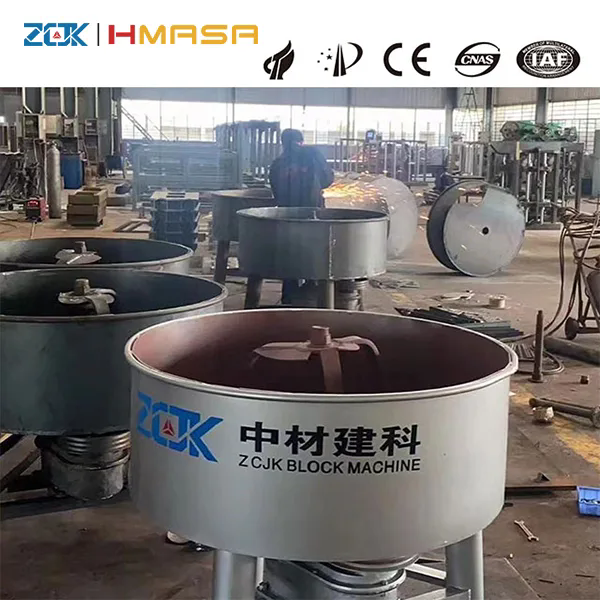
- Pan Mixer – Commonly used in precast concrete and specialized mixing applications.
- Portable Concrete Mixer – Compact and suitable for small projects or remote construction sites.
Manufacturers such as ZCJK provide multiple mixer models designed to support both mobile construction teams and industrial production facilities.
Key Components of a Concrete Mixer
A well-designed mixer contains several essential components that work together to achieve efficient mixing performance.
- Mixing Drum – The main chamber where materials are blended.
- Mixing Blades – Internal paddles that lift and fold the materials.
- Motor or Engine – Provides the power required for drum rotation.
- Transmission System – Transfers power from the motor to the mixing drum.
- Discharge System – Allows controlled unloading of mixed concrete.
- Frame and Support Structure – Ensures stability during operation.
High-quality mixers typically feature durable steel structures and optimized blade designs to enhance mixing efficiency while minimizing wear.
Technical Parameters and Specifications
When evaluating a concrete mixer, contractors often compare several key parameters to ensure the equipment meets project requirements.
| Parameter | Description |
|---|---|
| Drum Capacity | Total volume of the mixing drum |
| Batch Output | Amount of concrete produced per mixing cycle |
| Motor Power | Energy required to drive the mixing process |
| Rotation Speed | Drum rotation rate influencing mixing efficiency |
| Mixing Time | Average time required to produce a uniform mixture |
| Machine Weight | Total equipment weight affecting mobility and installation |
Understanding these specifications helps buyers choose a machine that balances performance, energy consumption, and productivity.
Benefits of Using Concrete Mixers
Using a professional concrete mixer provides multiple advantages compared to manual mixing methods.
- Consistent Concrete Quality – Uniform mixing ensures structural reliability.
- Higher Productivity – Large volumes can be mixed in shorter periods.
- Reduced Labor Costs – Mechanical mixing reduces reliance on manual work.
- Improved Material Utilization – Precise mixing minimizes waste.
- Better Worksite Efficiency – Continuous mixing supports uninterrupted construction operations.
These benefits make concrete mixers an essential investment for contractors aiming to complete projects efficiently and safely.
Common Buyer Pain Points and Solutions
Many buyers face challenges when selecting construction equipment. Understanding these concerns helps make informed purchasing decisions.
| Buyer Concern | Practical Solution |
|---|---|
| Inconsistent concrete quality | Choose mixers with optimized blade design and stable rotation speed |
| Low productivity | Select larger drum capacity or high-efficiency mixing systems |
| Frequent maintenance issues | Purchase equipment from experienced manufacturers |
| Difficult transportation | Consider portable or mobile mixer designs |
| High operating costs | Choose energy-efficient motors and durable components |
By addressing these common concerns early, construction companies can avoid operational delays and reduce long-term costs.
How to Choose the Right Concrete Mixer
Selecting the right mixer requires careful consideration of several factors.
- Project Scale – Small construction tasks require compact mixers, while large infrastructure projects demand high-capacity machines.
- Production Volume – Determine how much concrete must be produced per hour.
- Mobility Requirements – Portable mixers are ideal for moving between job sites.
- Power Source – Choose between electric or diesel-powered equipment depending on site conditions.
- Equipment Durability – Strong materials and reliable mechanical systems ensure long service life.
Working with an experienced manufacturer like ZCJK helps buyers identify equipment models that match their specific operational needs.
Maintenance and Operation Tips
Proper maintenance significantly extends the lifespan of concrete mixing equipment.
- Clean the drum immediately after each mixing cycle.
- Inspect mixing blades regularly for wear or damage.
- Check lubrication levels in bearings and gear systems.
- Ensure electrical or engine components are functioning properly.
- Store equipment in a dry environment when not in use.
Routine inspections and preventive maintenance can reduce downtime and ensure consistent performance throughout the equipment lifecycle.
Frequently Asked Questions
Q1: What materials can be mixed in a concrete mixer?
Concrete mixers are primarily used to combine cement, sand, gravel, and water. Some models can also mix mortar, plaster, or specialized construction materials.
Q2: How long does it take to mix concrete?
The mixing process usually takes between 3 and 10 minutes depending on the mixer size, rotation speed, and desired concrete consistency.
Q3: What capacity concrete mixer is suitable for small projects?
Portable mixers with capacities between 100 and 350 liters are commonly used for residential construction, renovation work, and small building projects.
Q4: How can concrete mixer lifespan be extended?
Regular cleaning, proper lubrication, and timely replacement of worn parts help maintain optimal performance and extend equipment lifespan.
Conclusion
Concrete mixers are essential tools in modern construction, ensuring that building materials are blended efficiently and consistently. By improving mixing accuracy, reducing labor intensity, and increasing productivity, these machines play a vital role in both small construction projects and large infrastructure developments.
Reliable equipment suppliers such as ZCJK provide a wide range of concrete mixers designed to meet diverse construction requirements. Selecting the right mixer and maintaining it properly can significantly enhance project efficiency and ensure long-term operational reliability.
If you are looking for high-performance concrete mixing equipment for your construction projects, the professional team at ZCJK is ready to assist. Contact us today to learn more about our advanced concrete mixer solutions and discover how the right equipment can improve your construction productivity and project success.