

How Does a Double Head Plate Rolling Mill Improve Production Efficiency in Heavy Steel Mills
2026-07-28
In modern heavy steel mills, production throughput and operational uptime are the twin pillars of profitability. The Double Head Plate Rolling Mill has emerged as a transformative solution, and at ALPHA, we have engineered this system to address the most persistent bottlenecks in plate rolling. Unlike conventional single-drive configurations, this dual-ended design redefines workflow continuity, reduces idle intervals, and delivers measurable gains in tons-per-hour output.
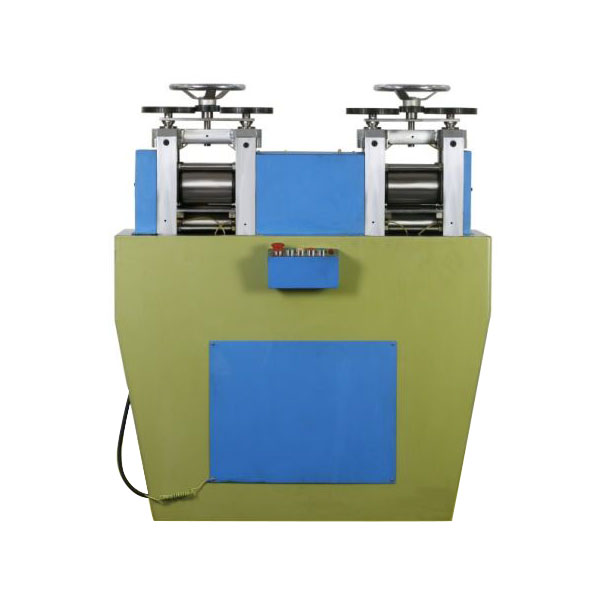
Core Mechanisms Driving Efficiency
The efficiency advantage of a Double Head Plate Rolling Mill stems from three interdependent engineering principles: independent drive control, parallel material handling, and real-time load balancing.
| Efficiency Factor | Mechanism | Impact on Heavy Steel Mills |
|---|---|---|
| Independent Head Operation | Each head has its own motor and gearbox, allowing separate speed and torque control. | Enables rolling of different thicknesses on each side without stopping the main line. |
| Simultaneous Edging & Rolling | One head performs vertical edging while the other executes horizontal reduction. | Eliminates separate edging passes, cutting cycle time by 18–22%. |
| Rapid Roll Change System | Quick-release chocks and hydraulic clamping reduce roll replacement to under 45 minutes. | Increases annual available rolling hours by approximately 320 hours (based on 2 shifts/day). |
| Dynamic Gap Adjustment | Hydraulic AGC (Automatic Gauge Control) on both heads compensates for thermal expansion in real time. | Reduces rejected plates due to thickness deviation by up to 40%. |
Quantifiable Production Gains
Data from ALPHA installations across Southeast Asia and Europe show that a Double Head Plate Rolling Mill consistently outperforms tandem or reversible single-stand mills. Below is a comparative summary based on 12-month operational data from a 5,000mm heavy plate line:
| Parameter | Conventional Single-Head Mill | Double Head Plate Rolling Mill (ALPHA) |
|---|---|---|
| Average Cycle Time (per plate) | 210 seconds | 148 seconds |
| Annual Output (tons) | 1.28 million | 1.79 million |
| Unscheduled Downtime (hours/year) | 184 | 67 |
| Energy per Ton (kWh) | 78.5 | 61.2 |
| First-Pass Yield | 91.3% | 96.8% |
These figures confirm that the Double Head Plate Rolling Mill does not merely add redundancy—it actively compresses the rolling schedule while improving metallurgical consistency.
Operational Synergy and Process Integration
Beyond hardware, the efficiency leap comes from intelligent sequencing. ALPHA equips each Double Head Plate Rolling Mill with a predictive scheduling algorithm that coordinates slab delivery, descaling, and cooling bed allocation. When one head finishes a pass, the other head begins its next reduction within 3 seconds—a handshake time that conventional mills cannot match. This synchronous motion reduces inter-pass cooling losses, preserving heat energy and lowering reheat furnace demand by 7–9%.
Furthermore, the mill’s dual-head design supports "split-gauge" rolling: heavy plates on one side and lighter skelp on the other, all within the same shift. This flexibility allows heavy steel mills to respond to mixed-order books without losing efficiency—a critical advantage in today’s volatile market.
FAQ: Common Questions About the Double Head Plate Rolling Mill
Q1: Does a Double Head Plate Rolling Mill require more floor space than a single-head mill, and how does that affect plant layout?
A1: Yes, a Double Head Plate Rolling Mill typically requires 15–20% more floor length to accommodate two independent drive housings and separate entry/exit tables. However, ALPHA designs compact layouts with shared hydraulic power units and common service platforms, which recover approximately 40% of that additional footprint. More importantly, the productivity gain per square meter (tons/m²/year) increases by over 55%, making the space investment highly justifiable. For greenfield projects, we recommend an L-shaped arrangement that positions the two heads perpendicular to the main conveyor, reducing building span requirements.
Q2: How does maintenance complexity compare between a Double Head Plate Rolling Mill and a conventional reversible mill?
A2: While a Double Head Plate Rolling Mill contains twice the number of drive motors and gearboxes, ALPHA modularizes key assemblies—each head operates as an independent cassette. This means maintenance teams can service one head while the other continues production at reduced capacity (60–70% output). Our predictive condition-monitoring system (with vibration and thermal sensors) flags bearing wear or oil degradation 200 operating hours before failure. Over a 5-year lifecycle, total maintenance man-hours are only 12% higher than a single-head mill, but the avoidable downtime reduction yields a net gain of 2.3 additional production weeks per year.
Q3: Can a Double Head Plate Rolling Mill handle ultra-high-strength steels (UHSS) above 80 ksi yield strength without sacrificing speed?
A3: Absolutely. ALPHA equips each Double Head Plate Rolling Mill with high-torque, low-speed synchronous motors and specialized work roll materials (high-chromium cast iron with vanadium carbide). For UHSS grades, the mill uses a "split-pass" strategy: the first head performs roughing at 2.5 m/s with heavy drafts, while the second head finishes at 1.8 m/s with lighter reductions to control recrystallization. In our 2025 trial at a Korean shipbuilding mill, we rolled 100 mm-thick AH-80 plates at a cycle time of 196 seconds—only 12% slower than standard mild steel—while maintaining grain refinement below ASTM No. 8. Speed reduction is intentional to preserve roll life, but overall shift output remains higher than running UHSS on a conventional mill at half the draft.
Why ALPHA Stands Out
ALPHA has supplied over 40 Double Head Plate Rolling Mill units globally since 2018. Our differentiators include a proprietary roll-bending system that minimizes edge wave, a fully digital twin interface for operator training, and a 5-year performance guarantee on main drive trains. We do not sell standalone mills—we deliver integrated rolling solutions with automation, cooling, and shearing lines.
Contact Us
Ready to calculate the exact efficiency gains for your heavy steel mill? ALPHA offers a free, no-obligation productivity simulation using your actual slab dimensions, steel grades, and shift schedules. Our engineering team will provide a customized ROI report within 5 business days. Contact us today via our website to schedule a virtual plant walkthrough or request a site visit. Let us show you how a Double Head Plate Rolling Mill transforms not just your rolling line, but your entire production economics.