

How Does a Heating Cooling Heat Pump Work?
2026-06-16
Abstract
A heating cooling heat pump is an advanced HVAC solution designed to provide both heating and cooling within a single integrated system. Instead of generating heat directly, it transfers thermal energy between indoor and outdoor environments, offering high efficiency and stable comfort throughout the year. This article explains how the system works, its core components, operating modes, advantages, and selection considerations, helping users understand its real-world performance and value.
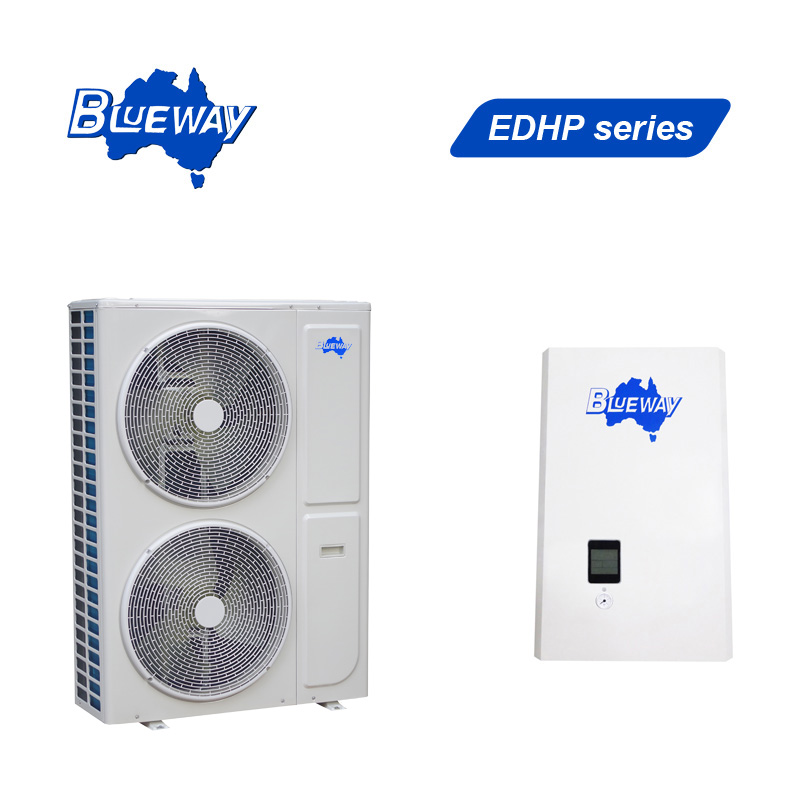
Table of Contents
- 1. Introduction
- 2. What Is a Heating Cooling Heat Pump?
- 3. Working Principle Explained
- 4. Key System Components
- 5. Heating vs Cooling Mode
- 6. Key Benefits
- 7. Application Scenarios
- 8. Selection Guide
- 9. Maintenance Tips
- 10. Common Issues and Solutions
- 11. Why Choose Blueway
- 12. FAQ
- 13. Conclusion
1. Introduction
Modern buildings demand energy-efficient and flexible climate control systems. Traditional HVAC systems often separate heating and cooling functions, leading to higher energy consumption and complex installations. A heating cooling heat pump simplifies this by combining both functions into one reversible system, significantly improving operational efficiency and reducing environmental impact.
2. What Is a Heating Cooling Heat Pump?
A heating cooling heat pump is a thermodynamic system that moves heat energy rather than generating it through combustion or electrical resistance. It uses a refrigeration cycle that can be reversed depending on seasonal demand. In winter, it extracts heat from outdoor air or ground sources and transfers it indoors. In summer, it removes heat from indoor spaces and releases it outside.
This dual functionality makes it a highly adaptable solution for residential, commercial, and industrial environments.
3. Working Principle Explained
The system operates based on the vapor compression cycle, which includes four key stages: evaporation, compression, condensation, and expansion. The refrigerant continuously circulates through these stages, absorbing and releasing heat as it changes state between liquid and gas.
In heating mode, the cycle extracts thermal energy from external air even at low temperatures. In cooling mode, the process is reversed to remove heat from indoor air and release it outside.
4. Key System Components
The performance of a heating cooling heat pump depends on four essential components:
- Compressor: Pressurizes refrigerant and drives the cycle.
- Evaporator: Absorbs heat from the surrounding environment.
- Condenser: Releases heat to indoor or outdoor space depending on mode.
- Expansion Valve: Regulates refrigerant pressure and flow.
5. Heating vs Cooling Mode
Below is a simplified comparison of system behavior in both modes:
| Operating Mode | Heat Flow Direction | Main Function | Energy Source |
|---|---|---|---|
| Heating Mode | Outdoor → Indoor | Provides indoor warmth | Ambient air / ground heat |
| Cooling Mode | Indoor → Outdoor | Removes indoor heat | Indoor thermal load |
6. Key Benefits
- High energy efficiency compared to conventional HVAC systems
- Year-round climate control in a single unit
- Lower operational costs due to heat transfer mechanism
- Reduced carbon emissions and environmental impact
- Flexible installation options for various building types
7. Application Scenarios
Heating cooling heat pump systems are widely used in:
- Residential apartments and villas
- Office buildings and commercial complexes
- Hotels and hospitality facilities
- Industrial workshops requiring temperature stability
- Healthcare and laboratory environments
8. Selection Guide
Choosing the right system depends on several technical and environmental factors. The table below summarizes key considerations:
| Factor | Description | Importance Level |
|---|---|---|
| Building Size | Total area determines capacity requirement | High |
| Climate Conditions | Outdoor temperature range affects efficiency | High |
| Energy Efficiency Rating | Higher rating reduces long-term cost | High |
| Installation Environment | Indoor/outdoor space availability | Medium |
9. Maintenance Tips
- Regularly clean air filters to maintain airflow efficiency
- Inspect refrigerant levels to ensure stable performance
- Check electrical connections periodically
- Schedule annual professional servicing
- Keep outdoor units free from debris and obstruction
10. Common Issues and Solutions
Reduced heating performance: Often caused by low refrigerant or dirty coils.
Unusual noise: May indicate loose mechanical components or compressor strain.
System short cycling: Typically linked to incorrect sizing or thermostat issues.
Early diagnosis and preventive maintenance can significantly extend system lifespan.
11. Why Choose Blueway
Blueway specializes in advanced HVAC and heat pump technologies designed for high efficiency, durability, and intelligent climate control. With continuous innovation in heating cooling heat pump systems, Blueway focuses on delivering stable performance across different climate conditions while optimizing energy consumption.
The engineering approach emphasizes system reliability, smart control integration, and environmentally responsible design. This makes Blueway solutions suitable for both residential and large-scale commercial projects requiring consistent thermal comfort.
12. FAQ
Q1: Can a heating cooling heat pump work in extreme cold climates?
Yes, modern systems are designed to extract heat even from low-temperature air, though efficiency may vary depending on model specifications.
Q2: Is it more efficient than traditional air conditioning systems?
Yes, because it transfers heat rather than generating it, resulting in significantly lower energy consumption.
Q3: How long does a typical system last?
With proper maintenance, a heating cooling heat pump can last 12–20 years depending on usage and environment.
Q4: Does it require frequent maintenance?
Routine maintenance is minimal but essential, typically involving filter cleaning and annual inspection.
13. Conclusion
A heating cooling heat pump represents a highly efficient and adaptable solution for modern climate control needs. By leveraging heat transfer technology instead of direct heat generation, it delivers consistent comfort while reducing energy consumption. Its dual functionality, combined with environmental benefits and operational flexibility, makes it an increasingly preferred choice across residential and commercial applications.
For reliable system design, advanced engineering support, and customized solutions, Blueway provides professional-grade heat pump systems tailored to diverse environmental requirements.
contact us today to explore how Blueway heating cooling heat pump solutions can improve your energy efficiency and comfort performance.