

How Does a High Speed Press Improve Manufacturing Efficiency?
2026-02-06
Article Summary: In modern manufacturing, speed and precision are not luxuries but necessities. A high speed press plays a pivotal role in optimizing production lines by increasing output, improving part consistency, reducing downtime, and lowering operational costs. This article breaks down what a high speed press is, explores how it works, highlights the problems it solves, and provides practical guidance on selecting the right machine for your application.
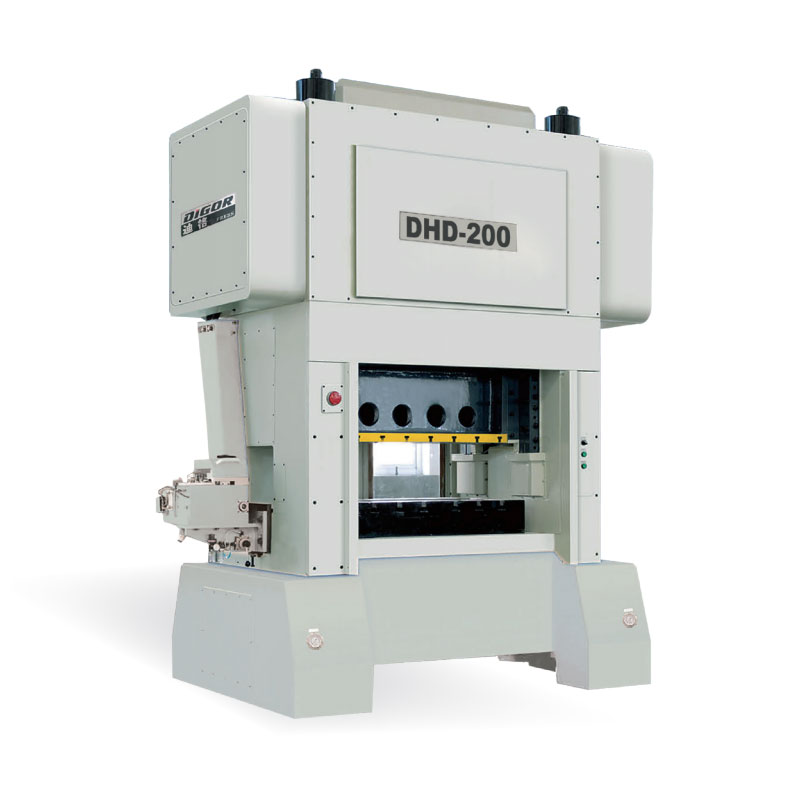
Table of Contents
- What Is a High Speed Press?
- Key Benefits of Using a High Speed Press
- Common Manufacturing Pain Points Solved by High Speed Presses
- How to Choose the Right High Speed Press
- Application Examples & Case Scenarios
- Frequently Asked Questions
- Conclusion & Next Steps
What Is a High Speed Press?
A high speed press is a mechanical or servo-driven press designed to perform stamping, forming, punching, or blanking operations at significantly higher rates than conventional presses. These machines are engineered for rapid cycles, often exceeding hundreds of strokes per minute, while maintaining consistent force and precision.
Unlike traditional presses that prioritize brute force over speed, high speed presses integrate advanced controls, optimized slide motion, and robust structural design to handle high-frequency operations without sacrificing part quality or machine longevity.
Key Benefits of Using a High Speed Press
Manufacturers adopt high speed presses for a range of strategic advantages. These include:
- Increased Production Throughput: Higher strokes per minute translate into more parts produced per hour or shift.
- Improved Part Consistency: Accurate repeatability reduces variation between parts, critical for industries with tight tolerances.
- Reduced Labor Costs: Faster cycle times reduce manual intervention and enable automated material handling integration.
- Enhanced Energy Efficiency: Modern servo-driven high speed presses can lower energy consumption compared with older mechanical models.
- Lower Total Cost of Ownership: Though upfront investment may be higher, reduced downtime and maintenance contribute to cost savings over time.
Common Manufacturing Pain Points Solved by High Speed Presses
| Pain Point | Impact on Operations | How a High Speed Press Helps |
|---|---|---|
| Insufficient Output | Missed deadlines, limited scalability | Delivers high cycles per minute to meet large batch demands |
| Inconsistent Quality | Higher rejection rates, warranty issues | Precision controls and stable slide motion improve repeatability |
| Excessive Downtime | Production delays and higher operating costs | Durable components and predictive maintenance features reduce stops |
| High Labor Dependency | Increased wages, scheduling challenges | Automatable processes reduce need for manual handling |
How to Choose the Right High Speed Press
Selecting a high speed press is more than picking the fastest machine. It requires alignment with your production goals, material types, and part complexity. Below are key considerations:
- Stroke Rate Requirements: Define the target strokes per minute needed to hit production quotas.
- Force Capacity: Match press tonnage and force profiles with material properties and forming depths.
- Control System Features: Evaluate ease of programming, feedback loops, and diagnostic capabilities.
- Integration Flexibility: Ensure compatibility with feeders, robots, and downstream processes.
- Service & Support Availability: Local support, spare parts availability, and training resources will impact uptime.
Application Examples & Case Scenarios
Here are real-world scenarios where high speed presses deliver tangible value:
- Automotive Fasteners: Producing thousands of bolts and clips per hour with uniform dimensions.
- Electronics Components: High precision stamping for connectors and shield assemblies at high repeatability.
- Consumer Goods: Efficient blanking and forming of metal parts for appliances and tools.
- Battery Tab Forming: In EV battery packs, ensuring consistent tab profiles at high throughput rates.
In each scenario, the ability to couple speed with precision enables manufacturers to maintain quality while scaling output.
Frequently Asked Questions
Q1: What differentiates a high speed press from a conventional press?
A high speed press is engineered for rapid-cycle operations, often with enhanced controls and slide dynamics that support higher strokes per minute while preserving accuracy. Conventional presses focus more on force capacity at slower cycle rates.
Q2: Are high speed presses suitable for all materials?
High speed presses are versatile but must be specified according to material hardness, thickness, and formability. Soft metals like aluminum and copper are commonly processed at high speed, while harder steels require careful tuning.
Q3: How do I maintain a high speed press for optimal performance?
Routine maintenance includes lubrication at specified intervals, inspection of die alignment, monitoring control system alerts, and replacing wear parts proactively. Many manufacturers offer predictive maintenance software to reduce unplanned downtime.
Q4: Can automation be paired with high speed presses?
Yes, material feeders, robots, and vision systems can be integrated to create fully automated cells that feed, press, inspect, and stack parts with minimal human input.
Q5: What safety considerations are essential for high speed presses?
Press safety encompasses light curtains, two-hand controls, safety gates, and emergency stops. Proper guarding and operator training are critical to prevent injuries in high-speed environments.
Conclusion & Next Steps
High speed presses represent a strategic investment for manufacturers who need to balance throughput, precision, and cost-effectiveness. By understanding your production requirements, evaluating machine capabilities, and planning for integration, you can harness the full potential of high speed technology.
If improving output, consistency, and operational efficiency are priorities for your operation, exploring high speed press options is a logical next step. For tailored solutions, expert consultation, and detailed specifications on high speed press models, reach out to Digor — we’re ready to help you enhance your production line’s performance. Contact us to discuss your application needs and receive a customized proposal.