

How Does a Hydrogel Coating Machine Improve Medical Product Manufacturing Efficiency?
2026-08-26
Article Summary:
A Hydrogel Coating Machine plays an important role in modern medical consumable manufacturing by providing accurate, stable, and efficient hydrogel application solutions. With increasing demand for medical electrodes, therapeutic patches, and adhesive healthcare products, manufacturers need equipment that can maintain coating consistency while reducing labor costs and production waste. This article explains how hydrogel coating technology works, why manufacturers need automated coating solutions, and how Junssen helps companies achieve reliable production performance through advanced automation equipment.
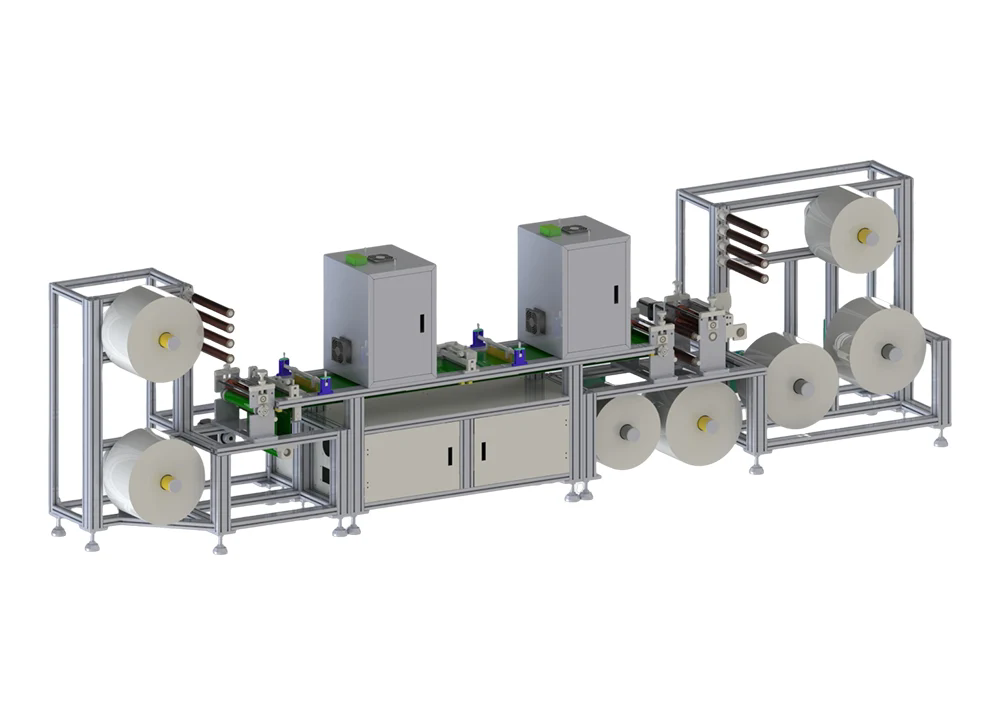
Table of Contents
- 1. What Is a Hydrogel Coating Machine?
- 2. What Manufacturing Challenges Does Hydrogel Coating Equipment Solve?
- 3. How Does a Hydrogel Coating Machine Work?
- 4. What Are the Main Advantages of Using Automated Hydrogel Coating Equipment?
- 5. Hydrogel Coating Machine vs Traditional Manual Coating Methods
- 6. Applications of Hydrogel Coating Machines
- 7. How to Choose the Right Hydrogel Coating Machine?
- 8. Frequently Asked Questions
1. What Is a Hydrogel Coating Machine?
A Hydrogel Coating Machine is specialized industrial equipment designed to apply hydrogel materials evenly onto different substrates, including medical films, conductive fabrics, foam materials, and adhesive layers. The machine is widely used in the production of medical electrodes, physiotherapy pads, healthcare patches, and other products requiring stable hydrogel performance.
Hydrogel materials have unique characteristics such as high moisture retention, excellent skin compatibility, and strong conductivity. However, these advantages can only be achieved when the coating thickness, spreading quality, and bonding performance are accurately controlled during manufacturing.
Traditional manual coating processes often struggle to maintain consistent thickness and production speed. A modern Hydrogel Coating Machine integrates precision coating systems, material feeding mechanisms, and automated control technology to ensure each product receives a uniform hydrogel layer.
Junssen specializes in developing automation equipment for medical consumable manufacturing. Its hydrogel coating solutions are designed to help manufacturers improve productivity, reduce production errors, and achieve stable product quality for large-scale production requirements.
2. What Manufacturing Challenges Does Hydrogel Coating Equipment Solve?
Medical consumable manufacturers face several challenges when producing hydrogel-based products. Since hydrogel directly affects product performance, even small variations in coating quality can influence adhesion, conductivity, comfort, and usability.
| Manufacturing Challenge | Impact on Production | How Hydrogel Coating Machine Helps |
|---|---|---|
| Uneven hydrogel thickness | Causes inconsistent product performance and customer complaints | Provides accurate coating control and stable material distribution |
| High labor dependence | Increases production costs and human errors | Automates coating processes and reduces manual operation |
| Material waste | Raises manufacturing expenses | Controls coating volume precisely to reduce unnecessary consumption |
| Low production efficiency | Makes it difficult to meet large orders | Supports continuous production with higher output capacity |
| Quality inconsistency between batches | Affects brand reputation and product reliability | Maintains repeatable production parameters |
For medical manufacturers, production stability is not only related to efficiency but also directly affects product safety and user experience. Automated coating technology helps companies establish a more controlled manufacturing process.
3. How Does a Hydrogel Coating Machine Work?
A Hydrogel Coating Machine usually combines multiple processing stages into one continuous production system. Although machine configurations may vary according to product requirements, the basic working process generally includes material feeding, hydrogel application, lamination, curing or stabilization, precision cutting, and finished product collection.
- Material Feeding: The base material is accurately transported into the machine through an automatic unwinding system. Stable tension control prevents wrinkles, stretching, or material deviation during production.
- Hydrogel Application: The coating system applies hydrogel onto the target surface with controlled thickness. The coating amount can be adjusted according to different product specifications.
- Lamination Process: Additional layers such as protective films, conductive materials, or supporting substrates can be combined with the hydrogel layer to create a complete product structure.
- Precision Processing: After coating and bonding, the material can enter die-cutting or forming stations to create products with accurate dimensions.
- Finished Product Collection: The final products are automatically separated, counted, or rolled for convenient packaging and transportation.
By integrating multiple steps into a continuous workflow, hydrogel coating equipment reduces unnecessary material handling and improves production consistency.
4. What Are the Main Advantages of Using Automated Hydrogel Coating Equipment?
Choosing an automated Hydrogel Coating Machine provides manufacturers with significant advantages compared with traditional production methods.
- Higher Coating Accuracy: Advanced coating systems help maintain consistent hydrogel thickness, improving product reliability.
- Improved Production Efficiency: Continuous operation reduces downtime caused by repeated manual processing.
- Lower Labor Costs: Automation decreases dependence on skilled operators and simplifies daily production management.
- Better Material Utilization: Precise coating control helps minimize hydrogel waste and reduces production expenses.
- Flexible Manufacturing Capability: Equipment parameters can be adjusted for different product sizes and designs.
According to Junssen's manufacturing experience, automated coating solutions are especially valuable for companies producing medical adhesive products that require high consistency and long-term production stability.
5. Hydrogel Coating Machine vs Traditional Manual Coating Methods
When manufacturers choose production methods for hydrogel-based medical products, the difference between automated equipment and manual coating processes becomes clear. Manual coating may be suitable for small-scale production or testing stages, but it often cannot meet the requirements of large-volume manufacturing where consistency, speed, and quality control are critical.
| Comparison Factor | Traditional Manual Coating | Hydrogel Coating Machine |
|---|---|---|
| Production Speed | Limited by operator working efficiency | Continuous automated production with higher output |
| Coating Uniformity | May vary between different operators and batches | Provides stable and repeatable coating thickness |
| Labor Requirement | Requires more workers for operation and inspection | Reduces manual involvement through automation |
| Material Control | Higher possibility of excessive material usage | Accurately controls hydrogel application quantity |
| Quality Management | Difficult to maintain consistent standards | Supports standardized production processes |
| Long-Term Cost | Lower initial investment but higher operating expenses | Higher efficiency and lower production cost over time |
For manufacturers looking to expand production capacity, automated hydrogel coating technology provides a more sustainable solution. It allows companies to maintain product quality while increasing production volume and reducing unnecessary operational expenses.
The Hydrogel Coating Machine developed by Junssen is designed to support manufacturers who require reliable coating performance, efficient workflow integration, and customized production solutions. By improving automation levels, companies can respond faster to market demand and maintain competitive advantages.
6. Applications of Hydrogel Coating Machines
Hydrogel coating technology has become increasingly important in industries where material performance and user comfort are essential. A high-quality Hydrogel Coating Machine enables manufacturers to produce various hydrogel-based products with stable quality.
| Application Area | Typical Products | Why Hydrogel Coating Is Important |
|---|---|---|
| Medical Healthcare | Electrodes, ECG pads, monitoring patches | Provides conductivity, skin adhesion, and comfort |
| Physical Therapy | Therapeutic gel pads and rehabilitation products | Ensures stable contact between product and skin |
| Beauty Industry | Hydrogel facial masks and skincare products | Improves moisture retention and user experience |
| Wearable Technology | Smart healthcare sensors and flexible devices | Supports reliable connection and comfortable wearing |
| Industrial Research | Specialized hydrogel material applications | Allows precise testing and controlled manufacturing |
As demand increases for smart healthcare products and advanced medical consumables, manufacturers require equipment capable of handling complex materials while maintaining production stability. Automated coating systems provide the foundation for scalable manufacturing.
7. How to Choose the Right Hydrogel Coating Machine?
Selecting suitable coating equipment requires careful consideration of production goals, product specifications, and future expansion plans. Different manufacturers may have different requirements depending on material types, production capacity, and automation levels.
The following factors should be evaluated before purchasing a Hydrogel Coating Machine:
- Coating Accuracy: The machine should provide precise control over coating thickness to ensure stable product performance.
- Production Capacity: Manufacturers should select equipment that matches current production needs while allowing future expansion.
- Material Compatibility: The equipment should support different hydrogel formulas and substrate materials.
- Automation Level: Automatic feeding, coating, inspection, and collecting functions can improve overall efficiency.
- Customization Capability: Different products may require special machine designs, and flexible customization is important.
- Maintenance Convenience: Easy maintenance helps reduce downtime and improve long-term equipment reliability.
| Selection Requirement | Recommended Consideration |
|---|---|
| Small batch production | Choose flexible equipment with adjustable parameters |
| Mass production | Select high-speed automated coating systems |
| Multiple product types | Choose machines with customization options |
| Strict quality requirements | Prioritize precision control and stable operation |
Junssen understands that every manufacturer has unique production challenges. Therefore, professional equipment design and customized solutions can help businesses achieve better results based on their specific requirements.
8. Key Maintenance Tips for Hydrogel Coating Machines
Proper maintenance is essential for maintaining coating accuracy and extending machine service life. Although automated equipment reduces manual workload, regular inspection and preventive maintenance remain necessary.
- Clean coating components regularly to prevent hydrogel residue from affecting production quality.
- Check material feeding systems to ensure stable transportation and avoid production interruptions.
- Inspect mechanical parts periodically to maintain smooth operation.
- Monitor coating parameters and adjust settings according to production requirements.
- Follow professional maintenance schedules recommended by equipment suppliers.
A well-maintained machine can provide long-term stable performance, reduce unexpected downtime, and improve the overall return on investment.
Frequently Asked Questions About Hydrogel Coating Machine
Q1: What products can be manufactured with a Hydrogel Coating Machine?
A Hydrogel Coating Machine can be used for producing medical electrodes, healthcare patches, therapy pads, wearable sensor products, and other applications requiring precise hydrogel layers.
Q2: Why is automated hydrogel coating better than manual coating?
Automated coating provides better consistency, higher production speed, reduced material waste, and improved quality control compared with manual operation.
Q3: Can a Hydrogel Coating Machine be customized?
Yes. Different manufacturers may require different coating widths, production speeds, material combinations, and automation functions. Professional suppliers such as Junssen can provide customized solutions according to production requirements.
Q4: How can manufacturers improve hydrogel coating quality?
Manufacturers can improve quality by using accurate coating equipment, maintaining stable production parameters, selecting suitable hydrogel materials, and performing regular equipment maintenance.
Q5: What should companies consider before investing in hydrogel coating equipment?
Companies should evaluate production volume, product design, coating precision requirements, automation needs, maintenance support, and future expansion possibilities before selecting equipment.
Conclusion: Why Is a Hydrogel Coating Machine Important for Modern Manufacturing?
The growing demand for medical and healthcare products requires manufacturers to adopt more efficient and reliable production technologies. A Hydrogel Coating Machine provides an effective solution by improving coating accuracy, reducing production challenges, and supporting consistent product quality.
Compared with traditional manual methods, automated hydrogel coating equipment offers better efficiency, stronger process control, and greater flexibility for different manufacturing requirements. Whether producing medical electrodes, therapy products, or advanced healthcare devices, reliable coating technology is essential for achieving stable results.
Junssen focuses on providing professional manufacturing equipment solutions designed to meet the needs of modern production environments. With advanced technology, customization capabilities, and industry experience, Junssen helps manufacturers improve efficiency and build competitive production systems.
If you are searching for a reliable Hydrogel Coating Machine solution to upgrade your production process, improve product consistency, and increase manufacturing efficiency, please contact us today. Junssen is ready to provide professional support and customized solutions for your business needs.