Article Summary
A machining center is one of the most important technologies in modern precision manufacturing.
It integrates multiple machining processes into one automated platform, helping manufacturers reduce production time, improve accuracy, and achieve consistent product quality.
However, many companies still face challenges such as low machining efficiency, unstable precision, high labor costs, and difficulties in processing complex components.
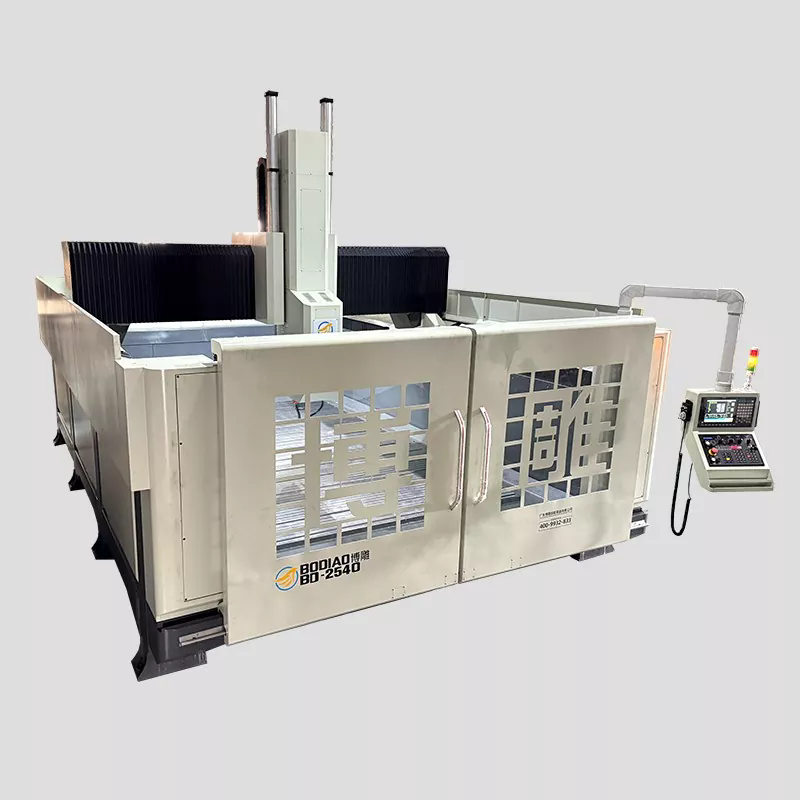
This article explains how a Machining Center works, why it is valuable for different industries, and how advanced machining solutions from Bodiao help manufacturers overcome common production challenges.
By understanding machining center functions, advantages, selection factors, and maintenance methods, businesses can make better decisions when upgrading their manufacturing capabilities.
Article Outline
-
Understanding the basic functions and structure of machining centers
-
Exploring how automation improves production efficiency
-
Analyzing manufacturing challenges solved by machining centers
-
Comparing different machining center types and applications
-
Providing practical purchasing and maintenance guidance
What Is a Machining Center?
A Machining Center is an advanced CNC machine tool designed to perform multiple machining operations automatically.
Unlike traditional machines that require separate setups for drilling, milling, cutting, and other processes, a machining center can complete various operations within one integrated system.
Equipped with automatic tool changers, CNC control systems, precision transmission components, and intelligent monitoring functions, machining centers provide manufacturers with higher productivity and better machining consistency.
Bodiao develops machining solutions that focus on precision processing, stable operation, and flexible production requirements.
These machines are designed to support manufacturers that need reliable performance for complex parts and high-volume production.
|
Component
|
Function
|
|
CNC Control System
|
Controls machining programs and ensures accurate movements
|
|
Spindle System
|
Provides high-speed rotation for cutting operations
|
|
Automatic Tool Changer
|
Allows continuous machining with different tools
|
|
Machine Bed
|
Provides structural stability and vibration resistance
|
How Does a Machining Center Work?
A machining center operates through a combination of computerized control, mechanical movement, and automated tool management.
The operator first creates or imports a machining program containing information about cutting paths, speeds, and tool operations.
After the program is loaded, the CNC system controls the movement of machine axes. The workpiece is positioned securely, and the automatic tool changer selects the required cutting tools according to the machining sequence.
During operation, the spindle rotates the cutting tool while the machine moves precisely along programmed paths. Sensors and control systems help maintain accuracy throughout the machining process.
-
Design the machining program based on the workpiece requirements.
-
Install the workpiece and select suitable cutting tools.
-
Load the program into the CNC control system.
-
The machining center automatically performs cutting operations.
-
Inspect the finished component for quality control.
What Manufacturing Problems Can a Machining Center Solve?
Many manufacturers struggle with production limitations caused by outdated equipment, manual operation, and inconsistent machining processes. A machining center provides effective solutions for these challenges.
|
Manufacturing Challenge
|
Machining Center Solution
|
|
Long production cycles
|
Multiple processes are completed in one setup, reducing processing time
|
|
Human operation errors
|
CNC automation improves machining consistency
|
|
Complex component requirements
|
Multi-axis control enables precise and complicated machining
|
|
High labor costs
|
Automation reduces dependence on manual operations
|
Key Advantages of Using a Machining Center
Choosing a machining center can significantly improve production capability. The main benefits include:
-
Higher Production Efficiency: Multiple machining processes can be completed without repeated setup.
-
Improved Precision: CNC control ensures accurate positioning and repeatable results.
-
Better Product Quality: Stable machining conditions reduce variations between parts.
-
Lower Manufacturing Costs: Reduced processing time and labor requirements improve cost efficiency.
-
Flexible Production: Different programs allow manufacturers to produce various components.
For manufacturers facing increasing market demands, machining centers provide a practical way to improve competitiveness while maintaining product quality.
Different Types of Machining Centers
Machining centers are available in different configurations depending on processing requirements.
|
Type
|
Main Features
|
Typical Applications
|
|
Vertical Machining Center
|
Spindle positioned vertically, suitable for general machining
|
Molds, mechanical parts, precision components
|
|
Horizontal Machining Center
|
Suitable for heavy cutting and complex workpieces
|
Automotive and industrial components
|
|
Multi-Axis Machining Center
|
Provides advanced movement flexibility
|
Aerospace and high-precision manufacturing
|
How to Choose the Right Machining Center?
Selecting suitable equipment requires careful evaluation of production requirements. Manufacturers should consider several important factors:
-
Machining Materials: Different materials require different cutting capabilities.
-
Part Size: Machine working range should match component dimensions.
-
Precision Requirements: Higher accuracy applications need advanced control systems.
-
Production Volume: High-volume manufacturing may require stronger automation features.
-
After-Sales Support: Reliable technical service ensures long-term operation.
Bodiao provides machining equipment solutions designed around different customer production needs, helping companies achieve stable and efficient manufacturing performance.
Applications of Machining Centers Across Industries
Due to their flexibility and precision, machining centers are widely used in many industries.
-
Automotive Industry: Manufacturing engine components, transmission parts, and precision assemblies.
-
Aerospace Industry: Processing lightweight and complex aerospace components.
-
Mold Manufacturing: Producing high-accuracy molds and tooling parts.
-
Medical Equipment: Creating precision medical components.
-
Electronics Industry: Manufacturing small and accurate structural parts.
Maintenance Tips for Long-Term Performance
Proper maintenance helps extend machine service life and maintain machining accuracy.
-
Regularly check lubrication systems and replace lubricants when necessary.
-
Clean chips and machining residues to prevent mechanical problems.
-
Inspect tool conditions and replace worn cutting tools.
-
Check CNC system performance and update programs when required.
-
Schedule professional inspections for critical components.
Frequently Asked Questions
What is the main purpose of a machining center?
A machining center is designed to automatically complete multiple machining operations with high precision, improving production efficiency and reducing manual work.
What industries use machining centers?
Machining centers are commonly used in automotive, aerospace, mold manufacturing, electronics, medical equipment, and general industrial production.
How does a machining center improve accuracy?
CNC control systems provide precise movement control, reducing human errors and ensuring consistent machining results.
How long can a machining center operate?
With proper maintenance and correct operation, a high-quality machining center can provide reliable service for many years.
Why choose Bodiao machining solutions?
Bodiao focuses on providing dependable machining equipment with precision performance, flexible configurations, and solutions that meet modern manufacturing requirements.
Conclusion
A Machining Center plays an essential role in modern manufacturing by combining automation, precision, and efficiency into one advanced machining solution.
It helps manufacturers overcome challenges such as slow production speed, inconsistent quality, and increasing operational costs.
With professional machining technology and customer-focused solutions, Bodiao supports businesses in achieving more efficient and reliable production processes.
If you are looking for a high-performance machining solution tailored to your manufacturing requirements, please contact us for professional support and customized solutions.