

How Does a Metal Punching Hydraulic Press Improve Precision, Productivity, and Manufacturing Efficiency?
2026-07-17
Metal fabrication companies are constantly challenged to produce high-quality components faster while maintaining tight tolerances and reducing production costs. Whether manufacturing electrical cabinets, automotive components, construction hardware, or industrial equipment, selecting the right punching technology directly affects production efficiency and product quality.
A Metal Punching Hydraulic Press offers exceptional force control, flexibility, and precision for punching, blanking, piercing, forming, embossing, and other sheet metal operations. Compared with conventional mechanical presses, hydraulic technology provides stable pressure throughout the entire stroke, making it suitable for a wider range of materials and complex applications.
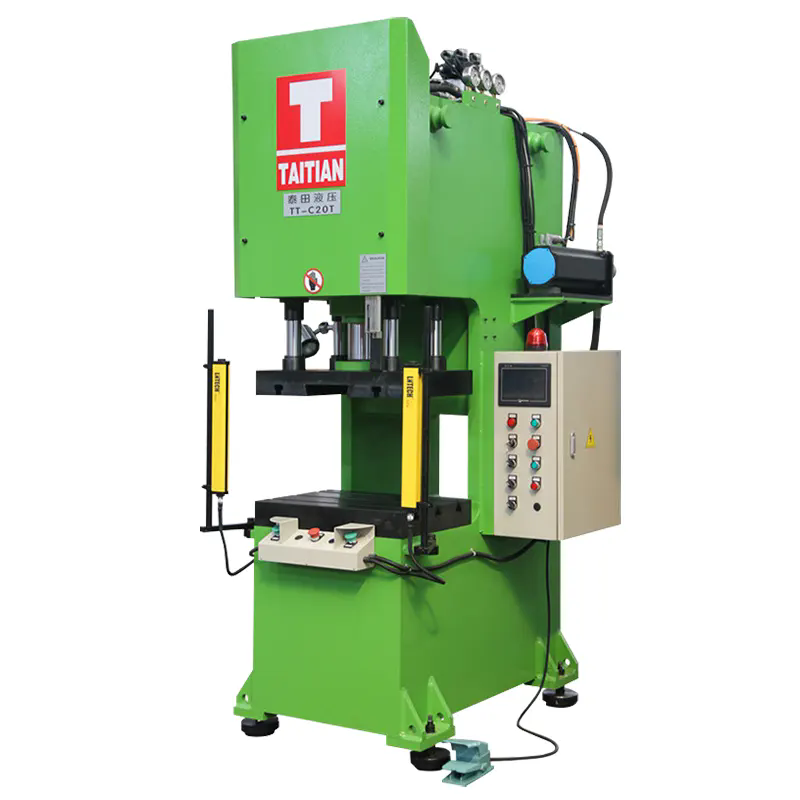
In this article, you'll learn how a Metal Punching Hydraulic Press works, why manufacturers increasingly choose hydraulic solutions, what features matter most, and how selecting the right equipment can improve productivity while reducing operational costs.
Table of Contents
- Understanding Metal Punching Hydraulic Press
- How Does a Metal Punching Hydraulic Press Work?
- Major Advantages of Hydraulic Punching Technology
- Common Industrial Applications
- Hydraulic Press vs Mechanical Press
- Key Features to Consider Before Buying
- Maintenance Tips for Long-Term Performance
- How to Choose the Right Machine
- Why Manufacturers Choose TAITIAN
- Frequently Asked Questions
- Conclusion
Understanding Metal Punching Hydraulic Press
A Metal Punching Hydraulic Press is a forming machine that uses hydraulic cylinders to generate controlled pressing force for punching holes, cutting shapes, trimming edges, embossing surfaces, and forming sheet metal components.
Instead of relying on a flywheel and crankshaft, hydraulic systems generate pressure through hydraulic oil, pumps, valves, and cylinders. This allows the machine to provide consistent tonnage during the entire pressing stroke, making it ideal for precision manufacturing.
Modern hydraulic punching presses are widely used for processing:
- Carbon steel
- Stainless steel
- Aluminum
- Copper
- Brass
- Galvanized sheet
- High-strength alloy materials
How Does a Metal Punching Hydraulic Press Work?
The operating principle is relatively straightforward but highly efficient.
- Hydraulic pumps generate oil pressure.
- The hydraulic cylinder converts pressure into linear force.
- The ram moves downward.
- The punch contacts the workpiece.
- The die supports the material underneath.
- The required hole or profile is formed.
- The ram returns automatically after completing the cycle.
Because hydraulic pressure is adjustable, operators can easily optimize force according to different materials, thicknesses, and tooling requirements.
| Component | Primary Function |
|---|---|
| Hydraulic Pump | Generates oil pressure |
| Hydraulic Cylinder | Converts hydraulic energy into pressing force |
| Ram | Transfers force to tooling |
| Punch | Cuts or forms the material |
| Die | Supports the workpiece and shapes the cut |
| Control System | Adjusts pressure, speed, and stroke |
Major Advantages of Hydraulic Punching Technology
Superior Force Control
Hydraulic presses deliver full tonnage throughout the stroke instead of only near the bottom dead center. This improves punching quality and reduces deformation.
High Precision
Modern servo-controlled hydraulic systems provide excellent positioning accuracy and repeatability, ensuring consistent dimensions across large production batches.
Flexible Production
Changing tooling allows the same machine to perform multiple manufacturing operations without requiring separate equipment.
Lower Tool Wear
Smooth hydraulic movement reduces impact loading, extending tooling life and minimizing maintenance costs.
Excellent Material Adaptability
Hydraulic presses can handle thin sheets as well as thicker metal plates while maintaining clean punching results.
Energy Savings
Modern hydraulic systems consume energy only when pressure is required, reducing unnecessary power consumption compared with older mechanical equipment.
Common Industrial Applications
Metal Punching Hydraulic Presses serve numerous manufacturing industries.
| Industry | Typical Products |
|---|---|
| Automotive | Brackets, chassis parts, reinforcement plates |
| Electrical | Switch cabinets, electrical enclosures, busbars |
| Construction | Metal connectors, structural brackets |
| Appliance Manufacturing | Cabinet panels, washing machine parts |
| Furniture | Metal frames and supports |
| Aerospace | Precision aluminum components |
| Agricultural Machinery | Heavy-duty structural parts |
Hydraulic Press vs Mechanical Press
| Comparison | Hydraulic Press | Mechanical Press |
|---|---|---|
| Pressure Control | Highly adjustable | Limited |
| Full Stroke Force | Available | Only near bottom stroke |
| Noise Level | Lower | Higher |
| Tool Protection | Excellent | Moderate |
| Production Flexibility | Very High | Limited |
| Complex Forming | Excellent | Less Suitable |
| Pressure Adjustment | Simple | Difficult |
For manufacturers handling multiple products and varying material thicknesses, hydraulic presses typically provide greater flexibility and long-term value.
Key Features to Consider Before Buying
Choosing the right Metal Punching Hydraulic Press requires evaluating several technical factors beyond tonnage alone.
- Machine frame rigidity
- Hydraulic system stability
- Servo energy-saving technology
- Automatic lubrication system
- PLC intelligent control
- Touchscreen operation interface
- Pressure adjustment range
- Stroke adjustment capability
- Fast die change design
- Safety protection systems
- Automatic feeding compatibility
- Customization options
Investing in a machine that supports future automation can significantly improve production efficiency as manufacturing demands grow.
Maintenance Tips for Long-Term Performance
Regular maintenance ensures stable production and extends machine lifespan.
- Inspect hydraulic oil quality regularly.
- Replace filters according to maintenance schedules.
- Monitor hydraulic pressure consistency.
- Lubricate moving components.
- Inspect cylinders for leakage.
- Keep tooling clean and properly aligned.
- Check electrical systems periodically.
- Verify safety devices before operation.
Preventive maintenance minimizes unexpected downtime while protecting expensive tooling and hydraulic components.
How to Choose the Right Machine
Every production line has unique requirements. Before investing in a Metal Punching Hydraulic Press, manufacturers should carefully evaluate their operational needs.
| Evaluation Factor | Importance |
|---|---|
| Maximum punching force | Determines processing capability |
| Material thickness | Affects tonnage selection |
| Production volume | Influences automation level |
| Tool compatibility | Improves production flexibility |
| Machine precision | Ensures product quality |
| Future expansion | Supports long-term growth |
Working with an experienced equipment manufacturer can simplify machine selection while ensuring the system matches actual production requirements.
Why Manufacturers Choose TAITIAN
TAITIAN has established a strong reputation in hydraulic press manufacturing by providing reliable, customized equipment designed for demanding industrial applications.
Its Metal Punching Hydraulic Press solutions are engineered to deliver stable performance, accurate force control, durable machine structures, and intelligent operating systems that support efficient production. Whether customers require standard machines or customized hydraulic solutions, TAITIAN focuses on helping manufacturers improve productivity, product consistency, and operational reliability.
By combining advanced hydraulic technology with practical manufacturing experience, TAITIAN supports customers across a wide range of industries, offering equipment tailored to different production capacities, material types, and automation requirements.
Frequently Asked Questions
What materials can a Metal Punching Hydraulic Press process?
It can process stainless steel, carbon steel, aluminum, copper, brass, galvanized steel, and many other metal materials.
Is a hydraulic press suitable for high-volume production?
Yes. Modern hydraulic presses equipped with automatic feeding systems can efficiently support continuous mass production.
Can one machine perform different operations?
Yes. By changing tooling, the same machine can perform punching, blanking, piercing, embossing, forming, trimming, and other metalworking operations.
How long does a hydraulic press typically last?
With proper maintenance and quality components, hydraulic presses can provide reliable operation for many years in industrial production environments.
Is customization available?
Many manufacturers, including TAITIAN, offer customized hydraulic press solutions based on production capacity, workpiece size, automation level, and application requirements.
Conclusion
A Metal Punching Hydraulic Press is more than a punching machine—it is a versatile manufacturing solution that improves precision, production flexibility, equipment longevity, and overall operational efficiency. With adjustable pressure, consistent forming performance, and compatibility with a wide range of materials, hydraulic punching technology continues to play a critical role in modern metal fabrication.
If your business is looking to upgrade production capabilities with reliable hydraulic press technology, TAITIAN offers professional solutions designed to meet diverse industrial requirements. Contact us today to discuss your production needs, receive expert guidance, and discover how the right Metal Punching Hydraulic Press can enhance your manufacturing performance.