

How Does a Nitrogen Generator for Laser Cutting Affect Cut Quality on Stainless Steel
2026-09-09
For fabricators and job shops, the difference between a premium stainless steel edge and a rejected part often comes down to one variable: assist gas quality. While many operators focus on laser power and focal position, the Nitrogen Generator for Laser Cutting has quietly become the most influential piece of auxiliary equipment in modern sheet metal processing. At Yili, we have observed that shops using on-site generated nitrogen consistently produce brighter, burr-free edges with narrower heat-affected zones compared to those relying on cylinder or liquid supply. This article breaks down the technical mechanisms behind that performance gap.
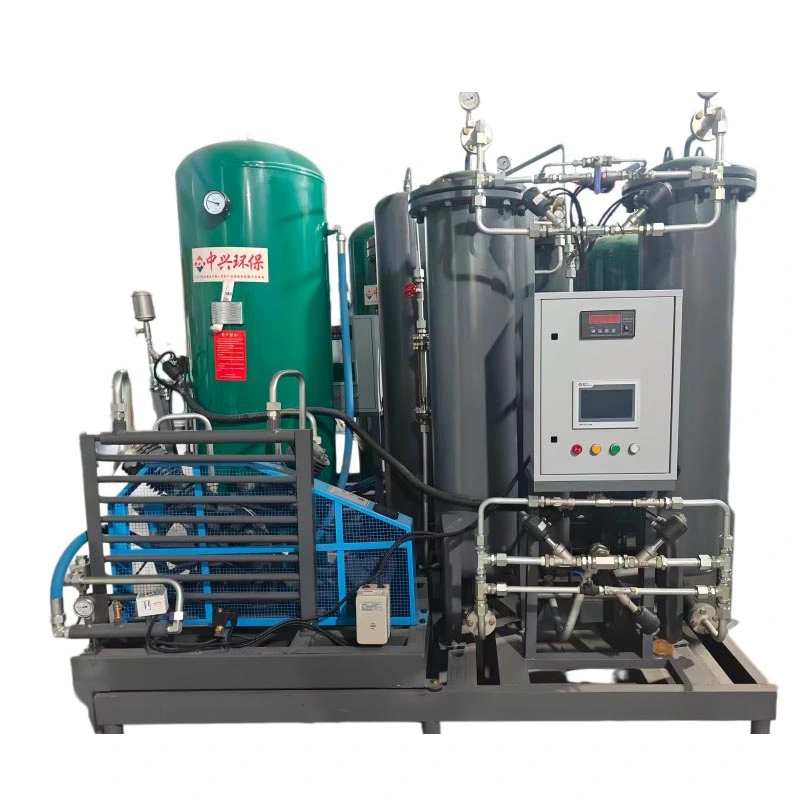
The Metallurgical Role of Nitrogen in Stainless Laser Cutting
Stainless steel absorbs laser energy efficiently, but the molten pool must be expelled before resolidification creates rough edges. Nitrogen serves two critical functions:
-
Oxidation prevention – Nitrogen displaces oxygen, preventing chromium carbide formation and preserving corrosion resistance.
-
Dross ejection – High-velocity nitrogen jet blows molten material out of the kerf before it adheres to the bottom edge.
When the Nitrogen Generator for Laser Cutting delivers gas at 99.5%–99.999% purity, the chemical inertness remains consistent. Any purity fluctuation—even a 0.5% oxygen intrusion—triggers exothermic oxidation that alters edge coloration from silver-white to yellowish or blue-grey.
Purity vs. Cut Quality: A Direct Correlation
The following table illustrates how Nitrogen Generator for Laser Cutting output purity directly impacts measurable cut characteristics on 304 stainless steel (4mm thickness, 4kW fiber laser):
| Purity Level | Oxygen Content | Edge Color | Burr Height (mm) | Corrosion Risk |
|---|---|---|---|---|
| 99.9% | ≤0.1% | Silver-white | <0.05 | None |
| 99.0% | ≤1.0% | Light straw | 0.08–0.12 | Low |
| 97.0% | ≤3.0% | Blue-grey | 0.20–0.35 | Moderate |
| 95.0% | ≤5.0% | Dark yellow | >0.50 | High |
Yili engineering tests confirm that a properly sized Nitrogen Generator for Laser Cutting maintaining 99.5% purity reduces post-processing grinding time by up to 40% compared to 97% purity. More importantly, the repeatability of an on-site system eliminates the "cylinder-to-cylinder" variance that plagues bottle supplies.
Pressure Stability and Nozzle Compatibility
Purity alone does not guarantee quality. The Nitrogen Generator for Laser Cutting must also sustain dynamic pressure under peak flow demand. During piercing, the nozzle requires 12–18 bar; during continuous cutting, 8–12 bar suffices. A generator with undersized buffer tanks causes pressure droop, which reduces jet velocity and allows molten metal to pool at the cut exit.
Yili recommends matching the generator’s FAD (free air delivery) to the laser’s maximum consumption, then adding a 20% safety margin. For a 6kW laser cutting 10mm stainless, a Nitrogen Generator for Laser Cutting with 150 Nm³/h capacity at 99.9% purity ensures pressure remains within ±0.3 bar during acceleration and deceleration phases.
Surface Roughness and Edge Rounding
High-purity nitrogen creates a laminar flow pattern that cools the kerf wall rapidly. This quenching effect produces a fine-grained recast layer—typically 5–10 microns thick—that requires no secondary finishing. Conversely, impure gas generates turbulent flow with localized hotspots, resulting in:
-
Wavy striations along the cut face
-
Micro-cracks at the bottom edge
-
Increased post-weld porosity if the component is later joined
A Nitrogen Generator for Laser Cutting from Yili equipped with a catalytic deoxo unit can achieve 99.999% purity, effectively eliminating these defects even on mirror-polished surfaces used in architectural applications.
FAQ – Nitrogen Generator for Laser Cutting
Q: What purity does my Nitrogen Generator for Laser Cutting need to produce for mirror-finish stainless edges?
A: For mirror-finish or #8 polished stainless, you require 99.999% (Grade 5) purity with oxygen content below 10 ppm. Any visible oxidation will permanently discolour the polished surface because the heat-affected zone cannot be mechanically removed without losing the mirror finish. Yili supplies dual-bed PSA systems with post-filtration that consistently achieve this grade for high-end kitchen and automotive trim applications.
Q: How often should I change the carbon molecular sieve (CMS) in my Nitrogen Generator for Laser Cutting?
A: CMS typically lasts 8–10 years under normal operating conditions, provided incoming compressed air has a pressure dew point below -40°C and oil content under 0.01 mg/m³. However, you should perform a purity check every 6 months using a paramagnetic oxygen analyser. If purity drops by more than 0.3% at the same flow rate, the CMS may require top-up or replacement. Yili includes remote diagnostic ports on all generators to simplify this verification.
Q: Can a smaller Nitrogen Generator for Laser Cutting be upgraded later if I buy a higher-power laser?
A: Yes, most modular PSA generators allow additional adsorber vessels to be paralleled. However, the compressor and dryer must also be scaled. Yili designs its Nitrogen Generator for Laser Cutting platforms with pre-engineered expansion ports, so you can increase capacity from 100 Nm³/h to 200 Nm³/h without replacing the entire skid. Always plan for future laser power upgrades during initial sizing to avoid redundant investment.
Operational Economics vs. Cut Quality Trade-offs
Some shop managers consider using lower purity (97%) to reduce compressor load and energy bills. While this saves approximately 8%–12% in electricity, the downstream costs often negate that benefit:
-
Extra grinding – 15–20 minutes per sheet
-
Rejected parts – 3%–5% scrap rate vs. <0.5% with 99.9%
-
Nozzle wear – shorter lifespan due to back-splatter
Yili has documented case studies where a Nitrogen Generator for Laser Cutting set to 99.5% purity delivered a 6-month payback purely from reduced consumables and rework, even after accounting for higher compression energy.
Best Practice Recommendations
| Parameter | Recommended Setting | Impact on Cut Quality |
|---|---|---|
| Purity | 99.5%–99.9% (min) | Prevents oxidation and burrs |
| Pressure stability | ±0.3 bar max drift | Ensures consistent jet force |
| Dew point | ≤ -40°C | Avoids internal condensation and purity drift |
| Flow buffer | 20% over laser max | Maintains pressure during piercing peaks |
Yili further advises installing a dedicated coalescing filter and activated carbon tower upstream of the Nitrogen Generator for Laser Cutting to protect the CMS from compressor lubricant carryover—a leading cause of premature performance degradation.
Final Verdict
The Nitrogen Generator for Laser Cutting does more than supply gas—it defines the upper limit of your stainless cutting capability. Purity determines edge aesthetics and corrosion resistance; pressure stability governs burr-free piercing; and system reliability ensures that every part, from first to last, meets the same visual standard. Yili has engineered its generators with dual-priority control logic that automatically prioritises purity during critical piercing phases and switches to flow-priority during continuous cuts, giving you the best of both worlds without operator intervention.
Ready to benchmark your current cut quality against a Yili on-site system?
Contact our applications team with your laser type, material thickness range, and monthly consumption—we will deliver a custom purity-efficiency simulation within 48 hours. Reach out to Yili today and discover why hundreds of fabricators have switched to generator-based nitrogen for their most demanding stainless work. Your edge quality—and your bottom line—will show the difference.