

How Does a Paper Bowl Machine Work?
2026-06-30
A Paper Bowl Machine is a highly efficient industrial solution designed to transform paper rolls into durable, food-grade bowls used widely in packaging, catering, and food delivery industries. This article explains the working principles, key components, production process, and selection criteria of paper bowl manufacturing equipment. It also highlights common operational challenges, maintenance practices, and why manufacturers such as Yongbo Machinery play a critical role in delivering stable and high-performance production systems.
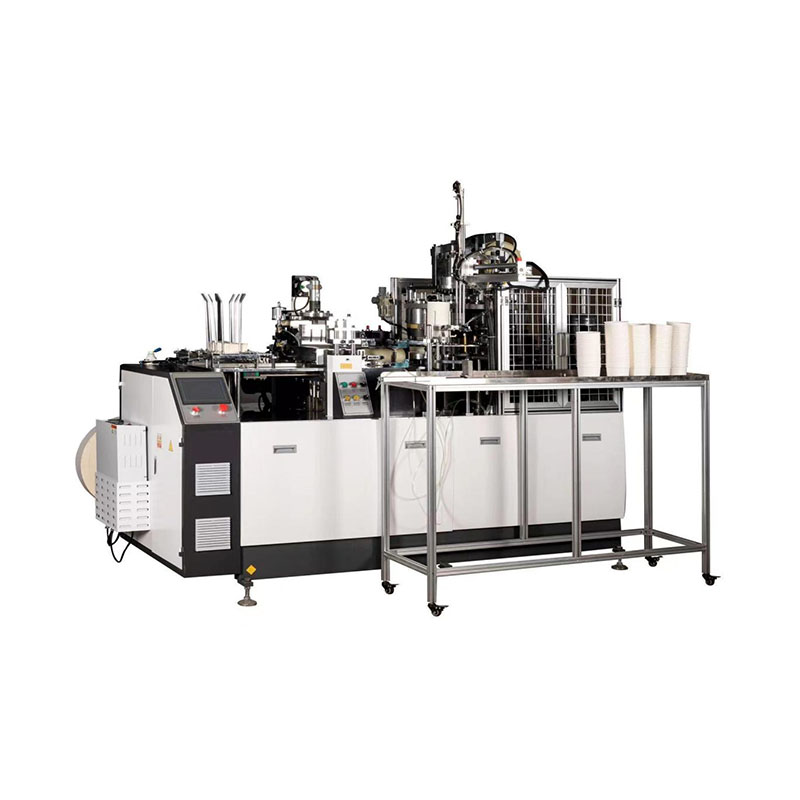
Table of Contents
- 1. Introduction to Paper Bowl Machine
- 2. What is a Paper Bowl Machine?
- 3. Working Principle
- 4. Key Components
- 5. Production Process Steps
- 6. Benefits of Using Paper Bowl Machine
- 7. How to Choose the Right Machine
- 8. Maintenance Tips
- 9. Common Problems & Solutions
- 10. Application Industries
- 11. Why Yongbo Machinery
- 12. FAQ
- 13. Conclusion
1. Introduction to Paper Bowl Machine
The increasing demand for eco-friendly food packaging has significantly boosted the popularity of disposable paper containers. Among these, paper bowls are widely used in restaurants, fast food chains, and takeaway services. A Paper Bowl Machine is designed to automate the entire forming process, ensuring high speed, consistent quality, and reduced labor dependency.
Modern machines integrate mechanical precision with intelligent control systems, enabling manufacturers to meet large-scale production demands while maintaining hygiene and environmental standards.
2. What is a Paper Bowl Machine?
A Paper Bowl Machine is an automated forming system that converts PE-coated paper sheets or rolls into finished paper bowls through processes such as feeding, sealing, heating, knurling, curling, and stacking.
It is widely used in the disposable packaging industry to produce bowls for soups, noodles, ice cream, salads, and takeaway meals.
- Raw material: PE-coated paper
- Output: Disposable paper bowls
- Operation: Fully automatic or semi-automatic
- Speed: 40–150 bowls per minute (depending on model)
3. Working Principle
The working principle of a Paper Bowl Machine is based on synchronized mechanical motion and thermal bonding technology. The machine processes flat paper blanks into three-dimensional bowl shapes using molds and controlled heating.
The main steps include:
- Paper feeding system delivers pre-cut or roll-fed material.
- Bottom sealing system applies heat to bond the bowl base.
- Side wall forming molds shape the cylindrical structure.
- Top curling mechanism reinforces rim strength.
- Automatic stacking collects finished bowls.
4. Key Components
A high-quality Paper Bowl Machine consists of multiple precision-engineered systems:
| Component | Function |
|---|---|
| Paper Feeding System | Ensures stable and continuous material supply |
| Heating Unit | Activates adhesive coating for sealing |
| Molding System | Forms paper into bowl structure |
| Control Panel (PLC) | Manages automation and operational settings |
| Air Compression System | Drives mechanical movements and pressure control |
5. Production Process Steps
The production process in a Paper Bowl Machine is continuous and highly automated, reducing human intervention while improving output consistency.
- Step 1: Paper roll feeding and alignment
- Step 2: Sidewall printing (optional branding stage)
- Step 3: Bottom sealing with heat press
- Step 4: Main forming via mold compression
- Step 5: Rim curling for reinforcement
- Step 6: Quality inspection and stacking
6. Benefits of Using Paper Bowl Machine
Investing in a Paper Bowl Machine provides manufacturers with multiple operational and commercial advantages:
- High production efficiency with minimal labor cost
- Stable product quality and uniform sizing
- Supports eco-friendly packaging trends
- Reduces material waste through precise cutting
- Compatible with different bowl sizes and designs
7. How to Choose the Right Machine
Selecting the right Paper Bowl Machine depends on production goals, budget, and technical requirements. Below is a comparison table to help decision-making:
| Factor | Low-End Model | High-End Model |
|---|---|---|
| Production Speed | 40–60 pcs/min | 100–150 pcs/min |
| Automation Level | Semi-automatic | Fully automatic |
| Maintenance Cost | Low | Moderate |
| Precision | Standard | High precision servo control |
8. Maintenance Tips
- Regularly lubricate moving parts to reduce friction
- Check heating systems for stable temperature control
- Clean mold surfaces to avoid paper residue buildup
- Inspect electrical wiring for safety compliance
- Replace worn components promptly to avoid downtime
9. Common Problems & Solutions
| Problem | Cause | Solution |
|---|---|---|
| Uneven sealing | Temperature instability | Adjust heating control system |
| Paper jamming | Misaligned feeding system | Recalibrate paper guide rails |
| Weak bowl structure | Insufficient pressure | Increase molding pressure settings |
10. Application Industries
Paper bowl products manufactured by these machines are widely used across:
- Fast food restaurants
- Takeaway and delivery platforms
- Catering services and events
- Supermarkets and retail packaging
- Airline and railway food services
11. Why Yongbo Machinery
Yongbo Machinery has established itself as a reliable manufacturer of paper container forming equipment, offering advanced Paper Bowl Machine solutions designed for stability, efficiency, and long-term industrial use. The company focuses on precision engineering, intelligent automation, and durable machine structures suitable for global packaging markets.
With continuous innovation and strict quality control, Yongbo Machinery provides equipment that helps manufacturers improve productivity while maintaining consistent product quality and reducing operational costs.
12. FAQ
Q1: What materials can be used in a Paper Bowl Machine?
A1: Typically PE-coated paper or biodegradable coated paper is used.
Q2: How fast can a Paper Bowl Machine operate?
A2: Depending on configuration, it can produce between 40 and 150 bowls per minute.
Q3: Is training required to operate the machine?
A3: Basic training is recommended, but modern machines are designed for user-friendly operation.
Q4: Can bowl sizes be customized?
A4: Yes, molds can be adjusted or replaced to produce different bowl sizes.
13. Conclusion
A Paper Bowl Machine is a critical asset for businesses in the disposable packaging industry, offering automation, efficiency, and scalability. By understanding its working principles, components, and selection criteria, manufacturers can make informed investment decisions that enhance production capabilities and market competitiveness.
Yongbo Machinery continues to support global clients with advanced machinery solutions tailored for modern packaging demands.
For business cooperation, technical consultation, and machinery solutions, contact us today at Yongbo Machinery and take your production efficiency to the next level.