

How does a photovoltaic welding strip rolling mill affect the consistency and quality of tinned copper ribbon
2026-05-19
The quality of tinned copper ribbon directly determines the performance and reliability of solar modules. A photovoltaic welding strip rolling mill plays a decisive role in shaping the ribbon’s thickness, surface finish, and dimensional stability. GRM has engineered advanced rolling solutions that address the most critical parameters affecting ribbon consistency. This article explores how this equipment influences production outcomes and answers the most frequent technical questions.
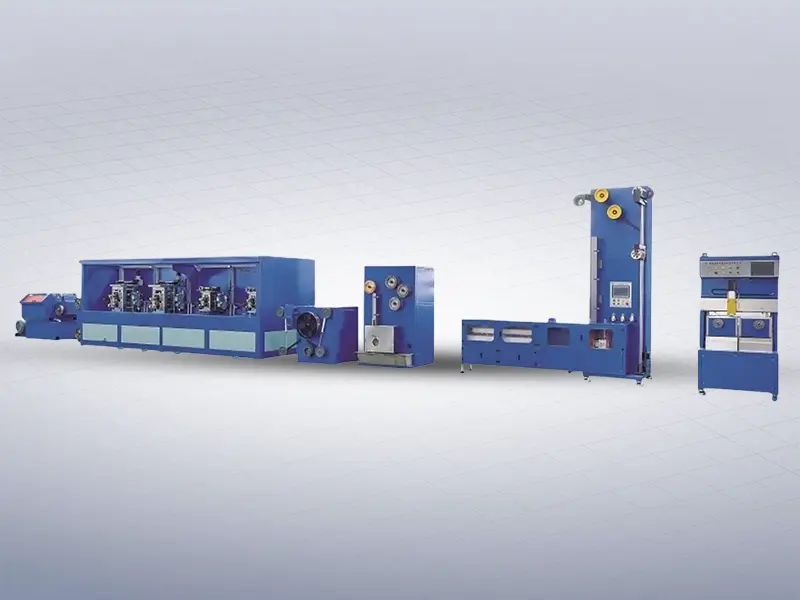
Key effects of a photovoltaic welding strip rolling mill on ribbon quality
| Aspect | Impact of the rolling mill | Benefit to tinned copper ribbon |
|---|---|---|
| Thickness uniformity | Precision roller gap control eliminates longitudinal variation | Reduced series resistance in solar cells |
| Surface roughness | Mirror-finished rolls produce smooth, defect-free strip | Better solderability and coating adhesion |
| Edge burr formation | Optimized roll geometry minimizes micro-burrs | Prevents interlayer short circuits in modules |
| Mechanical hardness | Controlled reduction ratio stabilizes temper | Consistent elongation during tabbing and stringing |
Core mechanisms ensuring consistency
A photovoltaic welding strip rolling mill influences ribbon quality through three primary mechanisms: roll pressure uniformity, material deformation rate, and real-time feedback control. GRM integrates high-rigidity frames and servo-driven gap adjustment to maintain tolerance within ±0.005 mm. Additionally, the rolling speed regulates grain structure refinement, which directly affects the ribbon’s flexural strength after tinning.
Comprehensive FAQ about Photovoltaic Welding Strip Rolling Mill
1. How does roll wear in a photovoltaic welding strip rolling mill affect tinned copper ribbon thickness over long production runs?
Roll wear gradually increases the gap between working rolls, leading to progressive thickening of the copper ribbon. If uncorrected, thickness can drift outside the ±0.01 mm specification, causing inconsistent solder coverage and increased contact resistance. GRM mills incorporate automatic roll gap compensation using linear displacement sensors. The control system recalculates the zero position after each coil and applies micro-adjustments during operation, ensuring that 50,000 meters of ribbon stay within target thickness without manual intervention.
2. What causes surface oxidation marks on ribbon produced by a photovoltaic welding strip rolling mill, and how can it be prevented?
Oxidation marks typically arise from residual rolling oil contamination or static discharge between rolls and the copper strip. When roll coolant degrades, it leaves carbonized deposits that transfer onto the annealed copper surface. These spots prevent uniform tin adhesion during the tinning bath. GRM solves this by implementing a dual-stage filtration system and conductive roll coatings that dissipate static charges below 10 volts. Regular analysis of coolant pH and conductivity, combined with weekly roll cleaning protocols, eliminates oxidation-related rejects.
3. Can a photovoltaic welding strip rolling mill produce both soft and half-hard tinned copper ribbons without changing roll sets?
Yes, but the mill must provide independent control of reduction percentage and rolling speed. Soft ribbon requires 8–12% thickness reduction at lower speeds (15–20 m/min), allowing recrystallization. Half-hard ribbon needs 18–22% reduction at higher speeds (35–45 m/min) to retain strain hardening. GRM rolling mills feature programmable reduction profiles that store up to 100 recipes. Operators switch between ribbon tempers by recalling a preset roll force and speed curve—no physical roll change required. This flexibility reduces changeover time from 45 minutes to under 5 minutes.
Best practices for maximizing quality with a photovoltaic welding strip rolling mill
-
Perform daily laser measurement of roll parallelism
-
Use non-contact infrared sensors to monitor roll surface temperature
-
Replace filtering cartridges every 200 operating hours
-
Calibrate load cells before each production shift
Contact us
Achieving micron-level consistency in tinned copper ribbon starts with the right photovoltaic welding strip rolling mill. GRM provides customized rolling solutions with full process automation and remote diagnostic support. Reach out to our engineering team today to discuss your ribbon specifications and request a performance simulation based on your target output.