

How Does a Pipe Bending Machine Improve Industrial Pipe Processing Efficiency?
2026-08-12
Article Summary:
A pipe bending machine plays an essential role in modern manufacturing by transforming straight pipes into accurate and complex curved components. From automotive exhaust systems and construction structures to industrial pipelines and furniture production, high-quality bending equipment helps manufacturers reduce waste, improve production speed, and achieve consistent results. This article explains how pipe bending machines work, why they are important, how to select the right equipment, and how XYOON provides reliable solutions for different industrial requirements.
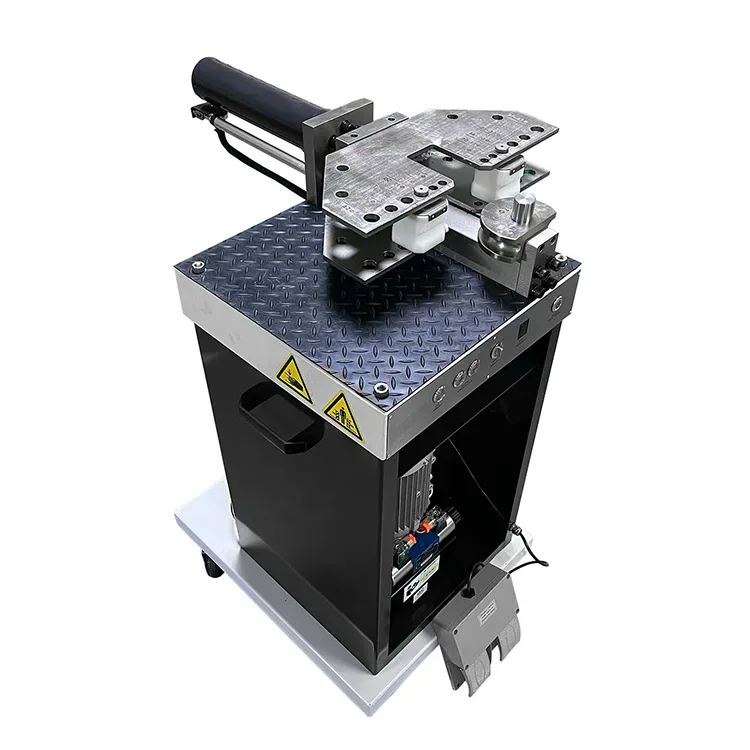
Table of Contents
- 1. Understanding the Role of a Pipe Bending Machine
- 2. How Does a Pipe Bending Machine Work?
- 3. Key Advantages of Using a Pipe Bending Machine
- 4. Different Types of Pipe Bending Machines
- 5. How to Choose the Right Pipe Bending Machine
- 6. Common Pipe Bending Challenges and Solutions
- 7. Industrial Applications of Pipe Bending Machines
- 8. Maintenance Tips for Better Machine Performance
- 9. Frequently Asked Questions
- 10. Conclusion
Understanding the Role of a Pipe Bending Machine
A pipe bending machine is specialized industrial equipment designed to reshape metal pipes into specific angles and curves without damaging their structure. Traditional manual bending methods often create problems such as uneven deformation, inconsistent dimensions, material waste, and low production efficiency. Modern bending machines solve these challenges by using advanced mechanical systems, hydraulic power, servo control, or CNC technology.
In many industries, pipes are not only required to transport fluids or gases but also need to fit into compact and complicated designs. A precise bending process ensures that pipes maintain their strength, smooth appearance, and accurate geometry after forming. Manufacturers can achieve better product quality while reducing labor costs and improving production capacity.
XYOON focuses on providing professional pipe bending solutions designed to meet different manufacturing needs. By combining reliable machine structures with practical operation systems, XYOON helps customers improve their production processes and maintain stable bending performance.
How Does a Pipe Bending Machine Work?
The working principle of a pipe bending machine involves applying controlled force to gradually deform a pipe into a required shape. Depending on the machine design, the bending process may use hydraulic cylinders, electric servo systems, or CNC-controlled movement mechanisms.
Although different models have different configurations, most pipe bending machines include several important components:
| Component | Function |
|---|---|
| Bending Die | Provides the required bending radius and supports the pipe during forming. |
| Clamping System | Holds the pipe firmly to prevent movement during the bending operation. |
| Mandrel System | Supports the inner wall of the pipe and reduces deformation or wrinkles. |
| Control System | Controls bending angles, speed, and production parameters accurately. |
| Drive System | Provides the mechanical force required for pipe forming. |
During operation, the pipe is positioned between the bending die and supporting components. The machine then applies force according to programmed parameters, creating the desired curve while maintaining dimensional accuracy.
Key Advantages of Using a Pipe Bending Machine
Choosing a professional pipe bending machine can significantly improve manufacturing efficiency and product consistency. Compared with traditional processing methods, automated bending equipment offers several important benefits.
- Higher Precision: Advanced control systems help achieve accurate bending angles and repeatable results.
- Improved Production Efficiency: Automated operations reduce processing time and increase output.
- Lower Material Waste: Precise forming reduces incorrect bends and damaged pipes.
- Better Product Appearance: Controlled bending minimizes surface damage and deformation.
- Flexible Processing Capability: Machines can handle different pipe materials, sizes, and bending requirements.
- Reduced Labor Dependence: Operators can complete complex bending tasks with easier machine control.
For manufacturers dealing with large production volumes, investing in reliable bending equipment can provide long-term economic benefits. A stable machine not only improves product quality but also reduces downtime caused by inconsistent manual operations.
Different Types of Pipe Bending Machines
Different production environments require different bending technologies. Selecting the correct machine type depends on pipe material, diameter, production quantity, and required bending complexity.
| Machine Type | Main Features | Suitable Applications |
|---|---|---|
| Manual Pipe Bending Machine | Simple structure and easy operation with lower investment cost. | Small workshops and low-volume production. |
| Hydraulic Pipe Bending Machine | Provides strong bending force for heavy-duty pipe processing. | Industrial pipes, construction, and large metal components. |
| CNC Pipe Bending Machine | Uses digital control for precise and automatic production. | Automotive, aerospace, and high-precision manufacturing. |
| Automatic Pipe Bending Machine | Integrates feeding, positioning, bending, and production control. | Mass production environments requiring efficiency. |
Among these options, CNC and automatic pipe bending machines are increasingly popular because they provide higher accuracy and better production consistency. Modern systems can store bending programs, simplify operation, and reduce setup time.
How to Choose the Right Pipe Bending Machine
Selecting suitable bending equipment requires careful consideration of production requirements. Buying a machine only based on price may lead to higher maintenance costs or insufficient performance in the future.
Important factors include:
- Pipe Material: Different materials such as stainless steel, carbon steel, copper, and aluminum require different bending forces and tooling designs.
- Pipe Diameter and Thickness: Machine capacity should match the size range of pipes used in production.
- Bending Accuracy Requirements: High-precision industries need advanced CNC control and stable mechanical structures.
- Production Volume: Automatic systems are more suitable for continuous large-scale manufacturing.
- Maintenance and Technical Support: Reliable after-sales service helps maintain long-term machine performance.
A professional manufacturer can help customers analyze their production needs and recommend a suitable configuration instead of offering a one-size-fits-all solution.
Common Pipe Bending Challenges and Solutions
Although pipe bending machines greatly improve manufacturing efficiency, improper equipment selection, incorrect operation, or unsuitable processing parameters may still cause production problems. Understanding these challenges helps manufacturers achieve better results and avoid unnecessary costs.
| Common Problem | Possible Cause | Effective Solution |
|---|---|---|
| Pipe Deformation or Flattening | Insufficient internal support, incorrect bending radius, or unsuitable tooling. | Use proper mandrel systems, select suitable dies, and adjust bending parameters. |
| Surface Scratches | Poor tool condition or excessive friction during bending. | Maintain tooling regularly and apply suitable lubrication methods. |
| Incorrect Bending Angle | Unstable machine settings or inaccurate parameter input. | Use precise control systems and verify bending programs before production. |
| Low Production Efficiency | Manual operations and frequent machine adjustments. | Upgrade to automated or CNC bending equipment for continuous production. |
| High Material Waste | Lack of process optimization and inaccurate calculations. | Use advanced software control and optimize bending sequences. |
Professional equipment providers such as XYOON understand these manufacturing challenges and focus on developing machines that balance accuracy, durability, and operational convenience. Selecting the right machine configuration can help businesses reduce production risks and improve overall profitability.
Industrial Applications of Pipe Bending Machines
Pipe bending machines are widely used across multiple industries because curved pipes are essential for creating efficient, compact, and durable structures. Their ability to produce accurate bends makes them valuable in both standard manufacturing and customized projects.
- Automotive Industry: Pipe bending machines are used for exhaust systems, chassis components, fuel lines, and other automotive tubing applications where precise geometry is required.
- Construction Industry: Bent pipes are widely used in building structures, handrails, metal frameworks, and architectural designs.
- HVAC Systems: Air conditioning and ventilation systems require accurately formed pipes to ensure efficient installation and operation.
- Industrial Equipment Manufacturing: Machinery manufacturers use bent pipes for hydraulic systems, equipment frames, and production lines.
- Furniture Production: Metal furniture manufacturers rely on bending machines to create smooth curves and modern designs.
- Energy and Pipeline Projects: Specialized pipe bending equipment supports applications where reliable flow systems and strong connections are necessary.
As industrial products continue to demand lighter designs, compact structures, and higher precision, the importance of advanced pipe bending technology continues to increase.
Maintenance Tips for Better Machine Performance
Regular maintenance is essential for extending the service life of a pipe bending machine and maintaining stable production quality. A well-maintained machine can reduce unexpected downtime and improve operational efficiency.
- Inspect Mechanical Components Regularly: Check bending dies, clamps, guide systems, and moving parts to ensure they remain in good condition.
- Maintain Hydraulic and Lubrication Systems: For hydraulic machines, monitor oil quality and hydraulic pressure. Proper lubrication reduces friction and component wear.
- Clean the Working Area: Remove metal particles, dust, and production residue that may affect machine accuracy.
- Check Control System Performance: Verify CNC programs, sensors, and electronic components to ensure accurate operation.
- Train Operators Properly: Skilled operators can reduce incorrect usage and improve production consistency.
Following a structured maintenance plan allows manufacturers to maximize equipment reliability while reducing long-term operating expenses.
How Modern Technology Improves Pipe Bending Performance
The development of digital manufacturing technology has transformed traditional pipe processing methods. Modern pipe bending machines now integrate intelligent control systems, automation technology, and precision engineering to meet increasingly complex production requirements.
Advanced machines provide several improvements:
- Digital Parameter Management: Operators can save and reuse bending programs for different products, reducing setup time.
- Higher Repeatability: Automated control ensures each pipe receives consistent processing.
- Improved Production Monitoring: Smart systems help identify operational issues quickly.
- Greater Design Flexibility: Manufacturers can produce complex bending shapes that were difficult to achieve manually.
XYOON continues to focus on practical innovation by providing pipe bending equipment that supports modern manufacturing demands. The combination of strong mechanical design and advanced control technology helps customers achieve efficient and reliable pipe processing.
Frequently Asked Questions
Q1: What materials can a pipe bending machine process?
A pipe bending machine can typically process various metal materials, including stainless steel, carbon steel, aluminum, and copper. The exact capability depends on machine specifications, tooling design, and bending force.
Q2: What industries need pipe bending machines?
Pipe bending machines are widely used in automotive manufacturing, construction, HVAC production, machinery manufacturing, furniture production, and many other industries that require accurately shaped metal pipes.
Q3: What is the difference between manual and CNC pipe bending machines?
Manual machines require more operator involvement and are suitable for small-scale production. CNC pipe bending machines use programmed control systems to achieve higher precision, faster production, and better consistency.
Q4: How can manufacturers reduce pipe bending defects?
Manufacturers can reduce defects by choosing suitable equipment, using correct tooling, optimizing bending parameters, performing regular maintenance, and providing proper operator training.
Q5: Why should companies choose a professional pipe bending machine supplier?
A professional supplier can provide suitable machine recommendations, technical guidance, customization options, and after-sales support. This helps businesses achieve better production performance and long-term equipment reliability.
Conclusion
A pipe bending machine is a critical solution for industries that require accurate, efficient, and reliable pipe forming processes. Compared with traditional manual methods, modern bending equipment provides better precision, lower material waste, faster production speed, and improved product quality.
Choosing the right machine requires consideration of pipe specifications, production requirements, automation level, and long-term operational needs. With professional manufacturing experience and customer-focused solutions, XYOON helps businesses overcome common pipe processing challenges and improve their production capabilities.
Whether you need standard pipe bending equipment or customized manufacturing solutions, selecting a reliable partner is essential for achieving consistent results. For more information about advanced pipe bending solutions and professional support, contact us today and let XYOON provide the right solution for your industrial needs.