

How Does a Planetary Mixer Improve Your Production Process?
2026-01-21
Summary
Industrial and commercial operations face ongoing pressure to improve product consistency, reduce labor costs, and increase throughput. A planetary mixer can dramatically affect operational efficiency, offering a versatile mixing solution for a wide variety of materials. This article explains how planetary mixers function, the benefits they deliver, key features to consider, use cases across industries, and answers common questions buyers have when evaluating solutions. By the end, you will have a clear understanding of how a planetary mixer can be leveraged to enhance your production process.
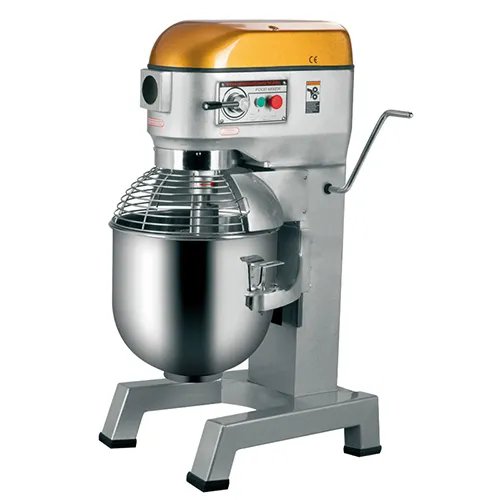
Table of Contents
- What Is a Planetary Mixer?
- Key Benefits of Using a Planetary Mixer
- How a Planetary Mixer Works
- Critical Features to Evaluate Before Purchase
- Industry Applications and Case Use
- Frequently Asked Questions
What Is a Planetary Mixer?
A planetary mixer is a high-performance piece of mixing equipment designed to handle a wide range of materials by replicating the motion of the planets. The mixing tool rotates on its own axis while simultaneously revolving around the center of the bowl, producing thorough and uniform mixing results. This dual motion ensures that material from all parts of the bowl is continuously folded, blended, and homogenized, delivering consistency that manual or conventional mixers struggle to achieve.
Key Benefits of Using a Planetary Mixer
Planetary mixers deliver tangible advantages for manufacturing operations, laboratory testing, and culinary production. Below are some of the most substantial benefits:
- Enhanced Mixing Uniformity: The planetary motion allows the mixing tool to reach every corner of the bowl, ensuring thorough blend and no dead zones.
- Versatility: Suitable for a wide range of materials including paste, creams, powders, slurries, adhesives, and doughs.
- Adjustable Speeds: Multiple speed settings enable operators to optimize mixing for different materials and process stages.
- Reduced Labor Costs: Automated mixing reduces manual labor and improves repeatability.
- Scalable Outputs: Models are available to support small-batch R&D environments and large-scale production lines.
How a Planetary Mixer Works
Understanding the internal mechanics of a planetary mixer helps explain why it excels in performance. The toolhead mounts on a rotating shaft while the bowl itself can be fixed or driven to rotate. The mixing implement rotates around the bowl center, and this dual action delivers a consistent shear and blending pattern. Operators can select different tool attachments such as paddles, whips, or blades based on the material characteristics.
| Component | Description | Function |
|---|---|---|
| Mixing Bowl | Stainless steel container | Holds material and transfers motion from tools |
| Planetary Tool | Paddle, whip, or blade | Applies shear and fold to materials |
| Drive System | Motor and gearbox | Enables dual rotation movement |
| Speed Control | Variable frequency drive | Adjusts mixing intensity |
This system delivers a blend that is consistently distributed within the material mass, minimizing the need for rework or manual intervention.
Critical Features to Evaluate Before Purchase
Choosing the right planetary mixer requires careful consideration of specifications aligned with your process needs. Below are essential criteria to evaluate:
- Capacity: Ensure the bowl volume matches your batch size requirements.
- Build Quality: Look for robust materials such as food-grade stainless steel where applicable.
- Speed Range: Wide speed range improves adaptability across materials.
- Control Interface: Digital controls and programmable settings increase ease of use.
- Maintenance Accessibility: Easy access to parts reduces downtime.
Industry Applications and Case Use
Planetary mixers are widely adopted across diverse sectors due to their adaptability. Some prominent use cases include:
- Food and Beverage: Dough preparation, batter mixing, icing blend, and emulsification of sauces.
- Chemicals: Homogenizing chemical pastes, additives, and slurry preparations.
- Cosmetics: Blending creams, lotions, and gel-based products to achieve uniform texture.
- Pharmaceuticals: Mixing active ingredients with carriers for consistent dosing.
- Adhesives: Preparing adhesives with precision control for performance consistency.
Frequently Asked Questions
Planetary mixers are designed to handle a wide range of materials including viscous pastes, dry powders, semi-solid compounds, and foam-like substances. The selection of the tool and speed setting directly influences performance for each material type.
Evaluate your typical batch volume and consider peak production demands. Select a mixer with a bowl capacity that accommodates your largest batch with room for headspace. Consulting with a supplier to match your material properties to machine specifications is recommended.
Regularly inspect seals, lubricate moving parts per manufacturer recommendations, and clean bowls and tools after each batch. Periodic checks on drive belts, sensors, and electrical controls help prevent unexpected downtime.
Yes. The dual-axis motion ensures that material is continually folded and blended, which reduces variation within a batch and between batches. This consistency is critical for quality control and customer satisfaction.
Choosing the right planetary mixer can be a transformational decision for your business. SYBO offers a range of high-performance planetary mixers that deliver reliability, precision, and adaptability across industries. If you would like to learn more about how a planetary mixer can improve your process, or to receive a tailored quote, please contact us today. Our team is prepared to assist you with product selection and implementation strategies tailored to your operational needs.