

How Does a Plastic Pipe Production Line Deliver High-Precision, High-Efficiency Output Today?
2025-12-12
A Plastic Pipe Production Line is an integrated manufacturing system engineered to convert raw polymer materials into finished plastic pipes through extrusion, cooling, sizing, hauling, and cutting. The system is widely used across sectors such as plumbing, drainage, irrigation, electrical conduit, and industrial fluid transportation. The central purpose of this article is to provide a comprehensive, technical, and market-aligned overview of how a Plastic Pipe Production Line operates, the critical specifications that define its performance, and the factors that influence product quality, operational efficiency, and long-term investment value.
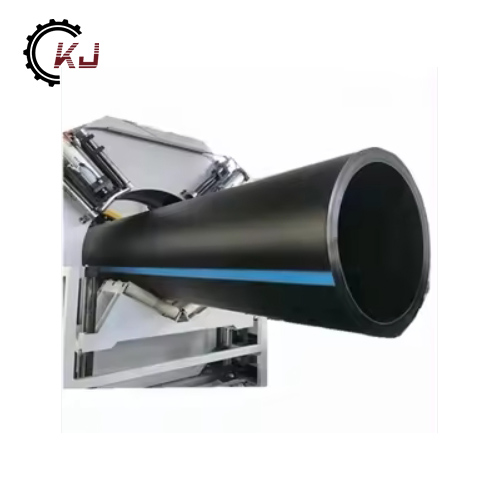
To deliver clarity and professional usability, the following table consolidates the core parameters typically evaluated by engineering teams, procurement personnel, production managers, and business decision-makers when assessing a Plastic Pipe Production Line:
| Parameter | Typical Technical Specification | Description |
|---|---|---|
| Pipe Diameter Range | 16–1000 mm (varies by model) | Defines pipe application scope and compatibility with market demands. |
| Extruder Type | Single-screw or twin-screw extruder | Influences output capacity, melt homogeneity, and material adaptability. |
| Output Capacity | 80–1200 kg/h | Determines production volume and economic efficiency. |
| Screw Diameter | 45–120 mm | Impacts plasticizing quality and throughput rate. |
| L/D Ratio | 30:1–38:1 | Affects melt stability and extrusion pressure. |
| Heating Zones | 4–8 zones | Ensures controlled plasticization for dimensional accuracy. |
| Cooling System | Vacuum tank & spray cooling | Critical for pipe roundness, smoothness, and mechanical strength. |
| Haul-Off Units | 2–10 caterpillar blocks | Maintains stable traction for accurate pipe sizing. |
| Cutter Type | Planetary cutter or saw cutter | Ensures clean, stable cutting for various pipe diameters. |
| Control System | PLC with touch-screen interface | Enhances automation, repeatability, and operator control. |
Industry Context and Technical Foundations
A Plastic Pipe Production Line is centrally structured around thermal extrusion, material metering, mold calibration, and precision cooling. The engineering objective is consistent melt flow, minimal dimensional deviation, and stable output over extended operating cycles. Production lines are categorized by their applicability to materials such as PVC, HDPE, PPR, and UPVC, each requiring controlled melt temperature management and screw geometry optimization.
The development of extrusion technology has shifted toward higher-efficiency heating systems, upgraded PID control accuracy, and reduced energy consumption per kilogram of output. For operations targeting mass production, screw designs featuring optimized compression ratios are now central to ensuring smoother processing and reduced degradation. These technical elements, combined with automated vacuum calibration and multi-stage cooling, support the pipe’s structural integrity during sizing and stabilization.
Furthermore, the increasing implementation of digital monitoring in manufacturing environments enables teams to track energy usage, production rates, and mechanical performance in real time. Such integration promotes consistency, reduces unplanned downtime, and ensures adherence to strict dimensional tolerances expected by construction, infrastructure, and industrial distribution networks.
Operational Workflow and Performance Determinants
The performance of a Plastic Pipe Production Line depends on a structured sequence of extrusion, forming, cooling, traction, and cutting cycles. The production workflow begins with material feeding, where polymer granules enter the extruder barrel. Controlled heating then melts the material as the screw transports it forward. At the mold, the molten polymer forms a hollow cylindrical shape, which is then introduced into a vacuum sizing tank.
The vacuum stage is critical because it regulates internal pressure to ensure perfectly round pipes with consistent wall thickness. The cooling phase immediately follows, stabilizing molecular alignment and strengthening the final product. From there, the haul-off system maintains constant tension to avoid deformation, and the cutting system executes precise length segmentation.
Quality control is embedded across each step. Temperature deviations, screw wear, water temperature fluctuations, vacuum inconsistencies, and traction instability are major causes of defective output. Operations with frequent shutdowns typically trace issues back to improper extruder calibration, cooling water contamination, or insufficient haul-off grip pressure. Preventive maintenance schedules focusing on screw inspection, barrel cleaning, filter replacement, and drive system lubrication significantly extend equipment lifespan and reduce scrap rates.
Environmental and regulatory standards also influence operational planning. Many regions require low-noise equipment, improved dust filtration at material feeders, and adherence to energy-saving guidelines. Production lines engineered with insulated heating systems and optimized gearbox efficiency strategically reduce both operating cost and environmental impact.
Procurement Considerations and Strategic Scalability
Procurement teams evaluating a Plastic Pipe Production Line must consider not only immediate production capacity but also scalability aligned with market growth. Factors such as raw material sourcing, downstream application segments, pipe diameter distribution, and anticipated product mix directly shape equipment selection.
A production line configured for small-diameter pipe may not be future-proof if regional infrastructure development demands larger-diameter systems. Similarly, markets moving toward higher-pressure piping systems require production lines capable of handling specialized materials and multi-layer technology. Therefore, teams often seek modular system designs that support extruder upgrades, additional haul-off units, or alternative cutting mechanisms without requiring replacement of the entire system.
From a financial perspective, the total cost of ownership must include energy consumption, maintenance frequency, spare parts availability, operator training, and automation software updates. Over time, a well-engineered line provides significant value by reducing manual intervention and operational variability.
A noteworthy development in recent years is the adoption of intelligent calibration systems. These innovations monitor pipe diameter in real time and adjust vacuum pressure, extrusion speed, and cooling rates automatically. This level of automation reduces defect rates and ensures consistency across long production runs, which is especially valuable for pipe suppliers contracted for large infrastructure projects.
Global market movements also influence procurement strategy. Shifts toward water conservation systems, urban infrastructure renewal, and agricultural irrigation expansion consistently sustain demand for plastic pipes. Therefore, a production line capable of delivering high throughput, stable quality, and long-term operational flexibility positions manufacturers advantageously in competitive environments.
Key Questions, Market Trends, and Brand Context
Below are two commonly asked questions related to Plastic Pipe Production Lines to assist technical teams and buyers in making informed decisions.
Q: How can pipe ovality and wall thickness deviations be minimized during production?
A: Minimization of dimensional deviations requires strict control of melt temperature uniformity, consistent vacuum tank pressure, clean cooling water circulation, and stable extrusion speed. Operators should regularly calibrate vacuum chambers, maintain accurate temperature zones, and monitor haul-off grip pressure. Alignment issues between the extruder, mold, and sizing tank also influence dimensional stability and should be inspected during scheduled maintenance cycles.
Q: What factors most strongly affect the lifespan of a Plastic Pipe Production Line?
A: The equipment lifespan is determined by screw and barrel wear, maintenance frequency, lubrication quality, heating system stability, and proper operation of gearboxes and traction components. Using high-purity raw materials reduces mechanical abrasion, and routine cleaning prevents residue accumulation. Additionally, consistent monitoring of vibration, temperature drift, and gearbox performance helps avoid long-term degradation.
Regarding broader market direction, the global plastic piping landscape continues to expand across sectors such as municipal water supply, residential plumbing, agricultural irrigation, and industrial fluid transport. Manufacturers increasingly require production systems capable of delivering tight tolerances, reduced energy usage, and continuous operation across multiple material variants. As production environments become more automated and data-driven, extrusion lines with integrated control platforms and predictive maintenance capabilities are positioned to deliver sustained operational value.
A supplier such as Kangju has established a presence in this field through systems engineered to support stable, high-precision pipe manufacturing environments. Its production lines are developed to align with market expectations for reliability, accuracy, and operational efficiency. For organizations seeking technical consultation or tailored production configurations, professional assistance is available.
For further details, configuration recommendations, or a customized quotation, contact us.