

How Does a Plate Production Line Improve Manufacturing Efficiency and Product Quality?
2026-07-24
Article Summary
A modern Plate Production Line plays a critical role in improving production efficiency, reducing waste, and ensuring consistent product quality in plastic sheet and plate manufacturing. As industries demand higher precision, faster delivery, and customized solutions, manufacturers need reliable production systems that can handle continuous operation while maintaining stable performance.
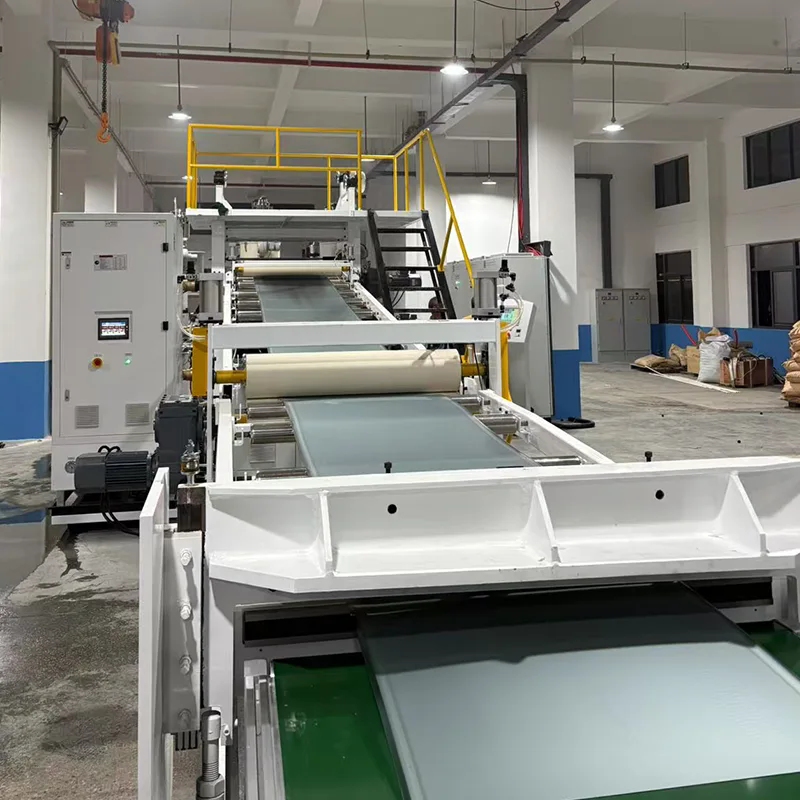
This article explains how a Plate Production Line works, the key production processes involved, the challenges manufacturers commonly face, and how advanced production technology can help companies achieve better productivity and long-term competitiveness. With professional manufacturing experience, Granplas provides advanced plate production solutions designed to meet different industrial requirements.
Table of Contents
- 1. What Is a Plate Production Line?
- 2. How Does a Plate Production Line Work?
- 3. What Are the Main Components of a Plate Production Line?
- 4. Why Should Manufacturers Invest in an Advanced Plate Production Line?
- 5. What Production Problems Can a Plate Production Line Solve?
- 6. How to Choose the Right Plate Production Line?
- 7. Applications of Plate Production Line in Different Industries
- 8. Frequently Asked Questions
1. What Is a Plate Production Line?
A Plate Production Line is an integrated manufacturing system designed to produce plastic plates, sheets, and boards through continuous extrusion and processing technology. It combines multiple production stages, including material feeding, melting, extrusion, shaping, cooling, cutting, and stacking.
Compared with traditional manual or semi-automatic production methods, an automated Plate Production Line provides higher production capacity, better dimensional accuracy, and more stable product performance. It allows manufacturers to produce plates with different thicknesses, widths, and material characteristics according to market demands.
For modern manufacturers, production efficiency is not only about speed. It also involves reducing raw material waste, controlling energy consumption, improving workplace safety, and ensuring every finished product meets quality requirements.
- Maintain stable and continuous production operation
- Improve product consistency and surface quality
- Reduce labor costs and production errors
- Support customized plate specifications
- Increase overall manufacturing profitability
2. How Does a Plate Production Line Work?
The working process of a Plate Production Line involves several carefully controlled stages. Each stage directly affects the final quality, appearance, and mechanical performance of the produced plates.
| Production Stage | Main Function | Quality Impact |
|---|---|---|
| Raw Material Feeding | Transfers plastic materials into the processing system | Ensures stable material supply and production continuity |
| Extrusion Process | Melts and pushes materials through the extrusion system | Determines material uniformity and production efficiency |
| Plate Forming | Shapes molten materials into required plate dimensions | Controls thickness accuracy and surface appearance |
| Cooling and Calibration | Cools and stabilizes the formed plates | Improves flatness and dimensional stability |
| Cutting and Stacking | Processes finished plates into specified sizes | Provides convenient packaging and transportation |
During production, temperature control, pressure management, and automated monitoring systems work together to maintain stable output. A well-designed Plate Production Line can minimize fluctuations and provide consistent production results even during long-term operation.
3. What Are the Main Components of a Plate Production Line?
A complete Plate Production Line consists of multiple functional units. Each component has an important role in achieving efficient and reliable manufacturing performance.
- Extruder System: The core part of the production line, responsible for melting and processing raw materials into a continuous flow.
- Die Head System: Controls the shape and thickness of the plate output to achieve precise forming results.
- Calibration Unit: Helps maintain accurate plate dimensions and improves surface quality.
- Cooling System: Quickly reduces material temperature and improves product stability.
- Hauling Unit: Provides consistent pulling force to maintain smooth production.
- Cutting System: Automatically cuts finished plates according to customer specifications.
- Control System: Monitors production parameters and allows operators to adjust processes efficiently.
Granplas focuses on providing reliable plate production solutions with practical engineering design. By optimizing each production unit, manufacturers can achieve better performance, easier operation, and lower maintenance requirements.
4. Why Should Manufacturers Invest in an Advanced Plate Production Line?
Manufacturing industries are facing increasing pressure from rising labor costs, strict quality requirements, and competitive market conditions. An advanced Plate Production Line helps companies overcome these challenges through automation and intelligent production management.
| Traditional Production Challenges | Benefits of Advanced Plate Production Line |
|---|---|
| High dependence on manual operation | Automated processes reduce labor requirements |
| Unstable product quality | Precise control improves consistency |
| High material waste | Optimized processing reduces unnecessary consumption |
| Low production efficiency | Continuous operation increases output capacity |
| Difficult maintenance management | Integrated systems simplify monitoring and adjustment |
A properly designed production line can create long-term value by improving productivity while maintaining reliable product quality. This is especially important for manufacturers serving industries where plate performance and dimensional accuracy are critical.
5. What Production Problems Can a Plate Production Line Solve?
Many manufacturers experience difficulties when producing plastic plates, including inconsistent thickness, surface defects, excessive waste, and unstable production speed. A professional Plate Production Line addresses these issues through advanced engineering design.
-
Uneven Plate Thickness:
Precision extrusion and calibration systems help maintain consistent thickness across the entire plate. -
Poor Surface Quality:
Stable temperature control and forming technology reduce surface imperfections. -
Frequent Production Interruptions:
Reliable components and automated control systems improve operational stability. -
High Production Costs:
Efficient energy management and reduced waste help lower manufacturing expenses. -
Limited Product Flexibility:
Adjustable production parameters allow manufacturers to produce different plate specifications.
6. How to Choose the Right Plate Production Line?
Selecting suitable production equipment requires careful consideration of production goals, material characteristics, product specifications, and future expansion plans.
| Selection Factor | Important Considerations |
|---|---|
| Production Capacity | Choose equipment according to expected output requirements |
| Material Compatibility | Ensure the system supports required raw materials |
| Product Specifications | Consider plate thickness, width, and application needs |
| Automation Level | Evaluate control systems and operational convenience |
| After-Sales Support | Select suppliers that provide technical assistance and service |
A reliable supplier should not only provide equipment but also offer professional technical guidance, installation support, and long-term cooperation. Granplas works closely with customers to develop practical plate production solutions that match their manufacturing objectives.
7. Applications of Plate Production Line in Different Industries
Plate Production Lines are widely used in many industries because plastic plates provide advantages such as lightweight structure, corrosion resistance, durability, and easy processing.
- Construction Industry: Used for protective boards, building materials, and industrial panels.
- Packaging Industry: Used for producing sheets and plates for various packaging applications.
- Automotive Industry: Used for lightweight components and interior materials.
- Electronics Industry: Used for protective and insulating materials.
- Advertising Industry: Used for display boards and customized panels.
With continuous improvements in manufacturing technology, Plate Production Line systems continue to expand their applications and provide manufacturers with more opportunities for product innovation.
8. Frequently Asked Questions
Q1: What materials can a Plate Production Line process?
A Plate Production Line can process various plastic materials depending on machine configuration, including commonly used thermoplastic materials. The specific material compatibility depends on production requirements and equipment design.
Q2: How can a Plate Production Line improve production efficiency?
By integrating automated feeding, extrusion, forming, cooling, and cutting processes, the production line reduces manual intervention and improves manufacturing speed and consistency.
Q3: What factors affect the quality of finished plates?
Material quality, temperature control, extrusion stability, calibration accuracy, and production parameter management all influence the final product quality.
Q4: Is a customized Plate Production Line available?
Yes. Different industries have different requirements for plate sizes, materials, and production capacity. Customized solutions can be developed according to specific manufacturing needs.
Q5: Why choose Granplas for Plate Production Line solutions?
Granplas provides professional plate production equipment designed with manufacturing efficiency, product stability, and customer requirements in mind. Through advanced technology and practical experience, Granplas helps customers build reliable production systems.
Conclusion
A Plate Production Line is an essential investment for manufacturers seeking higher efficiency, stable quality, and competitive production advantages. By combining advanced automation technology with precise processing control, modern production lines help businesses reduce costs, improve productivity, and meet changing market demands.
Granplas is committed to delivering dependable plate production solutions that support customers in achieving efficient and sustainable manufacturing operations. If you are looking for professional equipment solutions and customized production support, please contact us today to discuss your requirements and find the right Plate Production Line for your business.