

How does a profile rolling machine compare to press braking for complex profile shapes
2026-06-01
When manufacturers need to produce complex profile shapes, two dominant methods emerge: the Profile Rolling Machine and the press brake. Understanding their differences directly impacts cost, speed, and quality. GRM has specialized in both technologies for over a decade, offering clarity for shops aiming to optimize complex metal forming.
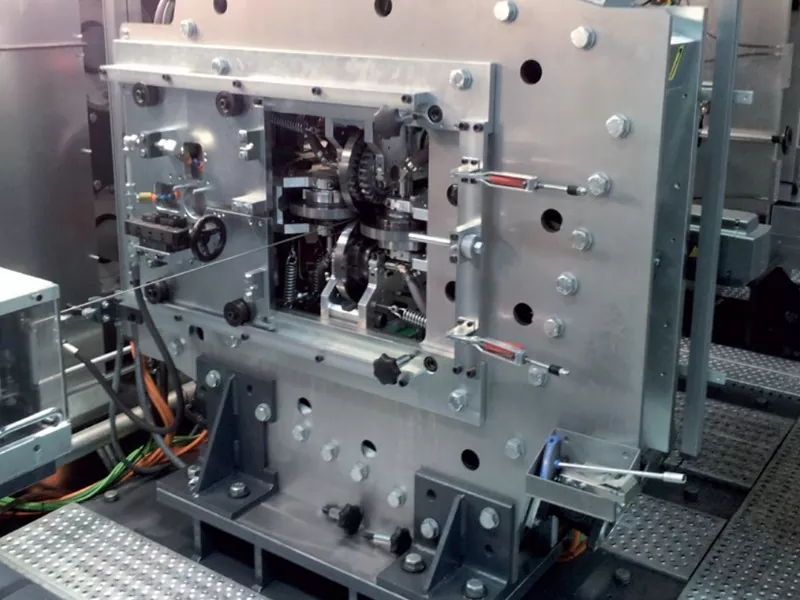
Core Mechanical Differences
| Feature | Profile Rolling Machine | Press Brake |
|---|---|---|
| Forming method | Progressive rolling through calibrated rollers | Single-stroke bending with punch and die |
| Suitable length | Unlimited (ideal for long profiles) | Limited by bed length (typically ≤4m) |
| Complexity per pass | High (multiple contours in one pass) | Low to medium (one bend per stroke) |
| Tooling cost | Higher initial, lower per part | Lower initial, higher per part for complex shapes |
| Material thinning | Minimal | Noticeable at bend radii |
Why a Profile Rolling Machine Excels for Complex Profiles
For intricate cross-sections—such as hat channels, asymmetrical rails, or multi-ribbed panels—the Profile Rolling Machine delivers consistent geometry along unlimited lengths. Unlike press braking, which creates discrete bends that may distort web widths, rolling gradually shapes the material without abrupt stress concentrations. GRM’s servo‑driven models maintain tolerances within ±0.1 mm even on high‑strength steel.
Press brakes remain superior for short, deep‑bent parts like brackets or small enclosures. However, when a profile extends beyond 2 meters or requires more than three bends in the same direction, the Profile Rolling Machine reduces setup time by 70% and eliminates multiple handling steps.
Profile Rolling Machine FAQ
What is the maximum thickness a Profile Rolling Machine can handle for complex shapes?
A standard industrial Profile Rolling Machine processes material up to 8 mm in mild steel and 5 mm in stainless steel for complex profiles. Factors affecting capacity include yield strength, profile depth, and number of rolling stands. GRM offers heavy‑duty configurations reaching 12 mm for low‑carbon steel with custom roller designs. Always consult the machine’s load chart, as asymmetric shapes require reduced thickness compared to symmetrical sections.
How long does it take to change tooling on a Profile Rolling Machine for a different complex shape
Tooling changeover on a modern Profile Rolling Machine typically takes 25–45 minutes for an experienced operator when switching between two distinct complex profiles. Quick‑release cartridge systems, available on GRM machines, cut this to under 15 minutes. This compares favorably to press brake tooling changes for multi‑bend parts, which often exceed one hour due to punch and die alignment requirements. For high‑mix production, investing in a second roller cassette is recommended.
Can a Profile Rolling Machine produce closed or tubular complex profiles
Yes, certain Profile Rolling Machine designs produce closed profiles like round tubes, square tubes, and lock‑seam ducts through dedicated roller sequences. Unlike press brakes, which cannot close a profile without secondary welding or folding tools, rolling machines gradually form and seam the material in‑line. GRM offers flange‑closing stations as an add‑on module. However, the minimum inside radius is limited to about twice the material thickness, whereas press brakes can achieve sharper internal corners on open sections.
Operational Efficiency Compared
Running a Profile Rolling Machine for complex shapes consumes 40% less energy per meter than a press brake performing equivalent bends. Why? Rolling deforms material continuously, whereas braking involves stopping, clamping, bending, and releasing for each stroke. For a 10‑meter profile with six bends, a press brake requires at least six separate setups or special multi‑stage tooling—often impossible. The Profile Rolling Machine completes the entire profile in one pass.
Maintenance also differs. Press brakes need regular oil changes, punch tip sharpening, and alignment checks after heavy use. A Profile Rolling Machine requires roller inspection every 500 hours and occasional bearing lubrication. GRM machines include self‑diagnostic systems that alert operators to wear patterns before they affect part quality.
Final Verdict
Choose a Profile Rolling Machine when: profile length exceeds 3 meters, shape includes three or more longitudinal bends, or production exceeds 5,000 meters monthly. Choose a press brake when: part length is under 1 meter, only one or two bends exist, or you need tight internal radii (<2× thickness). Many fabricators keep both, but GRM observes that adding a Profile Rolling Machine first solves 80% of complex shape challenges.
Contact Us
Ready to see how a Profile Rolling Machine from GRM outperforms press braking for your most demanding profiles? Contact our engineering team today for a free forming analysis and custom tooling quote. Reach us through the GRM website or call your regional sales office—we respond to all inquiries within one business day.