

How Does a PVC Wallboard Production Line Work?
2025-12-19
Abstract: This comprehensive guide explores the PVC Wallboard Production Line, covering production parameters, operational methods, applications, and common questions. It aims to provide manufacturers and investors with detailed insights into optimizing wallboard production for high-quality output.
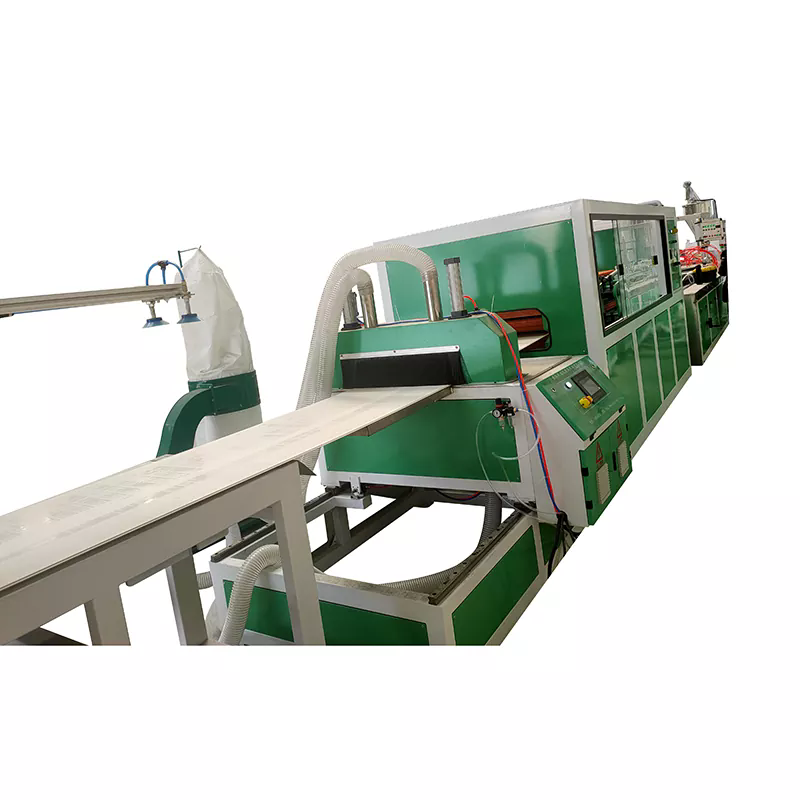
Table of Contents
Overview of PVC Wallboard Production Line
PVC Wallboard Production Lines are designed to manufacture high-quality PVC wallboards for construction, decoration, and interior finishing applications. The production process integrates feeding, extrusion, calendering, cooling, cutting, and stacking to create durable wall panels suitable for various wall structures. These production lines are optimized for continuous output, energy efficiency, and precision thickness control.
The main purpose of this article is to provide a complete understanding of PVC wallboard manufacturing processes, production parameters, operational techniques, and common operational challenges, offering practical solutions to improve efficiency and product quality.
Key Parameters and Production Specifications
Understanding the technical specifications of a PVC Wallboard Production Line is crucial for maximizing output and ensuring product consistency. Below is a detailed overview of the primary parameters:
| Parameter | Specification |
|---|---|
| Production Capacity | 1000–3000 kg/h |
| Board Width | 1220–2440 mm |
| Board Thickness | 2–25 mm |
| Line Speed | 3–10 m/min |
| Extruder Type | Single Screw / Twin Screw |
| Temperature Range | 160–230°C |
| Power Consumption | 90–250 kW |
| Raw Material | Rigid PVC Resin, Additives, Stabilizers |
How to Operate and Maintain a PVC Wallboard Production Line
Proper operation and maintenance are essential for the efficiency and longevity of a PVC Wallboard Production Line. Below are detailed guidelines:
How to Ensure Optimal Feeding and Mixing?
Consistent raw material feeding ensures uniform wallboard quality. Automated feeding systems with calibrated gravimetric feeders are recommended to maintain a stable resin-to-additive ratio, reducing material wastage and ensuring color and density consistency.
How to Achieve Consistent Thickness and Surface Quality?
Calendering and extrusion must be closely monitored. Adjusting the roll gap, screw speed, and line temperature allows precise control of board thickness and surface smoothness. Regular inspection of the die head prevents uneven flow and streaks on the wallboard.
How to Handle Post-Extrusion Cutting and Stacking Efficiently?
Automated cutting and stacking units improve efficiency. High-speed saws synchronized with line speed prevent edge damage, while pneumatic stacking reduces manual labor and minimizes deformation.
Frequently Asked Questions
Q1: How long does it take to set up a PVC Wallboard Production Line?
A1: The setup time depends on line capacity and automation level. Small lines can be commissioned within 2–3 weeks, while large-scale high-capacity lines may require 6–8 weeks including installation, calibration, and operator training.
Q2: How can energy consumption be reduced during production?
A2: Energy efficiency can be improved by using variable frequency drives for motors, insulating heating zones, recovering waste heat, and scheduling production runs to minimize idle periods. These practices can reduce electricity consumption by up to 20%.
Q3: How to prevent defects such as warping or surface scratches?
A3: Warping can be prevented by controlling cooling speed and temperature uniformity across the board. Surface scratches can be minimized by maintaining clean rolls, ensuring proper lubrication, and avoiding excessive tension during post-processing.
Conclusion and Brand Information
The PVC Wallboard Production Line represents a critical investment for manufacturers seeking high-efficiency and quality wallboard production. By adhering to operational best practices and maintaining equipment regularly, businesses can achieve consistent output and long-term profitability. Kechengda specializes in providing reliable PVC Wallboard Production Line solutions with comprehensive technical support and tailored configurations to meet diverse manufacturing needs. For inquiries and detailed consultations, contact us directly.