

How Does a Quick Mold Change System Improve Manufacturing Efficiency?
2026-03-13
Article Summary
Manufacturing industries constantly seek ways to reduce downtime, improve productivity, and maintain consistent product quality. A Quick Mold Change System is designed to streamline the process of replacing molds in production equipment, particularly in injection molding, stamping, and die casting operations. This article explains how quick mold change technology works, why it is essential for modern factories, and how it helps companies reduce operational costs while increasing production flexibility. Practical insights, technical explanations, and selection guidelines are provided to help manufacturers understand the benefits and implementation considerations of this system.
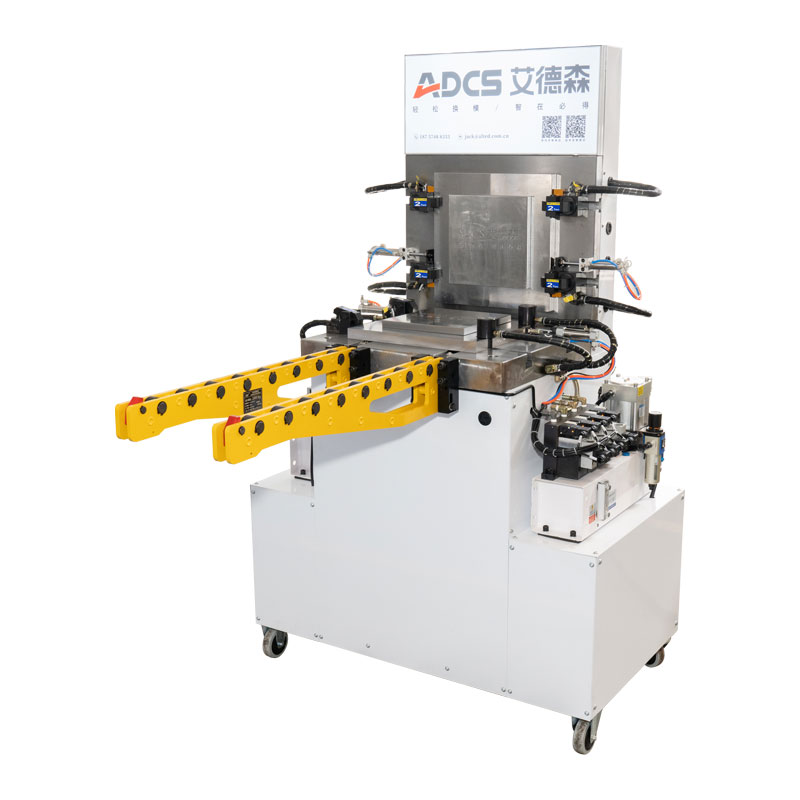
Table of Contents
- Introduction to Quick Mold Change Systems
- How a Quick Mold Change System Works
- Key Components of a Quick Mold Change System
- Main Advantages for Manufacturing Operations
- Typical Applications in Industrial Production
- Product Parameter Overview
- How to Choose the Right Quick Mold Change System
- Common Challenges and Practical Solutions
- Frequently Asked Questions
- Conclusion
Introduction to Quick Mold Change Systems
In modern manufacturing environments, production efficiency is closely tied to how quickly equipment can switch between different molds. Traditional mold replacement processes often require manual alignment, extensive labor, and long machine downtime. These delays directly impact production capacity and operational costs.
A Quick Mold Change System is engineered to simplify and accelerate the mold replacement process. By integrating hydraulic clamping, automated positioning, and modular tooling interfaces, this system allows operators to change molds in a significantly shorter period of time compared with traditional methods.
For industries that require frequent product changes—such as automotive parts manufacturing, plastic injection molding, and consumer goods production—the ability to perform rapid mold changes provides a strong competitive advantage.
How a Quick Mold Change System Works
A quick mold change system is designed to minimize the time required to remove and install molds on production machinery. The system integrates mechanical, hydraulic, and control components that automate several steps traditionally performed manually.
The basic working process generally includes the following stages:
- Machine stops production and releases the existing mold.
- Hydraulic clamps automatically loosen to disengage the mold.
- Mold transfer equipment slides or lifts the mold out of position.
- A new mold is inserted into the machine.
- The system automatically aligns and locks the mold in place.
- Production resumes with minimal setup adjustments.
By automating clamping and positioning, the system eliminates time-consuming manual adjustments. Operators can complete mold replacement in minutes rather than hours, improving overall production efficiency.
Key Components of a Quick Mold Change System
A reliable quick mold change system consists of several integrated components designed to support safe and efficient mold replacement.
- Hydraulic Clamping Units – Provide strong and consistent mold locking force.
- Mold Positioning Devices – Ensure accurate alignment between mold halves.
- Mold Transfer Carts or Rails – Allow smooth movement of heavy molds.
- Control Systems – Manage automated clamping and safety monitoring.
- Safety Sensors – Prevent operation errors and protect equipment.
When these components work together, the mold change process becomes faster, safer, and more reliable.
Main Advantages for Manufacturing Operations
Implementing a quick mold change system can significantly improve factory productivity. Manufacturers often adopt this technology to solve several operational challenges.
Reduced Downtime
One of the biggest advantages is the reduction of machine downtime during mold replacement. Traditional mold changes may require several hours, while automated systems can complete the process in a fraction of the time.
Improved Production Flexibility
Manufacturers increasingly need to produce multiple product variants in smaller batches. A quick mold change system allows factories to switch between molds more frequently without sacrificing productivity.
Enhanced Worker Safety
Handling heavy molds manually can pose safety risks. Automated clamping and transfer equipment reduce the need for direct manual handling, creating a safer working environment.
Consistent Mold Positioning
Accurate mold alignment is critical for product quality. Automated positioning systems ensure consistent alignment, reducing the risk of defects or equipment damage.
Typical Applications in Industrial Production
Quick mold change systems are widely used in industries where molds or dies must be replaced frequently. Some common applications include:
- Plastic injection molding production lines
- Automotive component manufacturing
- Metal stamping operations
- Die casting equipment
- Rubber molding production
- Packaging product manufacturing
These industries often operate high-volume production environments where reducing changeover time directly improves overall manufacturing efficiency.
Product Parameter Overview
When evaluating a quick mold change system, manufacturers typically review several key technical parameters. These specifications determine compatibility with production equipment and operational requirements.
| Parameter | Description |
| Clamping Force | Hydraulic force applied to secure the mold during operation |
| Mold Weight Capacity | Maximum mold weight the system can safely handle |
| Positioning Accuracy | Precision level for mold alignment during installation |
| Hydraulic Pressure Range | Operating pressure used by the clamping system |
| Control System Type | Manual, semi-automatic, or fully automated control options |
| Changeover Time | Typical duration required to replace molds |
Industrial solutions developed by companies such as ADCS are designed to integrate with a wide range of injection molding machines and manufacturing systems, helping factories upgrade their mold management processes.
How to Choose the Right Quick Mold Change System
Selecting the right system requires careful evaluation of production requirements and machine specifications. Several factors should be considered before implementation.
- Machine size and mold dimensions
- Maximum mold weight
- Required clamping force
- Production cycle frequency
- Automation level required
- Compatibility with existing production equipment
Factories that frequently change molds benefit most from fully automated solutions, while smaller production lines may adopt semi-automatic systems to balance cost and efficiency.
Common Challenges and Practical Solutions
Although quick mold change systems provide significant advantages, manufacturers may face several challenges during implementation.
Equipment Compatibility
Older machinery may require modifications to integrate quick mold change technology. Professional system evaluation helps ensure proper installation.
Operator Training
Operators must understand how to use the system safely and efficiently. Structured training programs help maximize performance benefits.
Initial Investment
While the upfront investment may appear significant, the reduction in downtime and labor costs often leads to long-term financial savings.
Frequently Asked Questions
1. How much time can a quick mold change system save?
Depending on the equipment and mold size, mold change time can be reduced from several hours to less than 15 minutes in many production environments.
2. Is a quick mold change system suitable for all molding machines?
Most modern systems can be adapted to various injection molding machines, stamping presses, and die casting equipment with proper customization.
3. Does the system require complex maintenance?
Routine maintenance typically involves hydraulic inspection, lubrication, and control system checks. With proper care, the system can operate reliably for many years.
4. Can the system improve product quality?
Yes. Accurate mold positioning and consistent clamping force help maintain stable production conditions and reduce product defects.
Conclusion
A Quick Mold Change System plays a critical role in modern manufacturing by minimizing downtime, improving safety, and enabling flexible production scheduling. As product variety increases and production cycles become shorter, efficient mold management becomes essential for maintaining competitive manufacturing operations.
Advanced solutions developed by ADCS are designed to help factories modernize their production lines and achieve faster, more reliable mold replacement processes. By integrating automated clamping, precise positioning, and intelligent control technology, manufacturers can significantly enhance operational efficiency.
If your factory is looking to improve productivity and reduce equipment downtime, implementing a professional quick mold change solution is a strategic step forward. Contact us to learn more about how ADCS quick mold change systems can support your manufacturing operations and help you achieve greater production efficiency.