

How Does a Slant-bed CNC Lathe Improve Precision and Manufacturing Efficiency?
2026-09-01
Article Summary
Modern manufacturing companies are facing increasing pressure to achieve higher machining accuracy, shorter production cycles, and lower operating costs. Traditional machining equipment may struggle with chip removal, vibration control, and maintaining consistent precision during long production runs. A Slant-bed CNC Lathe provides an advanced solution by combining an inclined machine bed structure, strong rigidity, intelligent CNC control, and efficient cutting performance.
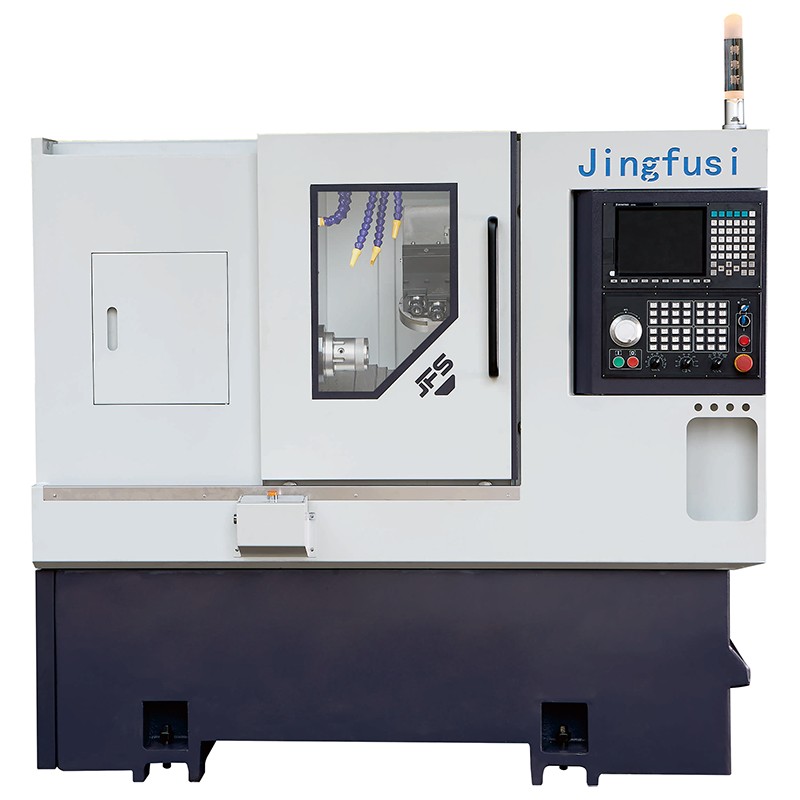
This article explains how a Slant-bed CNC Lathe works, why its structure delivers better machining results, what problems it solves for manufacturers, and how companies can select the right equipment for their production needs. With professional manufacturing experience, Jingfusi provides reliable CNC machining solutions designed for industries requiring precision, stability, and long-term performance.
Table of Contents
- 1. What Is a Slant-bed CNC Lathe?
- 2. How Does the Slant-bed Structure Improve Machining Performance?
- 3. What Problems Can a Slant-bed CNC Lathe Solve?
- 4. What Are the Key Features of a High-quality Slant-bed CNC Lathe?
- 5. Slant-bed CNC Lathe vs Traditional Flat-bed CNC Lathe
- 6. How to Choose the Right Slant-bed CNC Lathe?
- 7. Industrial Applications of Slant-bed CNC Lathe
- 8. Frequently Asked Questions
1. What Is a Slant-bed CNC Lathe?
A Slant-bed CNC Lathe is a computer-controlled turning machine designed with an inclined machine bed instead of the traditional horizontal flat structure. The angled bed design changes the relationship between the workpiece, cutting tools, guide rails, and chip removal system, creating a more stable machining environment.
Unlike conventional lathes that rely on a flat bed structure, a Slant-bed CNC Lathe uses an inclined angle, commonly around 30 to 45 degrees, to improve overall machine rigidity and operational efficiency. This structure allows cutting forces to be distributed more effectively, reducing vibration during high-speed machining operations.
Jingfusi develops CNC machine tools with practical industrial applications in mind. Its Slant-bed CNC Lathe solutions focus on improving processing stability, reducing maintenance requirements, and helping manufacturers achieve consistent production quality. :contentReference[oaicite:0]{index=0}
The equipment is widely used for precision turning operations involving steel, aluminum alloys, stainless steel, titanium alloys, and other engineering materials. It is suitable for industries where accuracy and productivity are essential.
2. How Does the Slant-bed Structure Improve Machining Performance?
The main difference between a Slant-bed CNC Lathe and traditional CNC turning equipment is the inclined bed structure. This design directly affects machining accuracy, chip management, and machine durability.
| Structural Feature | Machining Benefit |
|---|---|
| Inclined machine bed | Improves rigidity and reduces deformation during heavy cutting operations |
| Angled guide rail arrangement | Enhances movement stability and positioning accuracy |
| Gravity-assisted chip removal | Allows chips and coolant to leave the cutting area more efficiently |
| Compact integrated design | Provides better accessibility and easier machine operation |
One of the biggest challenges in CNC machining is controlling heat, vibration, and chip accumulation. When chips remain in the machining area, they can damage finished surfaces, interfere with automatic operations, and reduce tool life.
The inclined bed allows chips to naturally move downward into the collection system, keeping the cutting area cleaner. This improves continuous production efficiency and reduces interruptions caused by manual cleaning.
In addition, the rigid structure helps maintain machining accuracy when the machine operates at high spindle speeds or performs heavy cutting tasks. This makes the Slant-bed CNC Lathe an ideal choice for manufacturers producing complex precision components.
3. What Problems Can a Slant-bed CNC Lathe Solve?
Manufacturers often experience challenges including inconsistent product quality, excessive tool wear, long setup times, and increasing labor costs. A properly designed Slant-bed CNC Lathe addresses these issues through improved mechanical performance and automation capability.
-
Problem: Poor machining stability
Solution: The rigid inclined bed structure minimizes vibration and improves cutting stability. -
Problem: Frequent chip buildup
Solution: The angled design improves chip evacuation and reduces production interruptions. -
Problem: Declining tool performance
Solution: Better cutting conditions help reduce unnecessary tool stress and extend tool service life. -
Problem: Difficult operation management
Solution: CNC automation simplifies machining processes and improves repeatability. -
Problem: Limited production flexibility
Solution: Different configurations allow manufacturers to handle various machining requirements.
For factories producing large quantities of precision parts, these improvements can significantly influence production efficiency and overall manufacturing costs.
4. What Are the Key Features of a High-quality Slant-bed CNC Lathe?
Selecting a CNC lathe requires more than checking basic specifications. A reliable machine should combine mechanical strength, precision control, convenient operation, and long-term service capability.
| Feature | Importance |
|---|---|
| High rigidity casting structure | Provides stable support during precision machining |
| Precision guide rails and screws | Ensures accurate axis movement and repeatable processing |
| Advanced CNC control system | Improves programming efficiency and machining consistency |
| Powerful spindle performance | Supports efficient cutting of different materials |
| Automatic tool configuration options | Reduces tool changing time and improves productivity |
Jingfusi focuses on practical CNC machine tool design, using standardized configurations to maintain equipment stability and simplify maintenance. The company provides CNC turning solutions that support different manufacturing requirements, including precision machining and high-efficiency production environments. :contentReference[oaicite:1]{index=1}
5. Slant-bed CNC Lathe vs Traditional Flat-bed CNC Lathe
When investing in CNC machining equipment, manufacturers often compare Slant-bed CNC Lathes with traditional flat-bed CNC lathes. Although both machines can perform turning operations, their structural designs create significant differences in performance, efficiency, and long-term production value.
| Comparison Item | Slant-bed CNC Lathe | Traditional Flat-bed CNC Lathe |
|---|---|---|
| Machine structure | Inclined bed design improves rigidity and cutting stability | Flat structure may provide less support during heavy cutting |
| Chip removal | Chips move naturally downward for efficient removal | Chip accumulation may require additional cleaning processes |
| High-speed machining | Better vibration control supports higher-speed operations | May experience greater vibration under demanding conditions |
| Automation integration | Suitable for automatic loading, unloading, and production lines | Automation integration can be more limited depending on design |
| Production efficiency | Designed for continuous and high-volume manufacturing | More suitable for general machining requirements |
For manufacturers producing precision components in large quantities, the Slant-bed CNC Lathe offers clear advantages in productivity and machining consistency. The improved structure helps maintain accuracy over extended operating periods, making it suitable for modern automated factories.
However, equipment selection should always depend on specific production requirements. Factors such as material type, component size, machining complexity, production volume, and available workspace should all be considered before purchasing.
6. How to Choose the Right Slant-bed CNC Lathe?
Choosing the correct Slant-bed CNC Lathe requires a detailed understanding of production goals. A machine that performs well for one manufacturer may not be the best option for another. The following factors should be carefully evaluated.
| Selection Factor | Key Considerations |
|---|---|
| Workpiece requirements | Check diameter, length, weight, and material characteristics of the parts being processed. |
| Machining accuracy | Select equipment with suitable positioning accuracy and repeatability for product requirements. |
| Production volume | High-volume production may require automation functions and higher efficiency configurations. |
| Spindle performance | Choose spindle power and speed according to cutting conditions and material hardness. |
| Maintenance convenience | Consider accessibility, component reliability, and after-sales technical support. |
Before purchasing, manufacturers should analyze their current production challenges. For example, if the main issue is low machining efficiency caused by frequent manual adjustments, an automated Slant-bed CNC Lathe configuration may provide a better solution.
If the main concern is precision instability during continuous operation, priority should be given to machine rigidity, guide rail quality, spindle accuracy, and structural design.
Working with an experienced CNC machine supplier can also reduce investment risks. Jingfusi provides professional CNC turning equipment solutions based on different application scenarios, helping customers select suitable configurations instead of choosing equipment only according to basic specifications.
7. Industrial Applications of Slant-bed CNC Lathe
Because of its precision, flexibility, and production efficiency, the Slant-bed CNC Lathe is widely used across multiple industries. It can process various rotating components that require accurate dimensions and excellent surface quality.
| Industry | Typical Machined Components |
|---|---|
| Automotive manufacturing | Engine components, transmission parts, shafts, and precision connectors |
| Aerospace industry | High-accuracy structural parts and lightweight alloy components |
| Medical equipment | Precision instruments and small complex components |
| Electronics manufacturing | Small metal housings and precision mechanical parts |
| General machinery | Shafts, bushings, threaded parts, and customized components |
The flexibility of CNC programming allows manufacturers to produce both standard components and customized products. By adjusting machining parameters, operators can achieve different cutting requirements while maintaining stable production quality.
For businesses seeking to improve manufacturing competitiveness, investing in advanced CNC equipment is not only about replacing old machines. It is about creating a more efficient production system with better quality control, reduced waste, and improved operational reliability.
8. Maintenance Tips for Extending Slant-bed CNC Lathe Service Life
Regular maintenance is essential for keeping CNC equipment operating accurately. Even a high-performance Slant-bed CNC Lathe requires proper care to maintain long-term reliability.
- Clean chips regularly: Keep the chip removal system working efficiently to prevent interference with machining operations.
- Check lubrication systems: Proper lubrication reduces friction and protects moving components.
- Inspect guide rails: Regular inspection helps identify wear before it affects machining accuracy.
- Maintain CNC systems: Update parameters and check electrical components to ensure stable operation.
- Monitor cutting performance: Unusual vibration, noise, or temperature changes should be investigated promptly.
A preventive maintenance program can significantly reduce unexpected downtime and improve the return on investment of CNC equipment.
Frequently Asked Questions
Q1: What is the main advantage of a Slant-bed CNC Lathe?
The main advantage is its inclined bed structure, which improves machine rigidity, vibration resistance, and chip removal efficiency. These improvements help manufacturers achieve more stable and accurate machining results.
Q2: Is a Slant-bed CNC Lathe suitable for high-volume production?
Yes. Its structural design and automation compatibility make it suitable for continuous production environments where efficiency and repeatability are important.
Q3: What materials can be machined by a Slant-bed CNC Lathe?
A Slant-bed CNC Lathe can process many materials, including steel, stainless steel, aluminum alloys, copper alloys, and other engineering materials depending on machine configuration and tooling selection.
Q4: How does the inclined bed improve chip removal?
The angled structure uses gravity to guide chips away from the machining area, reducing accumulation and improving continuous operation efficiency.
Q5: Why should manufacturers choose Jingfusi for CNC lathe solutions?
Jingfusi focuses on providing reliable CNC machining equipment with practical industrial performance. Through professional design, quality manufacturing, and application-oriented solutions, Jingfusi helps customers improve machining efficiency and production stability.
Conclusion
A Slant-bed CNC Lathe is an important upgrade for manufacturers looking to improve machining precision, production efficiency, and equipment reliability. Compared with traditional machining solutions, its inclined structure provides better rigidity, improved chip management, and stronger performance during demanding operations.
Selecting the right CNC lathe requires careful consideration of production requirements, component characteristics, machining accuracy, and long-term operational goals. With the right equipment partner, manufacturers can achieve more efficient workflows and stronger market competitiveness.
Jingfusi is committed to delivering dependable CNC machining solutions that meet modern manufacturing challenges. Whether you need precision turning equipment, customized configurations, or professional technical support, please contact us today to discuss the right Slant-bed CNC Lathe solution for your business.